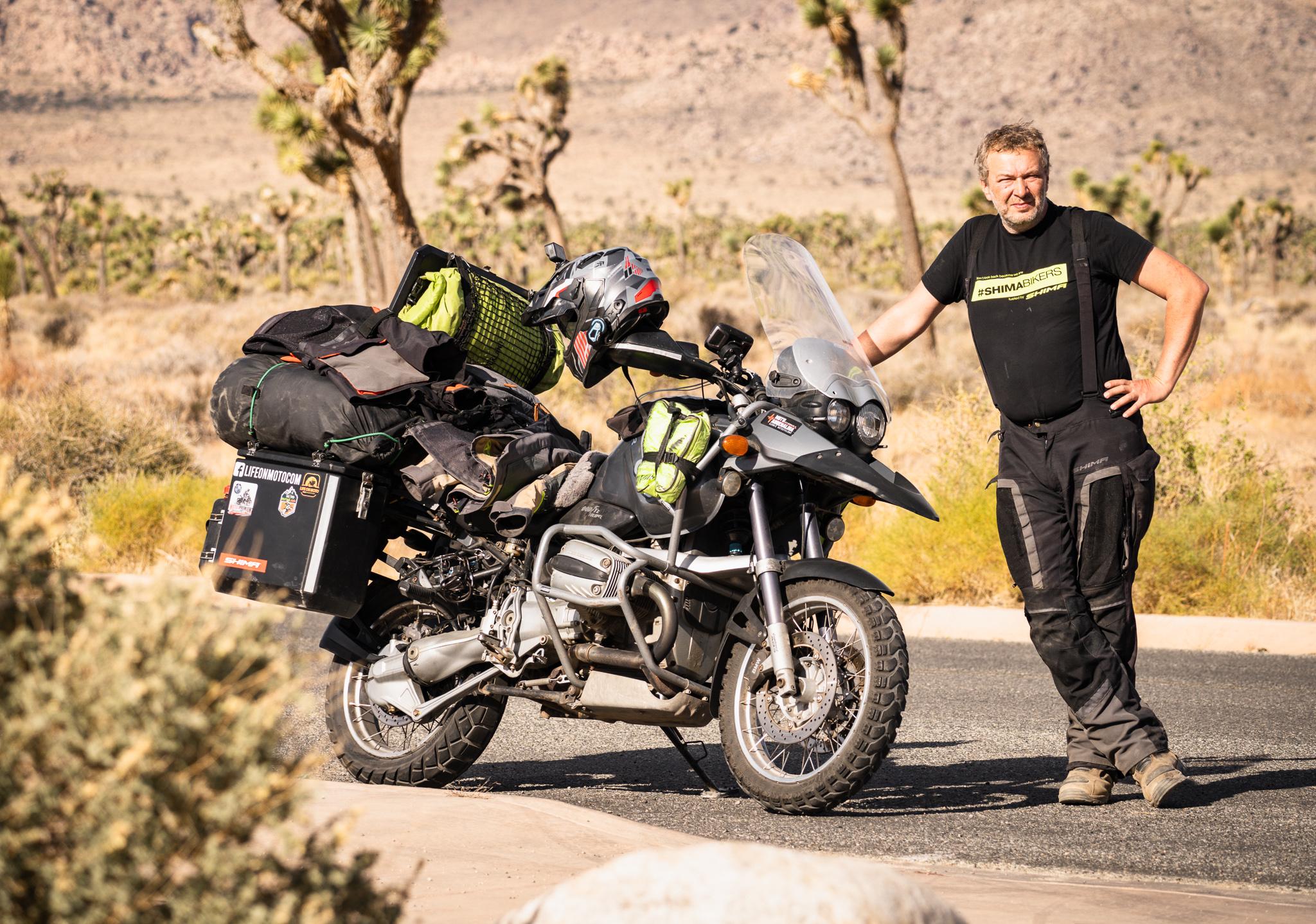
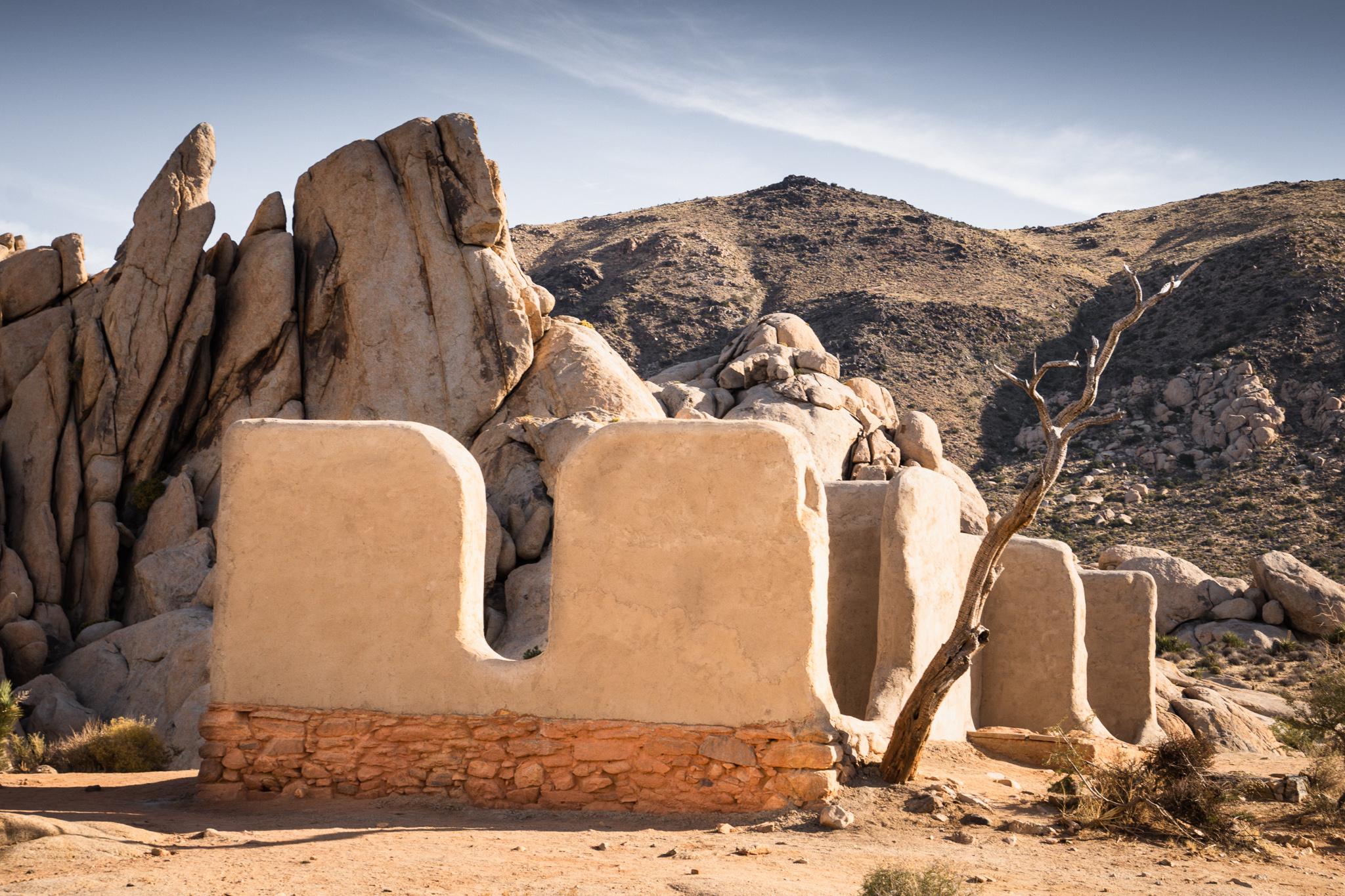
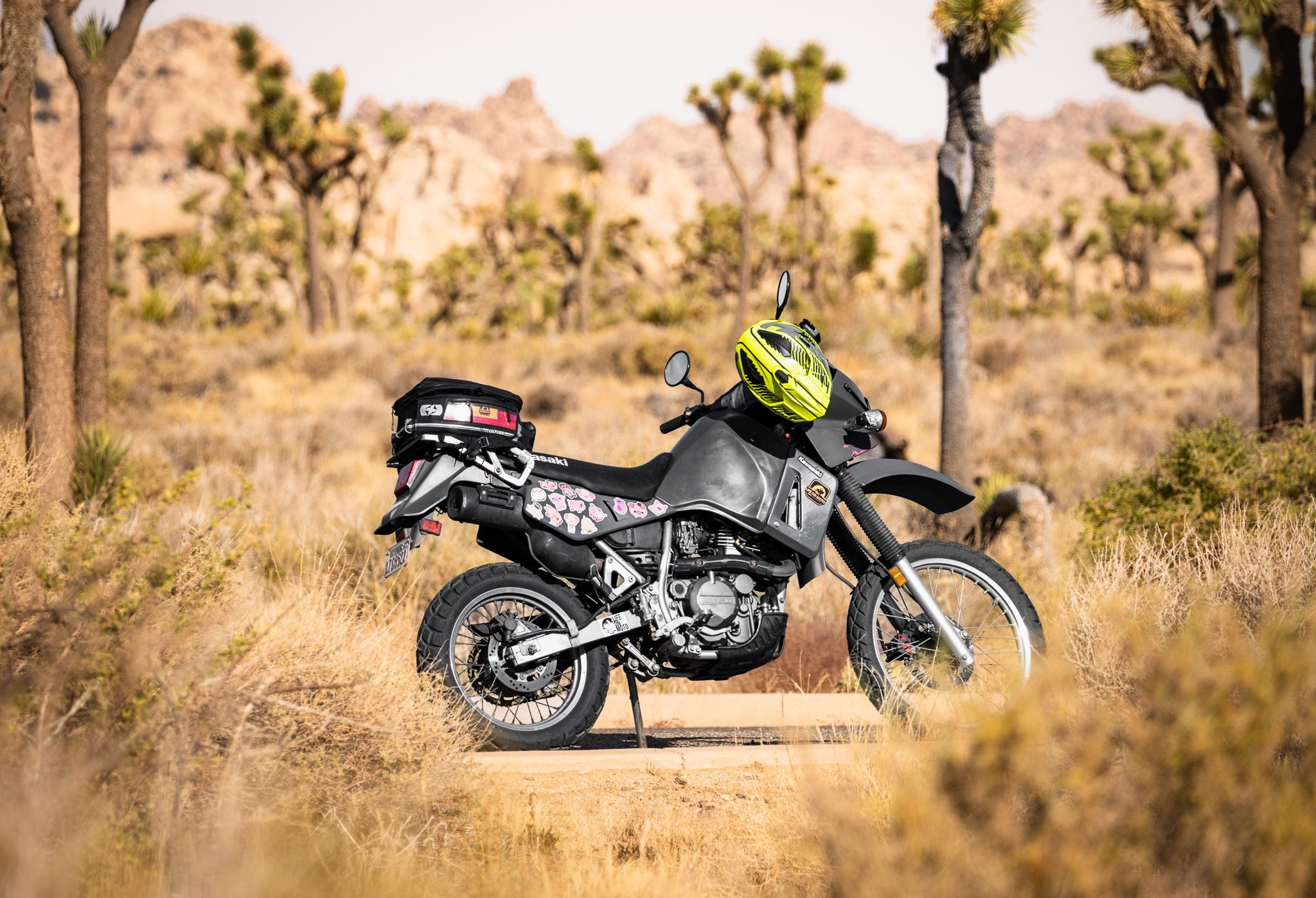
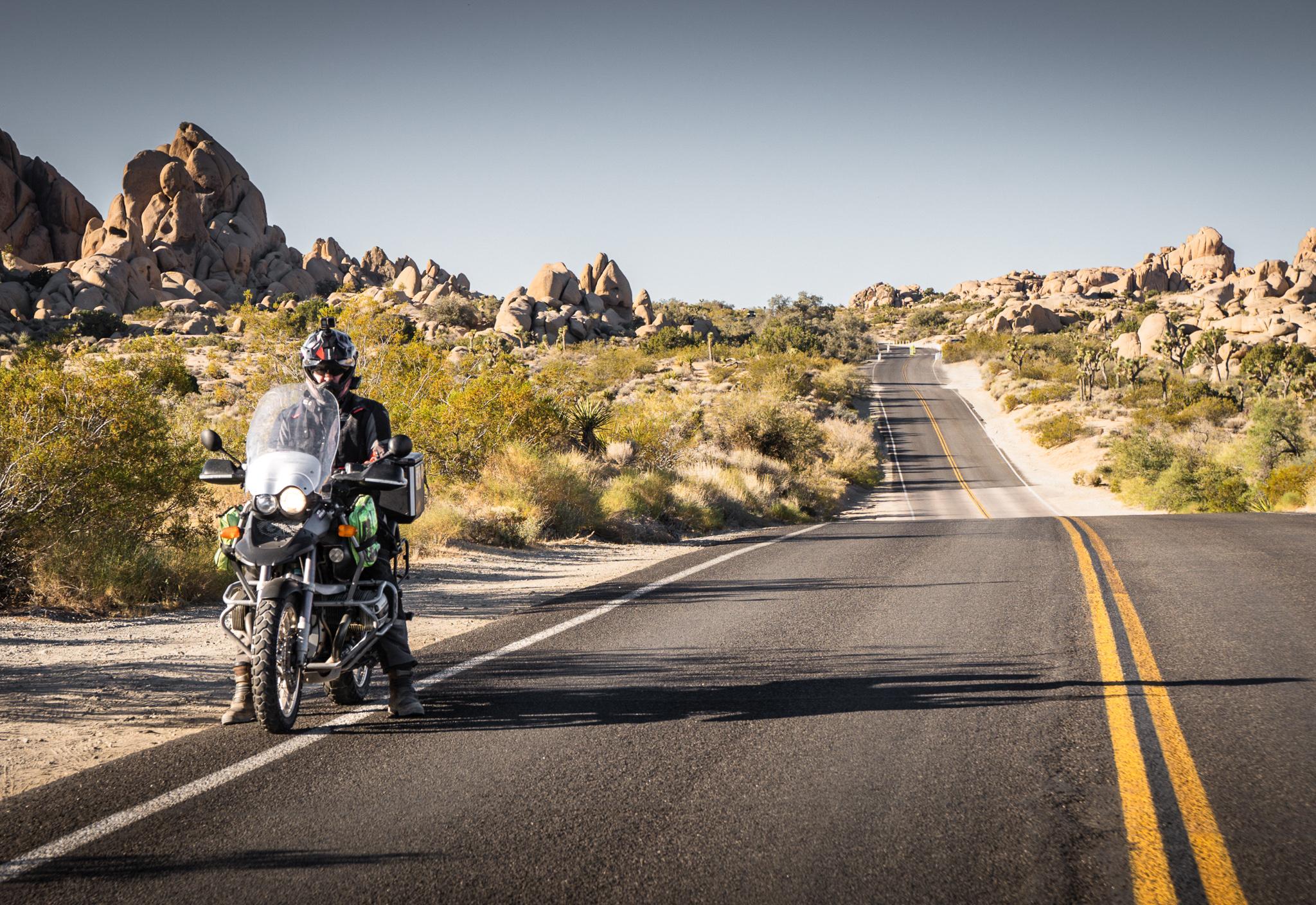
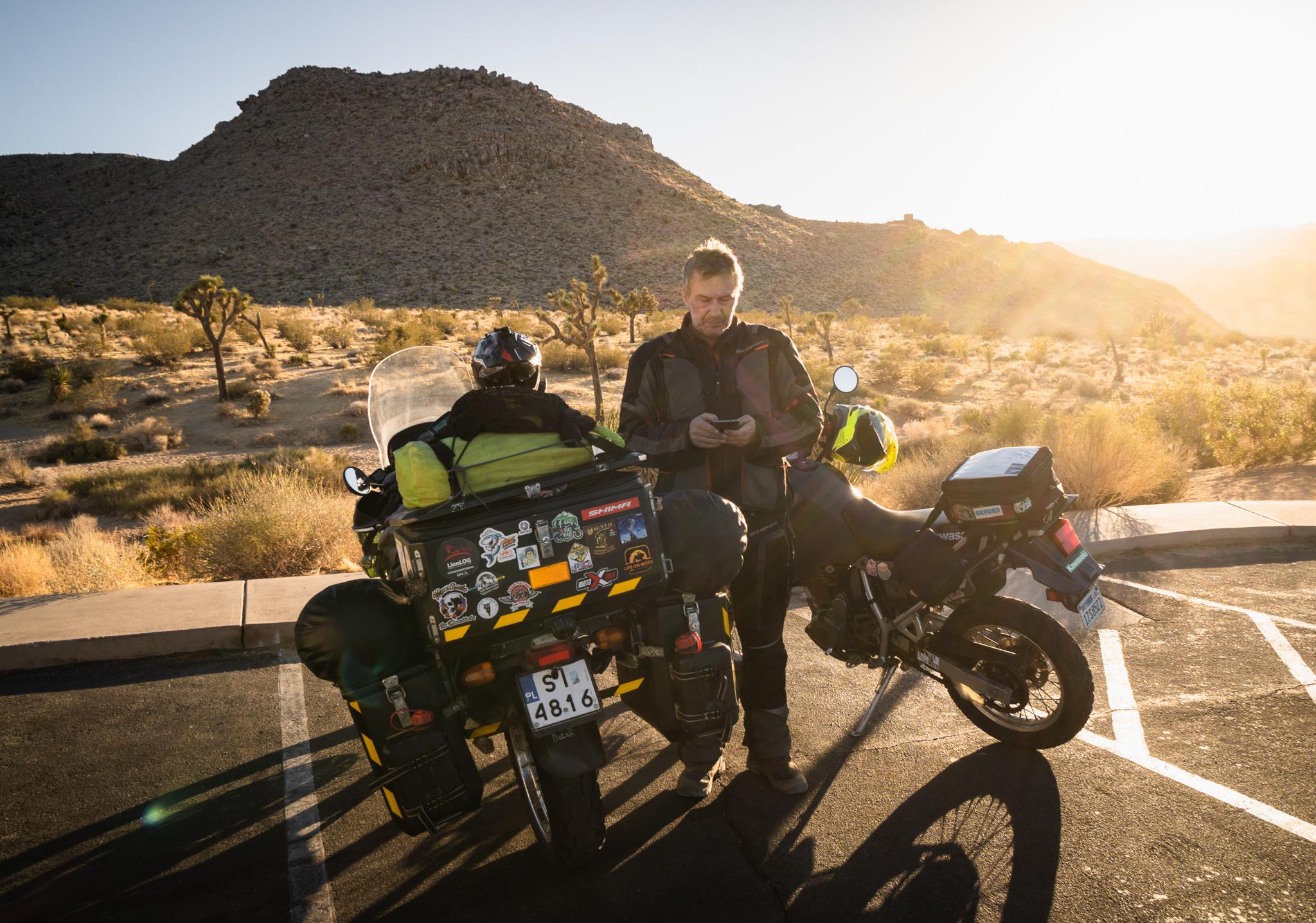
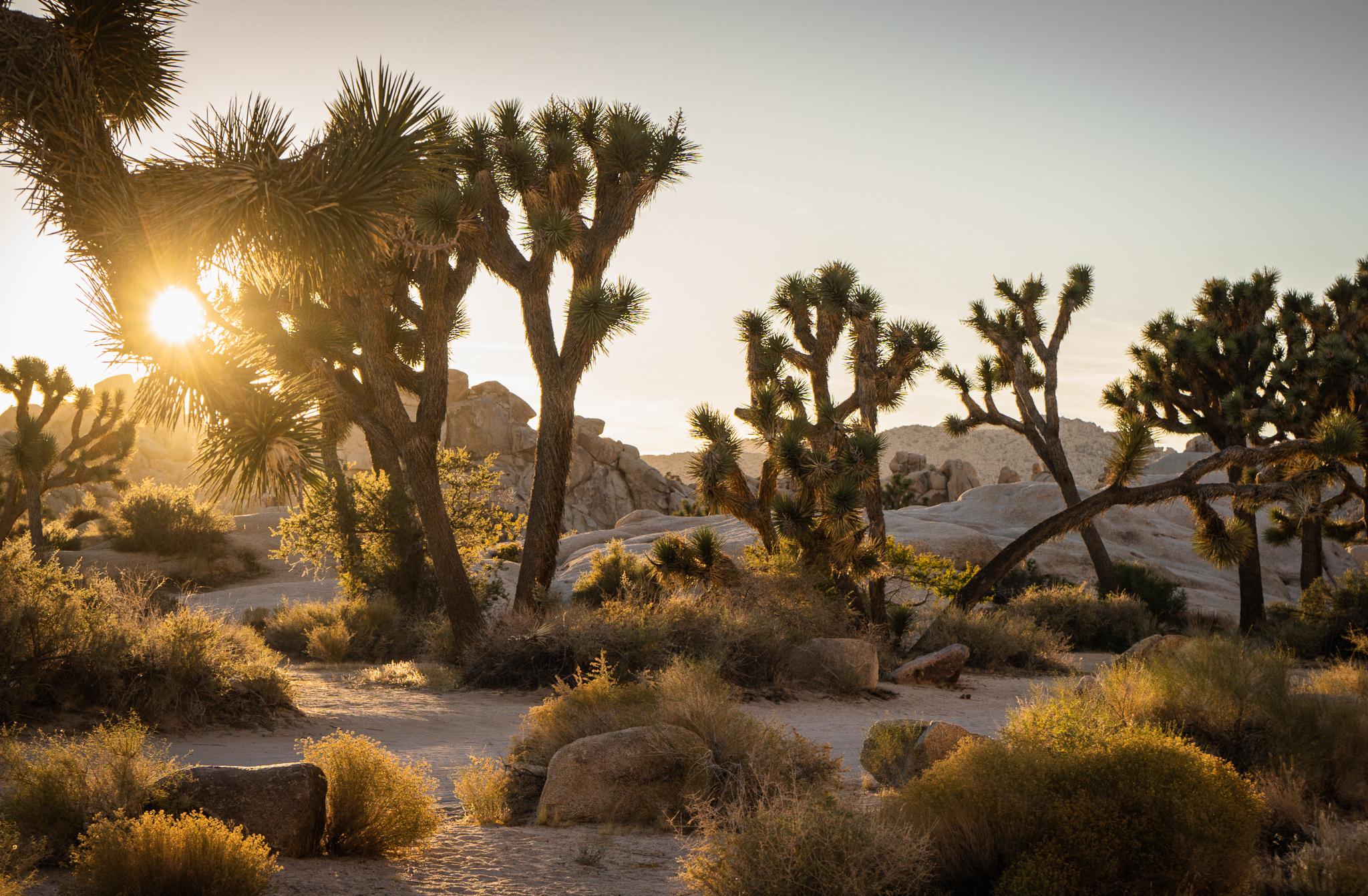
Joshua Tree National Park isn’t one of the most popular national parks in the United States. It’s a far cry from the grandeur of the Grand Canyon, Monument Valley, or Death Valley. Most visitors simply drive through it, checking off the various attractions along the road, which winds like a black ribbon through the park’s desert landscape. You’ll find everything here – fantastic rock formations, gorges, hidden canyons, and thousands of Joshua trees. Among them are several picturesquely situated campgrounds, and we spent a few wonderful days at one of them. But before we got there, an unforgettable journey awaited us. It was all the more special because it was my first 240 kilometers on a new motorcycle, with a freshly earned driver’s license in my pocket.
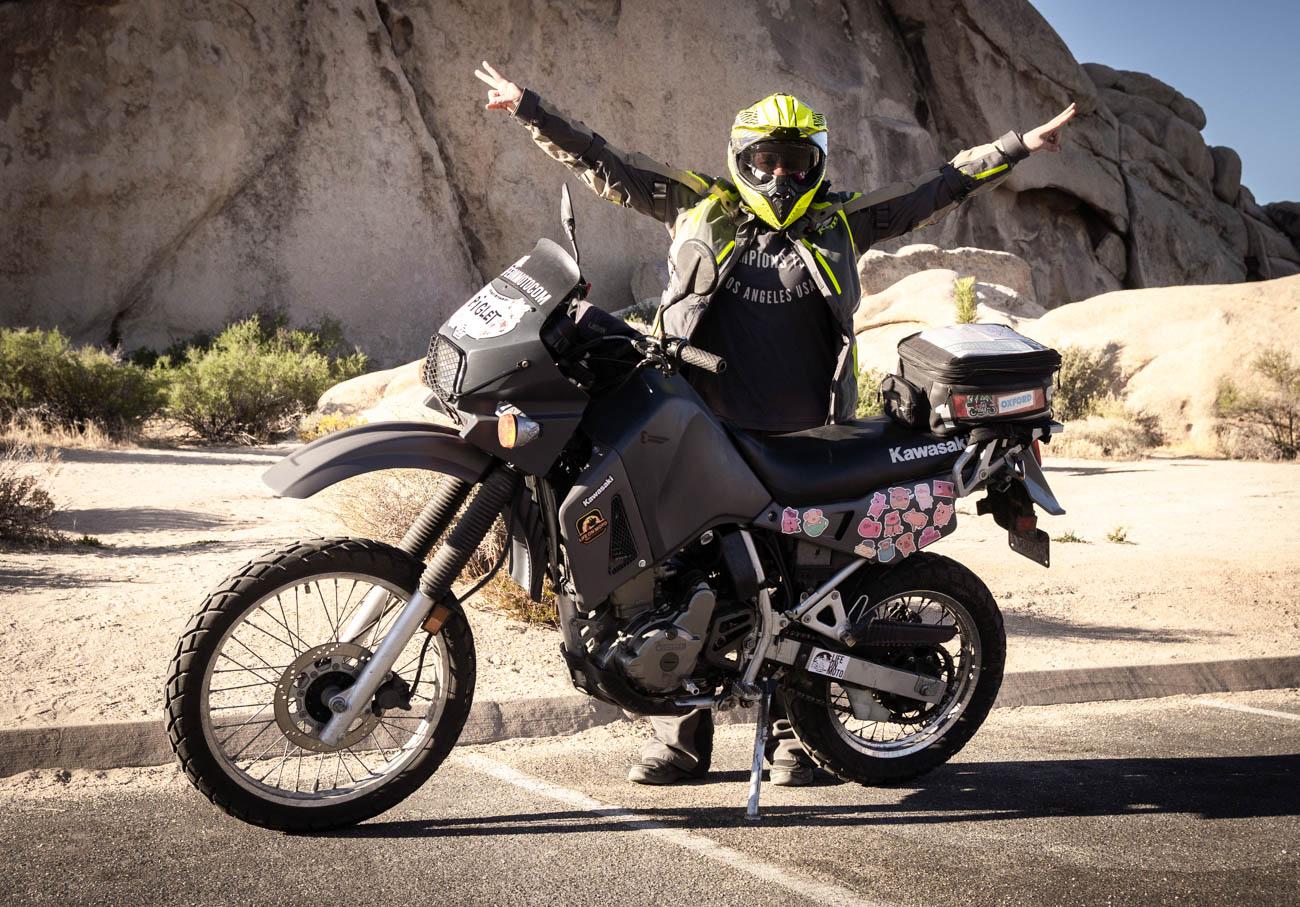
THE ROAD FROM LOS ANGELES TO JOSHUA TREE NATIONAL PARK
We said goodbye to Los Angeles with a deep sense of relief. We’re not fans of big cities, the fast-paced life there, the ubiquitous consumerism, and the unimaginable traffic jams. To tell the truth, we didn’t even go to the famous Hollywood sign, we didn’t see the Walk of Fame, and we didn’t visit Malibu Beach. Most of our time in Los Angeles was spent taking care of all the paperwork involved in buying my motorcycle, getting it road-ready, and sorting through the trunks full of our old junk that had arrived on Basiorek from Mexico last year. The rest of the time we spent at Ryan’s shop – he’s a brilliant mechanic from whom we really learned a lot, but also a wonderful person who brings together the local motorcycle community around his shop. We spent many cheerful evenings by the campfire with a beer, got to know his family and friends, and at one point he even took us in when the wait for motorcycle parts was dragging on unbearably, putting a significant strain on our budget. It was hard to say goodbye, because we’d grown attached to him and his family, but the motorcycles were ready, packed up, and our hearts were longing for the road.
The plan was simple – to leave Los Angeles early in the morning, as soon as possible, before the City of Angels really started to come alive, and then, bypassing San Bernardino, reach Joshua Tree National Park by evening. We were also considering making a longer stop in Palm Springs along the way. In total, we had about 240 kilometers to drive.
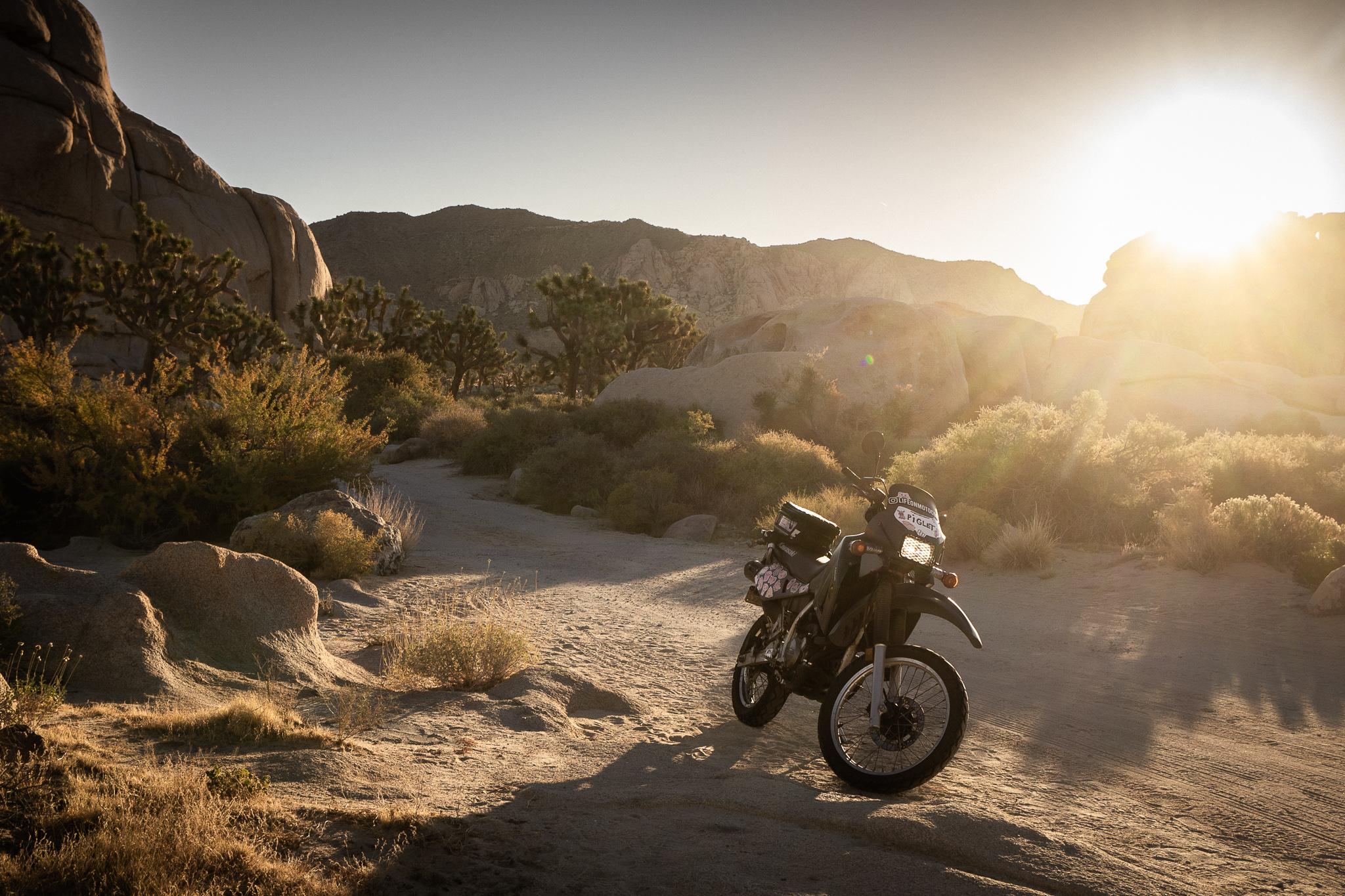
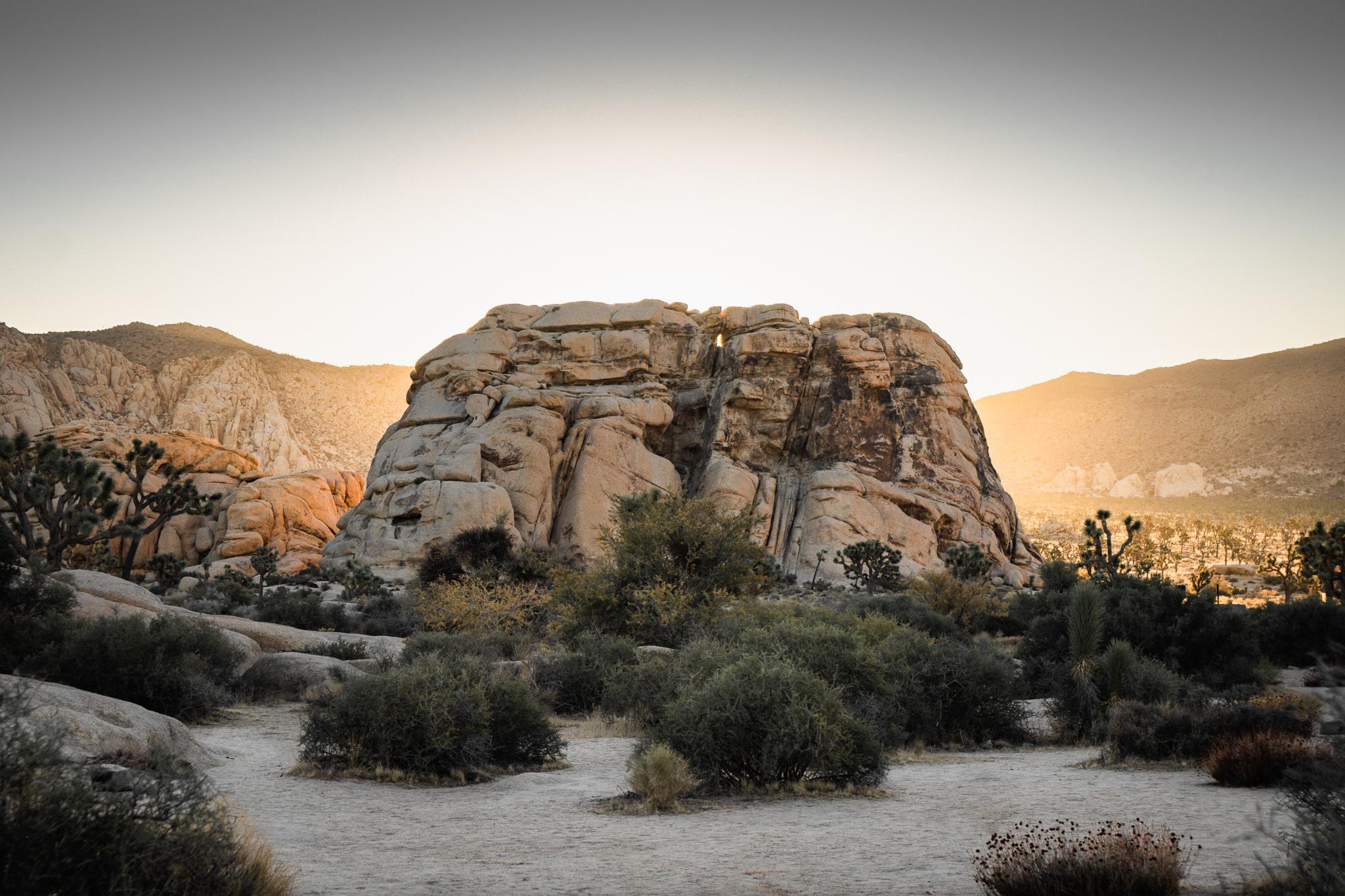
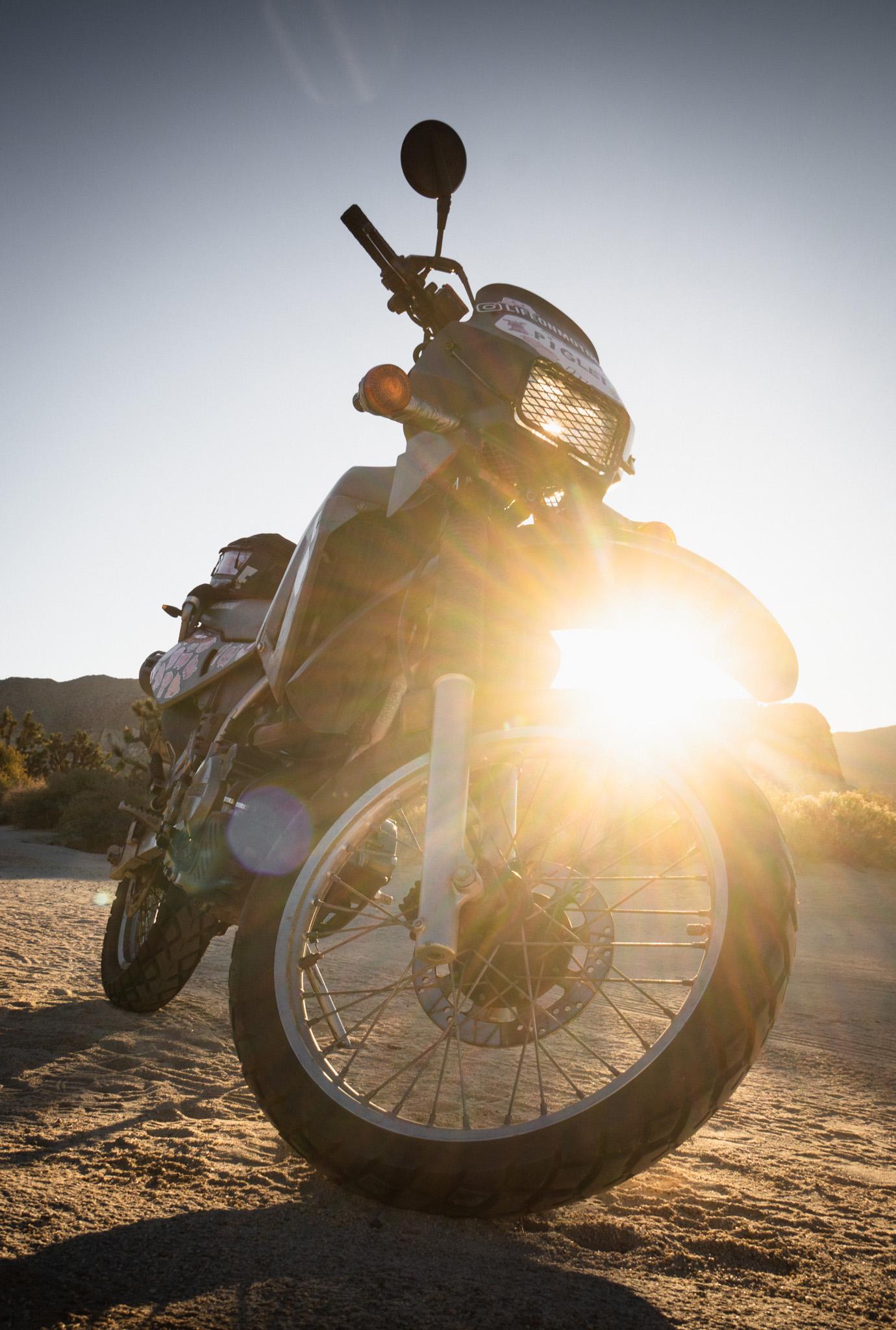
As long as we were shielded by the sound barriers along the highway and the tall buildings of Los Angeles, the drive was calm and predictable. Beyond San Bernardino, the landscape began to change – the sound barriers disappeared, and the metropolitan skyline gave way to low-lying farms and the scattered buildings of the desert outskirts. This was exactly the view we’d been waiting for – open space stretching endlessly to the horizon. Our delight didn’t last long, though. As soon as we pulled out onto the exposed road, the wind hit the side of the motorcycles with such force that I could barely keep Piglet in its lane.
Time and again, the motorcycle was blown off course – first to the left, then to the right. Sometimes the wind would seem to let up, change direction, and for a moment push us in the same direction we were heading, providing brief relief from the crosswinds. Szymek was clearly handling it better, and for me, it was a real lesson in riding in difficult conditions. I don’t remember much about that route besides the constant roar in my helmet and the tears the wind forced from my eyes as I tried to ride with my visor up because my goggles kept fogging up.
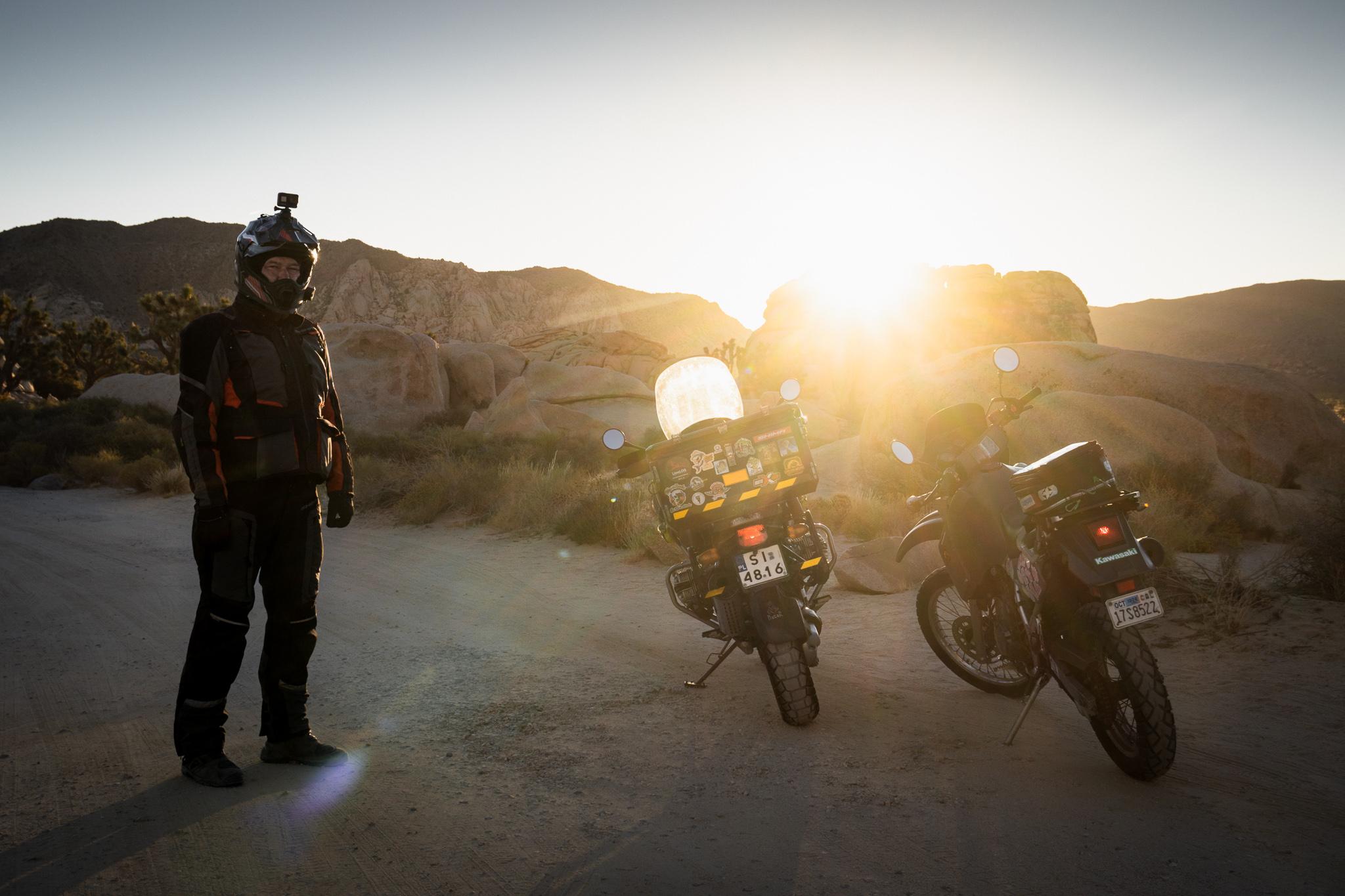
We arrived at Joshua Tree National Park just as the sun had almost completely disappeared behind the hills, painting them in intense, warm colors. The wind had died down a bit around Yucca Valley, allowing us to fully enjoy the desert landscape in its early-evening glow. We pulled up to the park ranger station to buy an Annual Pass and ask about available campsites. It turned out, however, that all the spots had long been taken, and we couldn’t spend the night in the park that evening. We hadn’t expected this—we’d come specifically on a Thursday, assuming we’d avoid the weekend crowds. We had no choice but to look for lodging in the area and try to enter the park the next morning. We succeeded, but before we get to that, we need to mention two important points – the aforementioned National Park Pass and the campgrounds at Joshua Tree.
AMERICA THE BEAUTIFUL – NATIONAL PARKS PASS
Everyone who told us about traveling through the United States mentioned the Annual Pass, also known as the America the Beautiful Pass. It’s a pass that grants multiple entries to all national parks and recreational areas in the U.S. at no additional cost. Unfortunately, however, it does not cover state parks. A single-entry fee to national parks usually costs around $25–$30 per person or vehicle, depending on the location. In our case, the $80 pass turned out to be the better deal.
Importantly, until the end of 2023, two people could use a single card. Starting in 2024, each person must have their own personalized card. Cards are almost always checked upon entering the parks and are often verified against an ID, so it’s important to make sure your signature on the back is legible. You can purchase the pass from park rangers at park entrances or at information centers. You can also order it online, but shipping costs will apply. NOTE! Pass prices have risen dramatically in 2026 – currently, they cost as much as $250!
CAMPGROUNDS WITHIN THE PARK AND BLM LAND
There are 8 campgrounds within the park. Some of them require advance reservations, while others operate on a first-come, first-served basis. Jumbo Rock, Indian Cove, Black Rock, and Cottonwood belong to the first group. They are closed outside the summer months, when the park itself isn’t very popular due to the extreme heat. You can reserve a spot there at www.recreation.gov. Belle, Hidden Valley, Ryan, and White Tank, on the other hand, are first-come, first-served campgrounds. Taking our experience as an example – or rather, learning from our mistakes – it’s better to arrive early or take advantage of the reservation option than to arrive like we did and find out in the evening that everything is already booked.
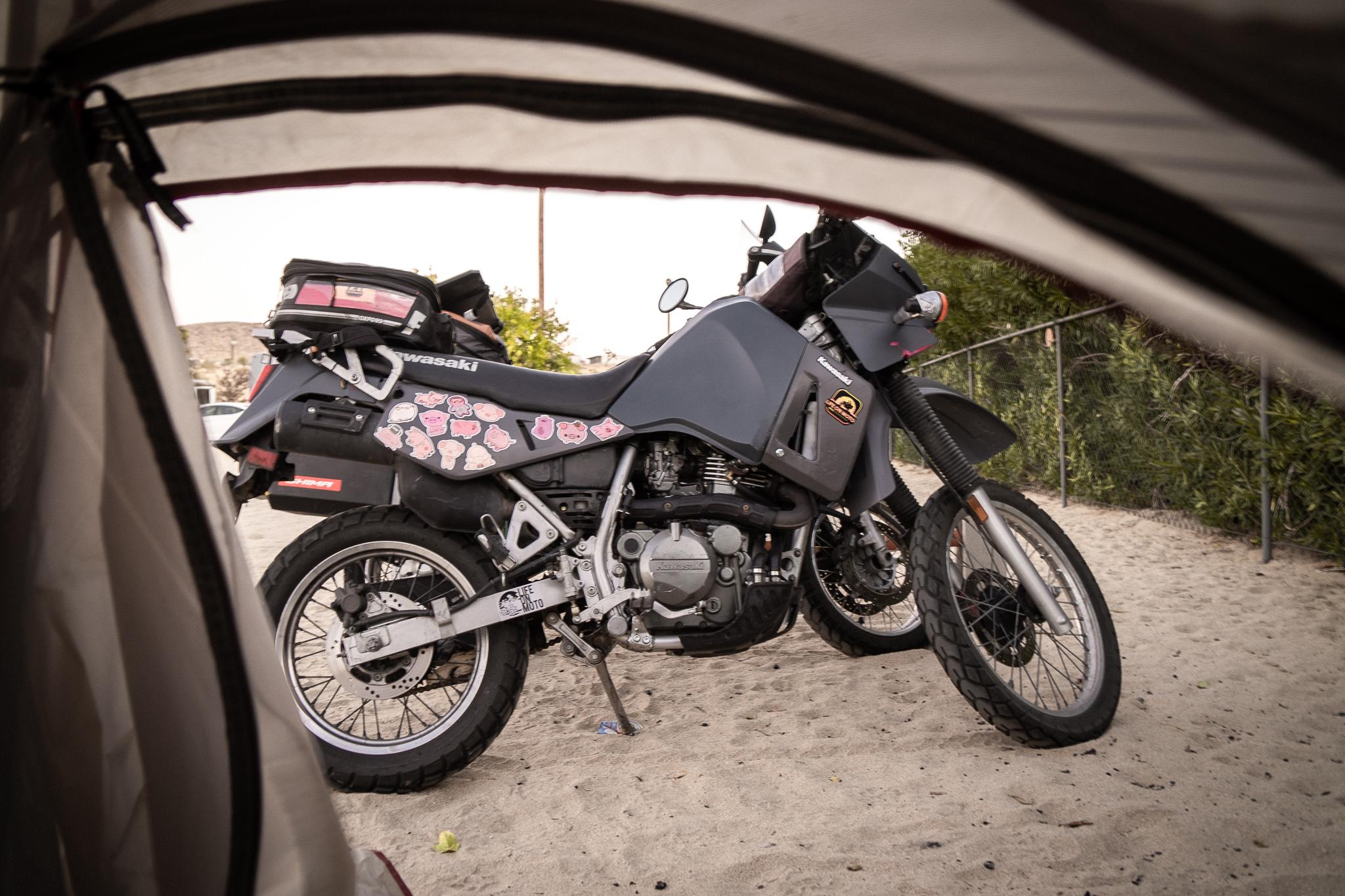
However, if you find yourself in such a situation, you can take advantage of the numerous BLM areas located around the park. BLM (Bureau of Land Management) refers to public lands where you can camp for free. Of course, you have to be prepared for this, because you usually won’t find water or restrooms there – not to mention stores. We ended up staying at a regular campground not far from the park entrance and spent the night there.
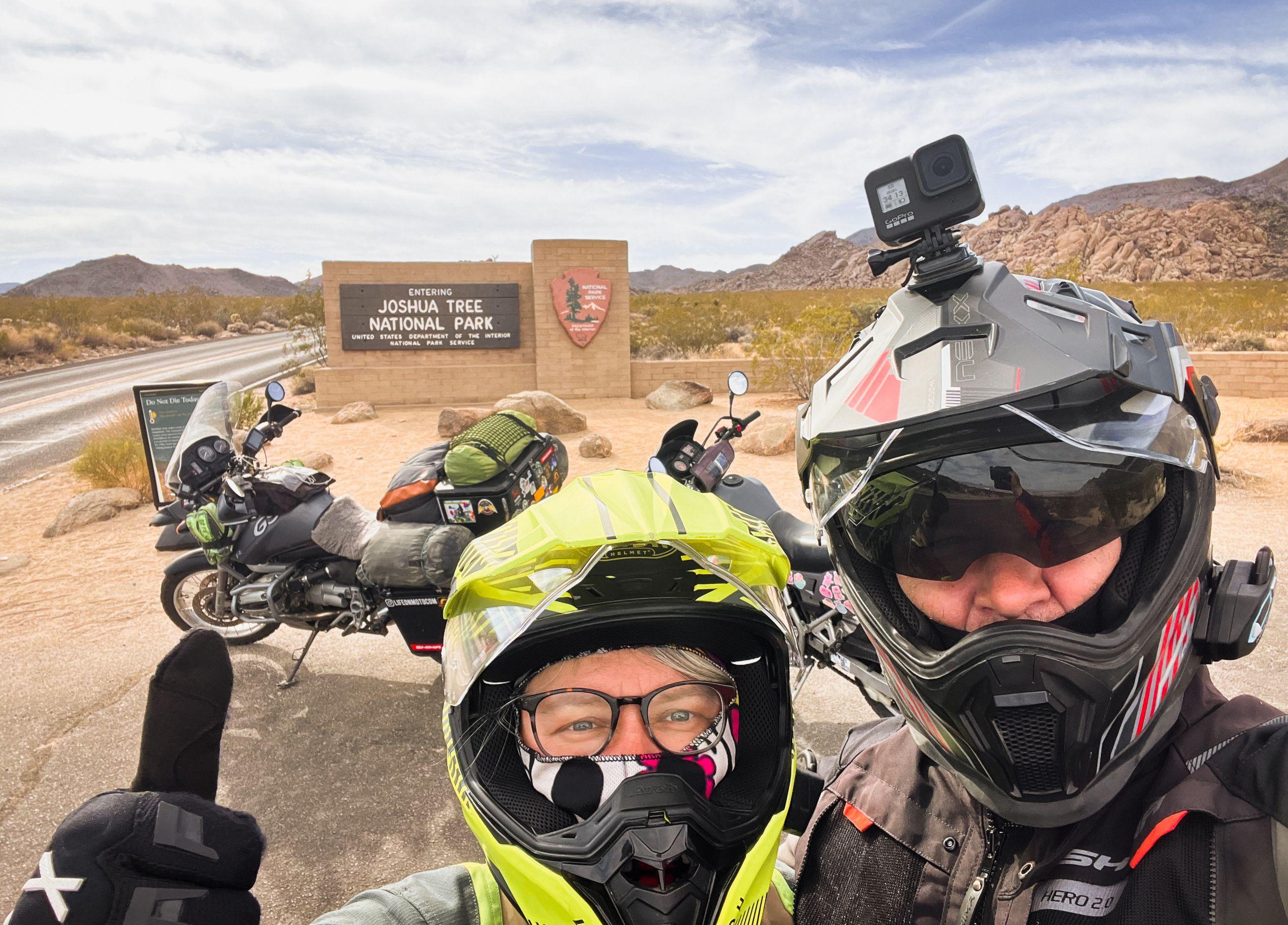
WE’RE ENTERING JOSHUA TREE PARK!
We decided to set off before sunrise and make breakfast and coffee once we got to the park, after we found a campsite. We quickly packed up our stuff, left the camping fee in the box for the owner – since there was no one from the staff there in the evening – and headed toward the park.
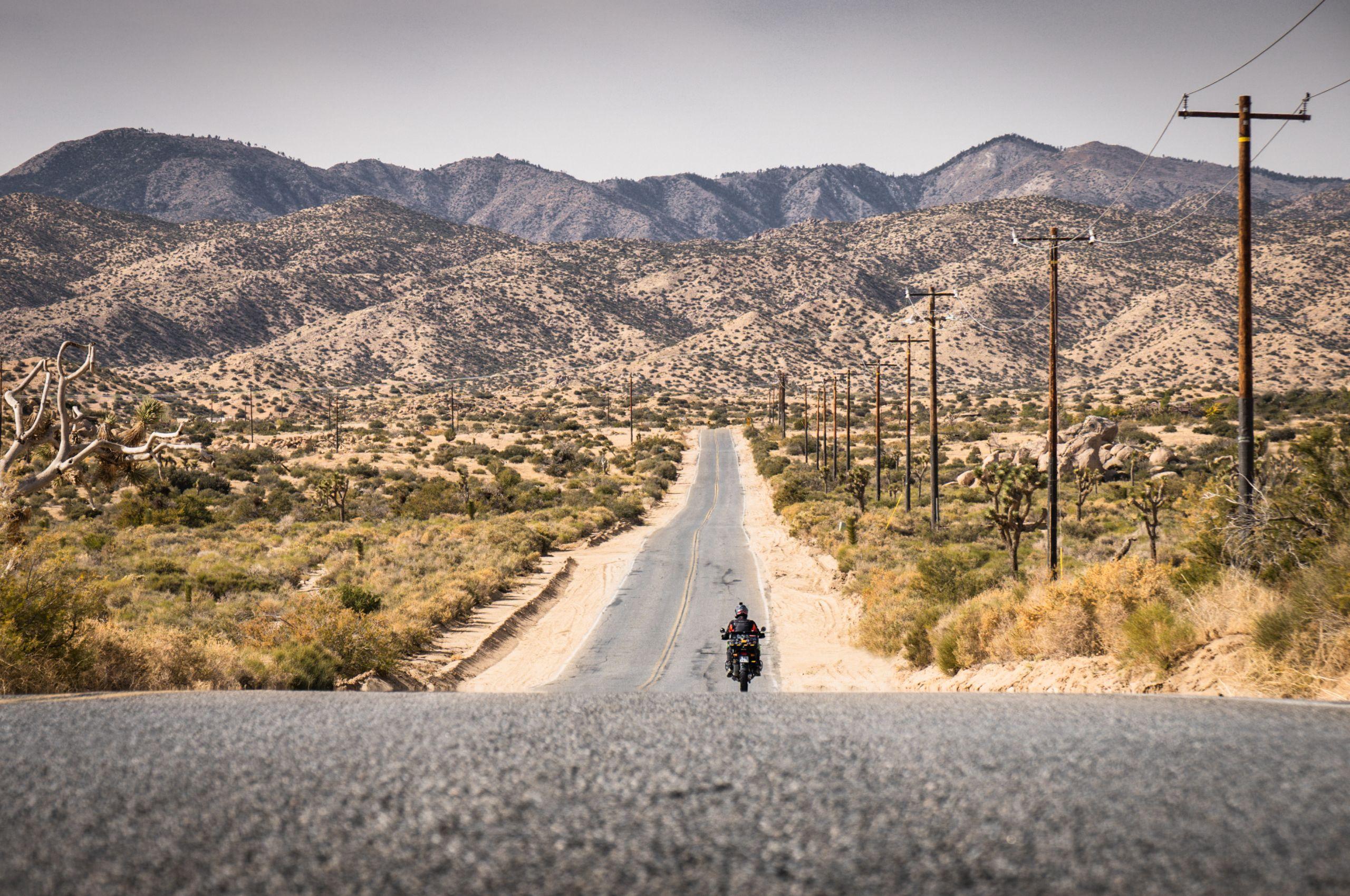
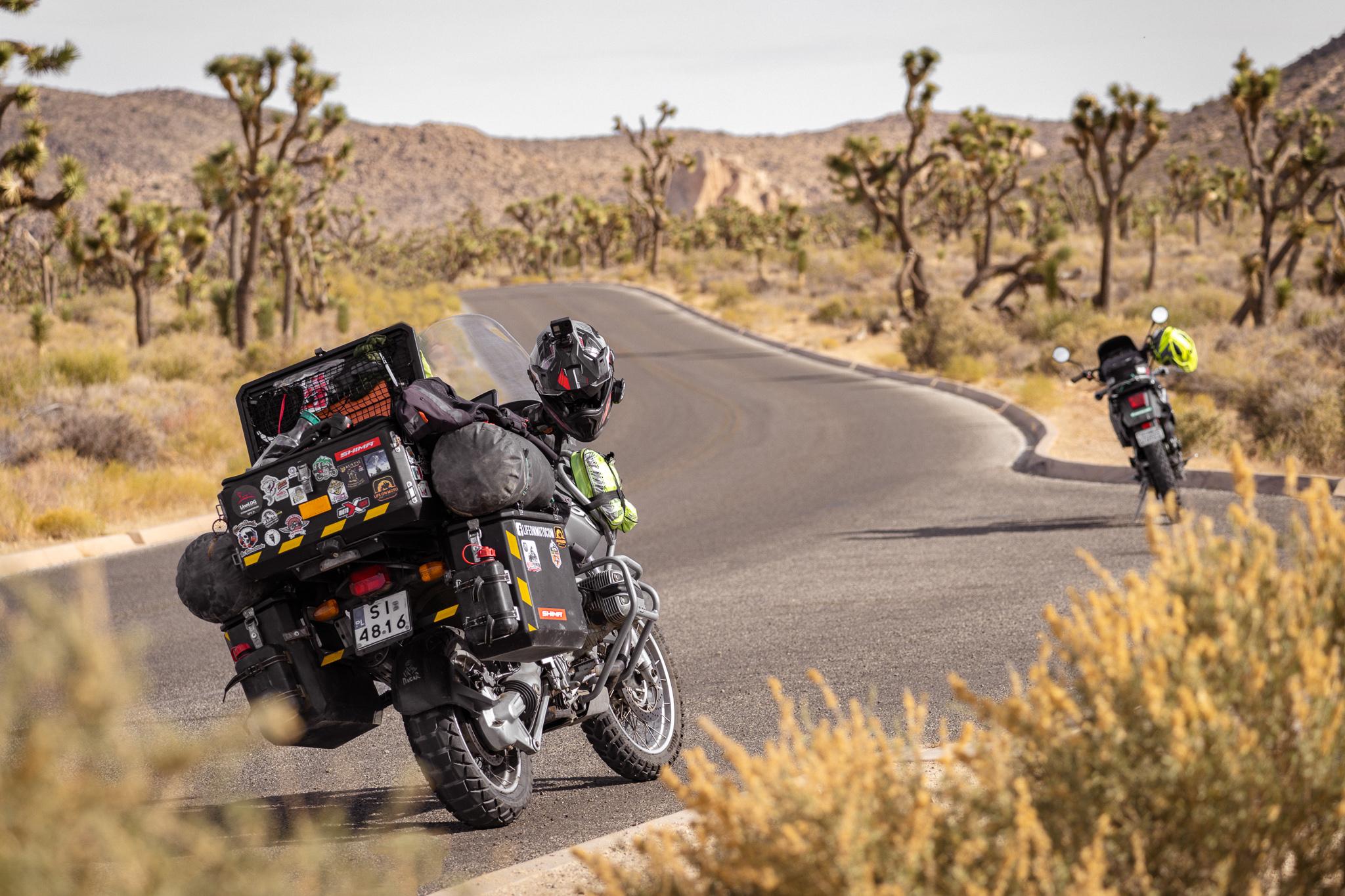
We passed the ranger station at the entrance – which was still closed because it was so early – and rode into a world of rocks, cacti, and Joshua trees. We were completely alone on the road; only the sound of our motorcycles’ engines broke the silence. The black asphalt wound gently through the desert, revealing one magnificent view after another. After less than 20 kilometers, we arrived at our campground – Hidden Valley.
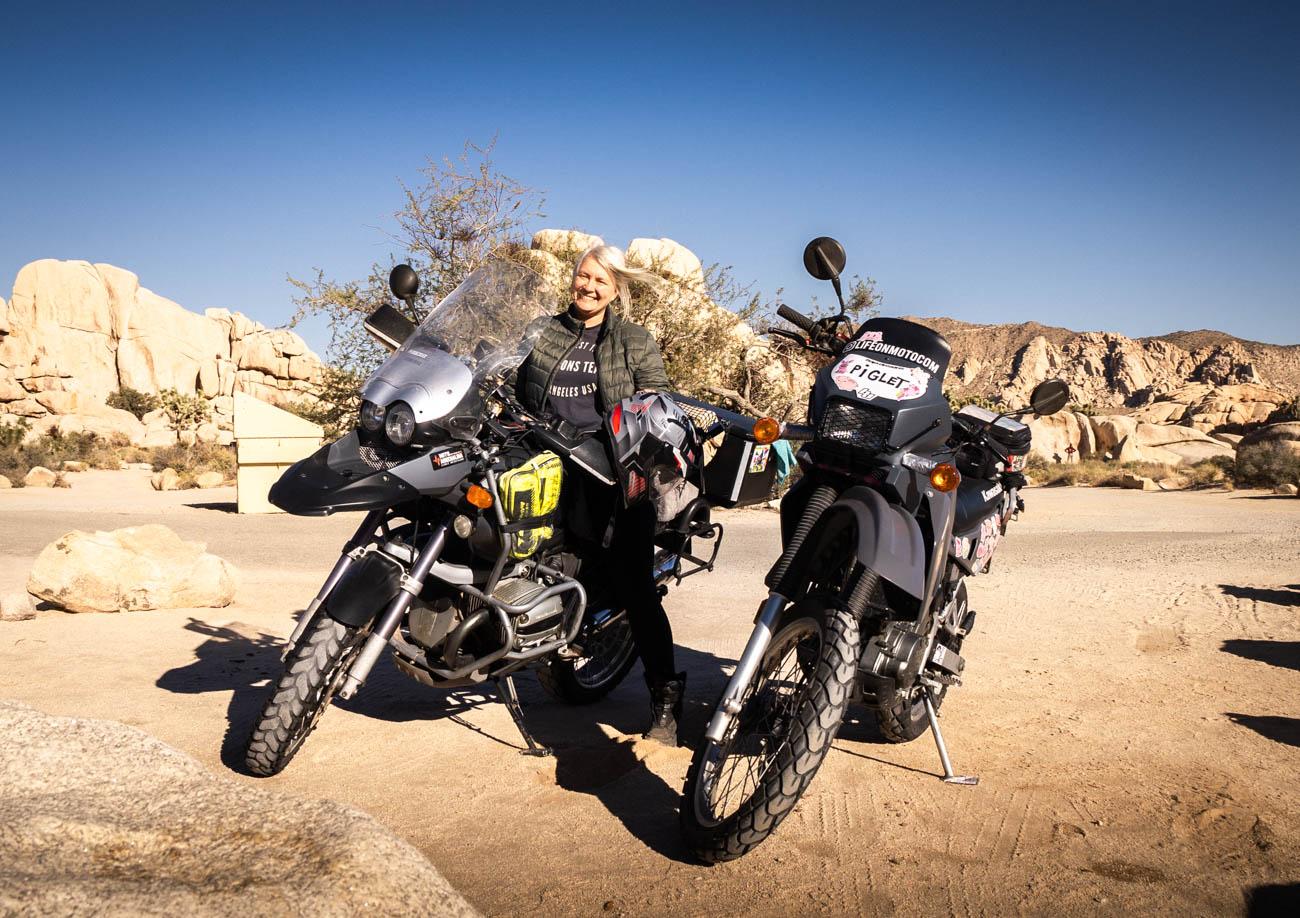
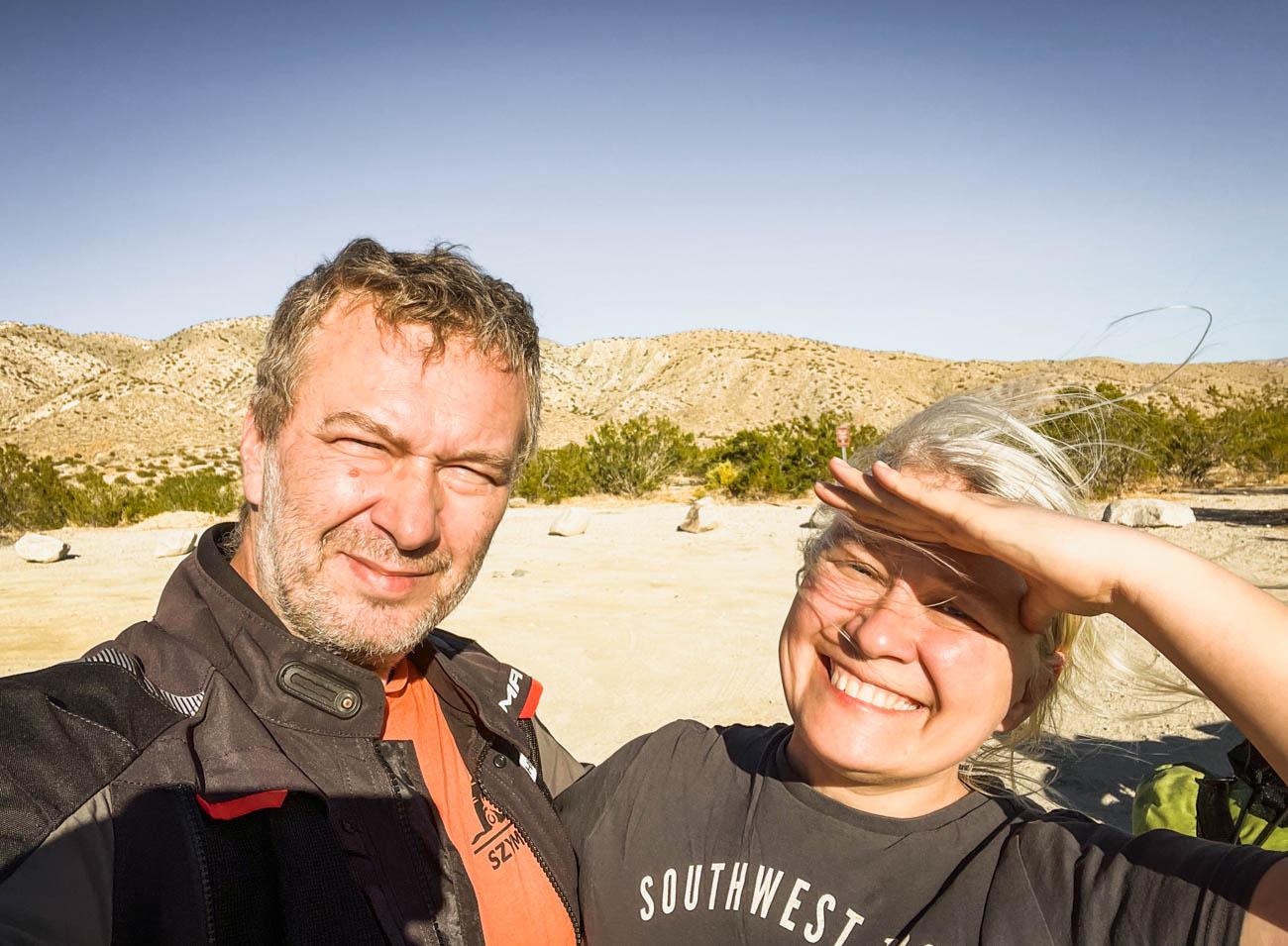
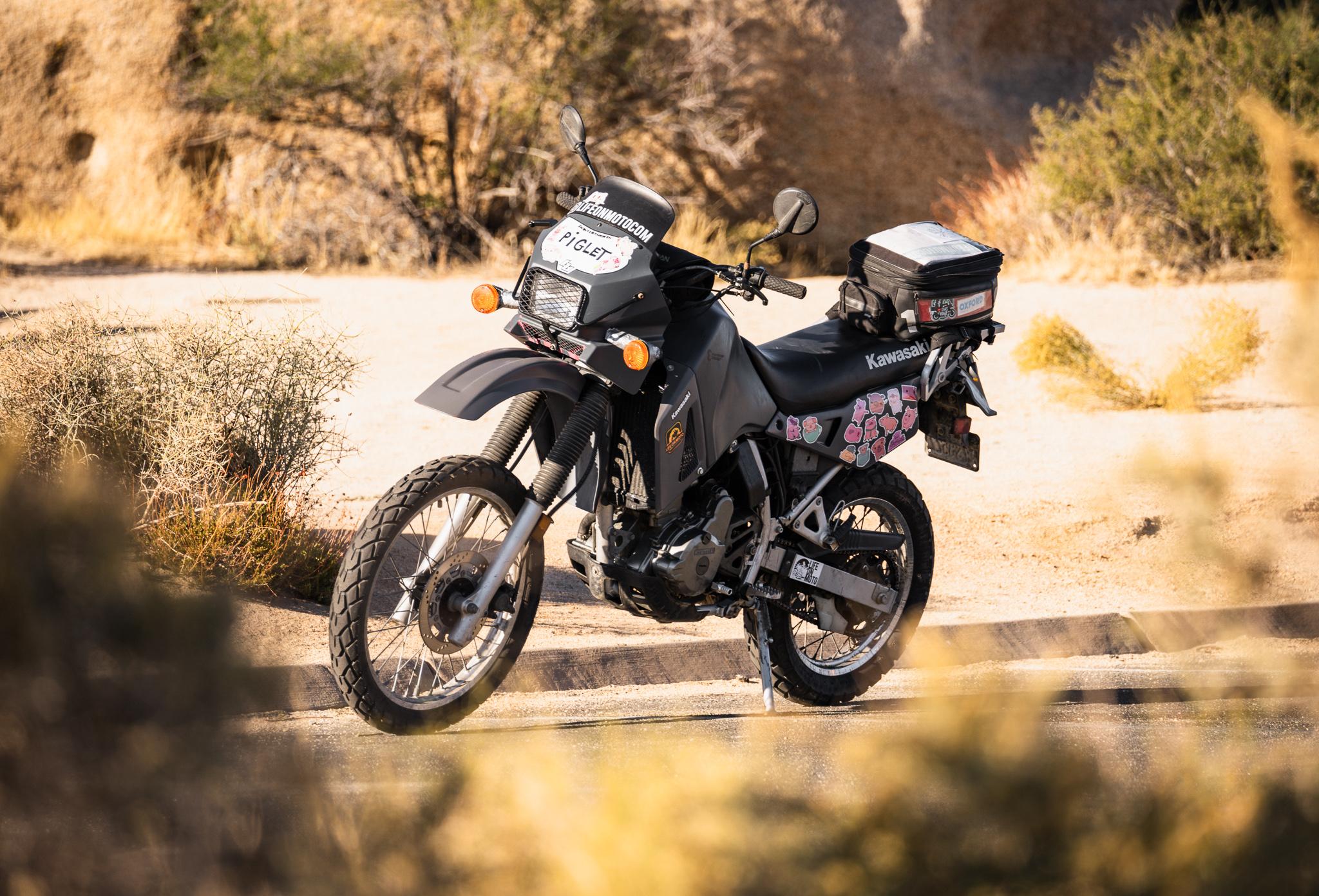
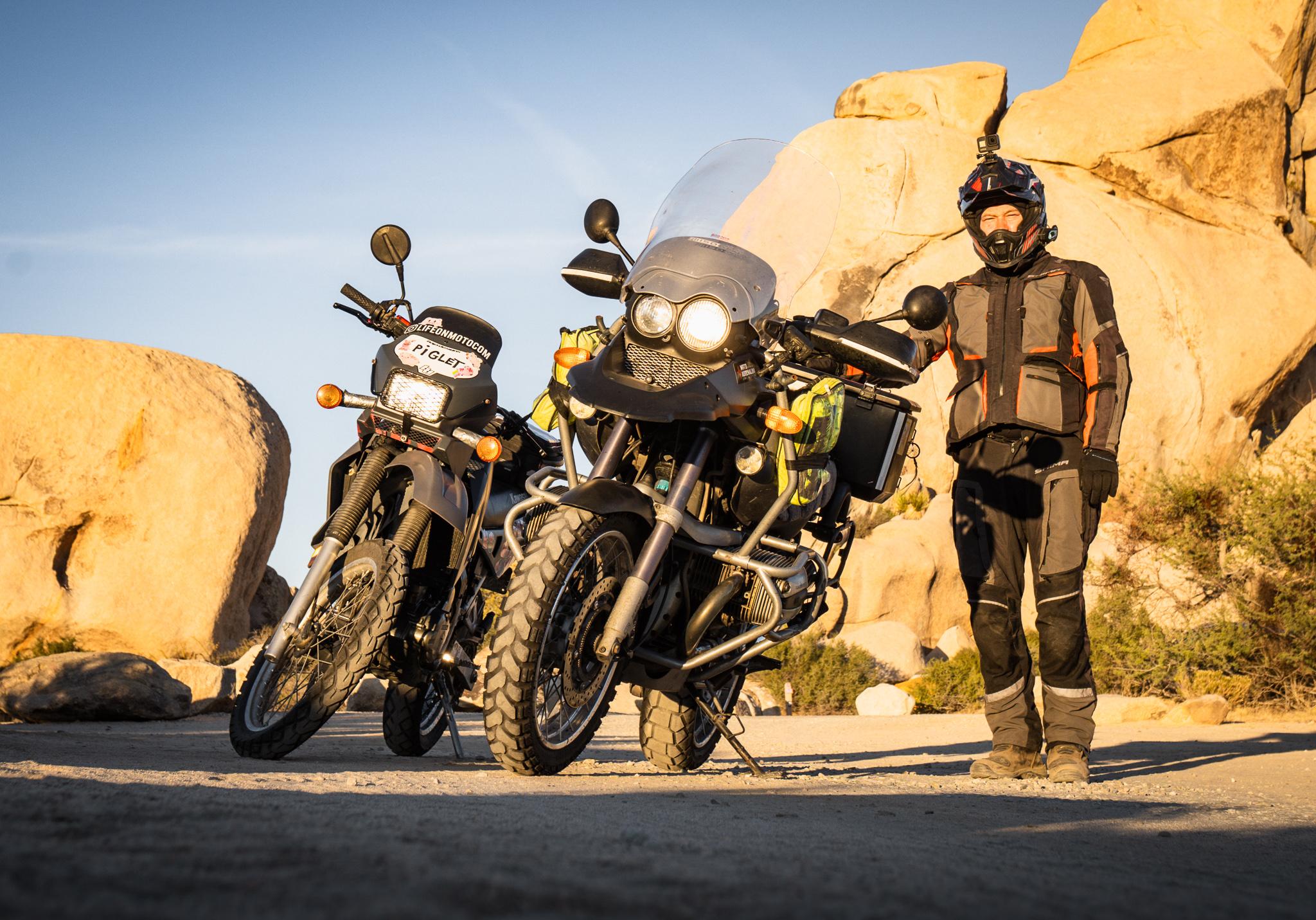
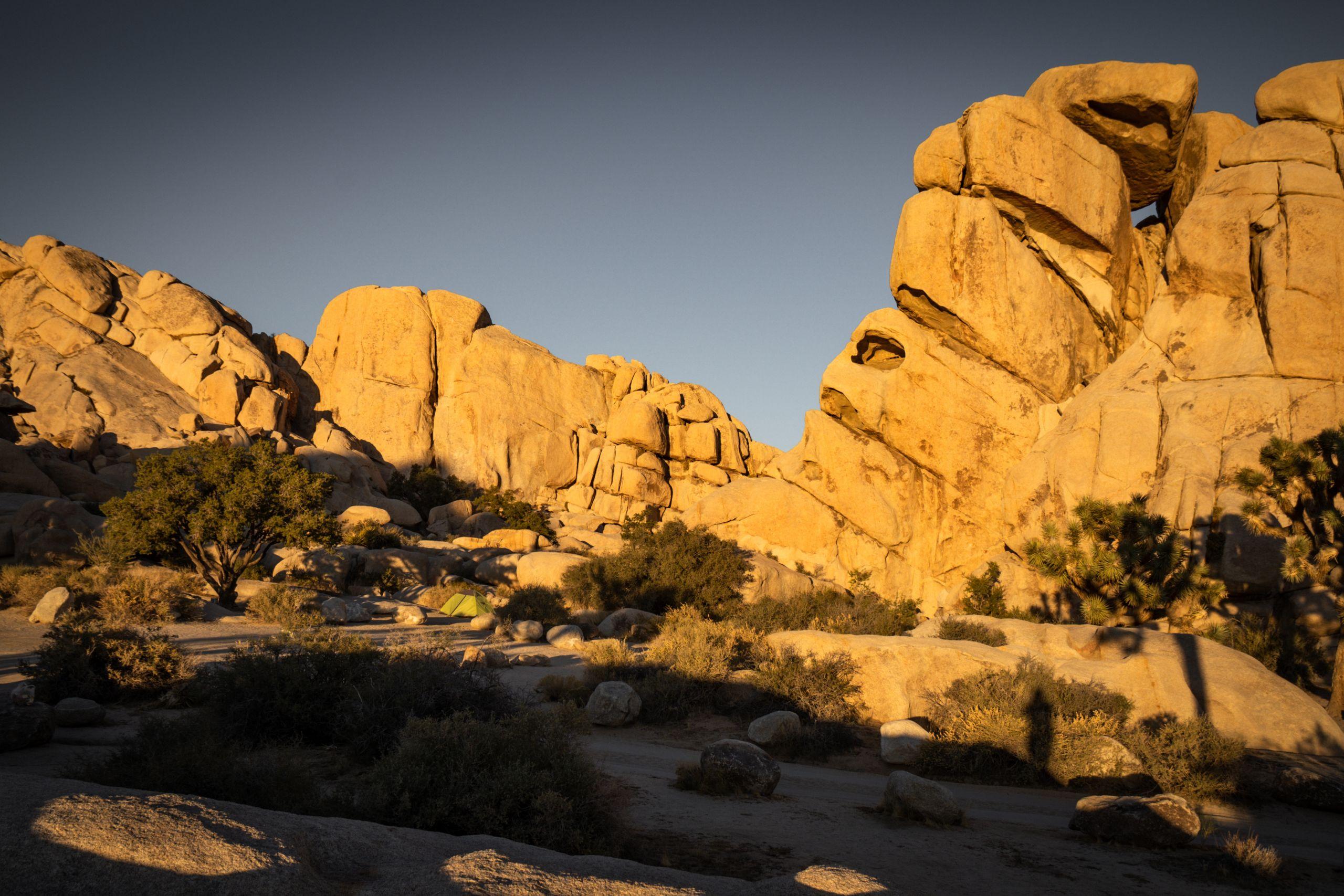
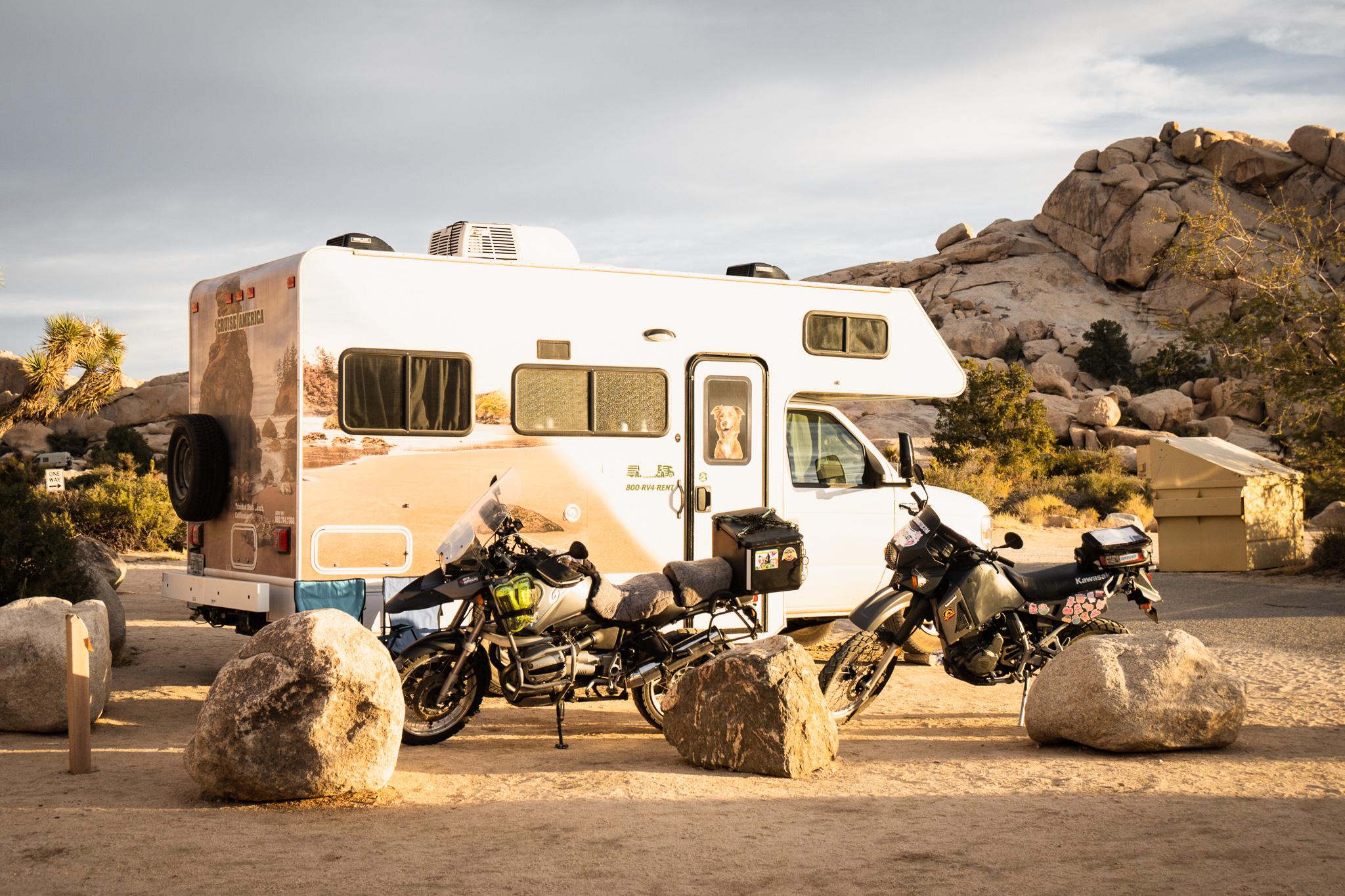
We parked our motorcycles in the empty parking lot next door and went to check out the campground. We arrived very early, so we had no trouble finding an open spot. Quite a few people were already slowly packing up to continue their journey, vacating their campsites. We took one of them, right next to a gigantic rock rising from the ground like a monolith. We leisurely brewed some coffee and marveled at the sun flooding the valley with its warm rays.
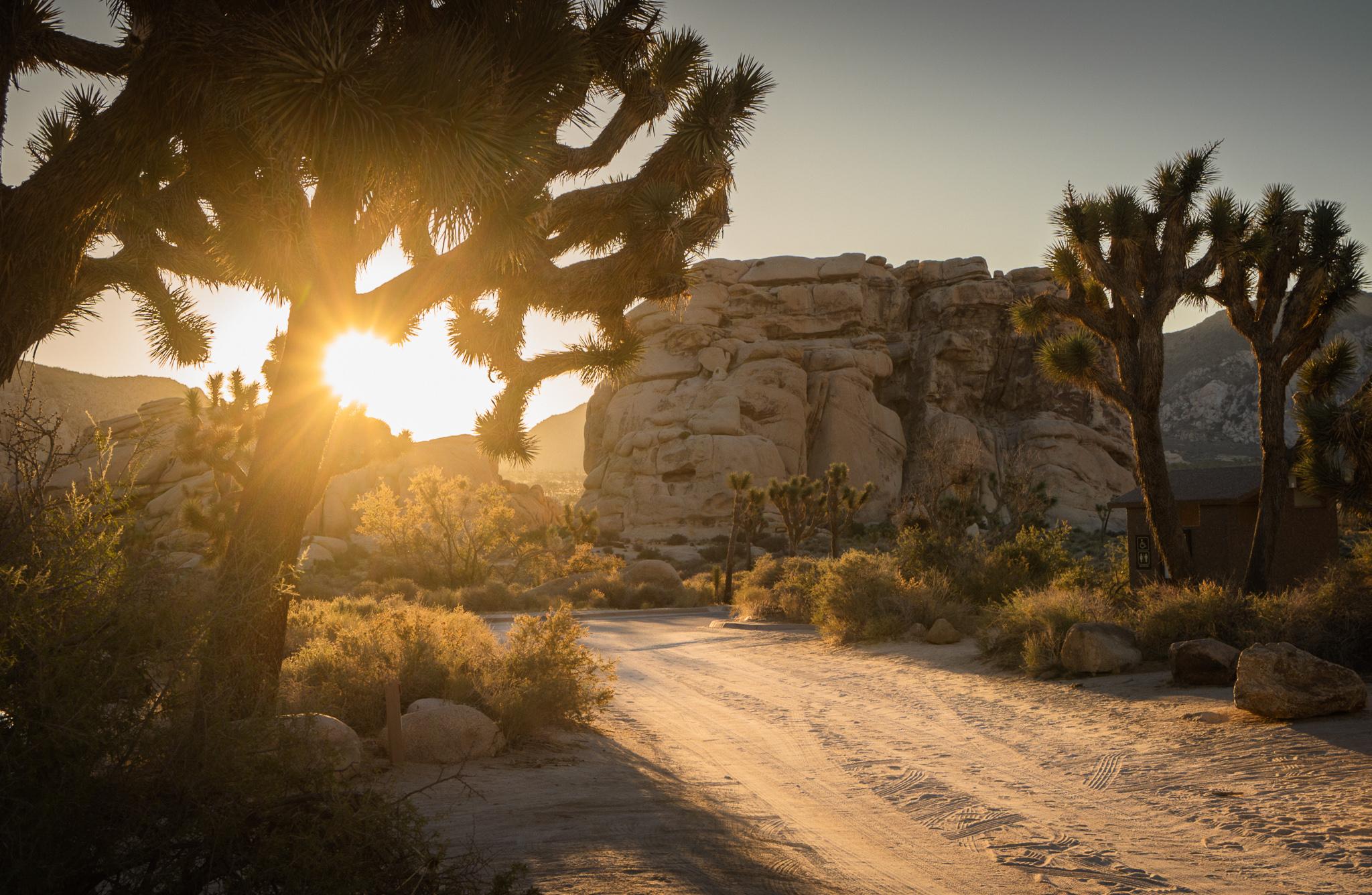
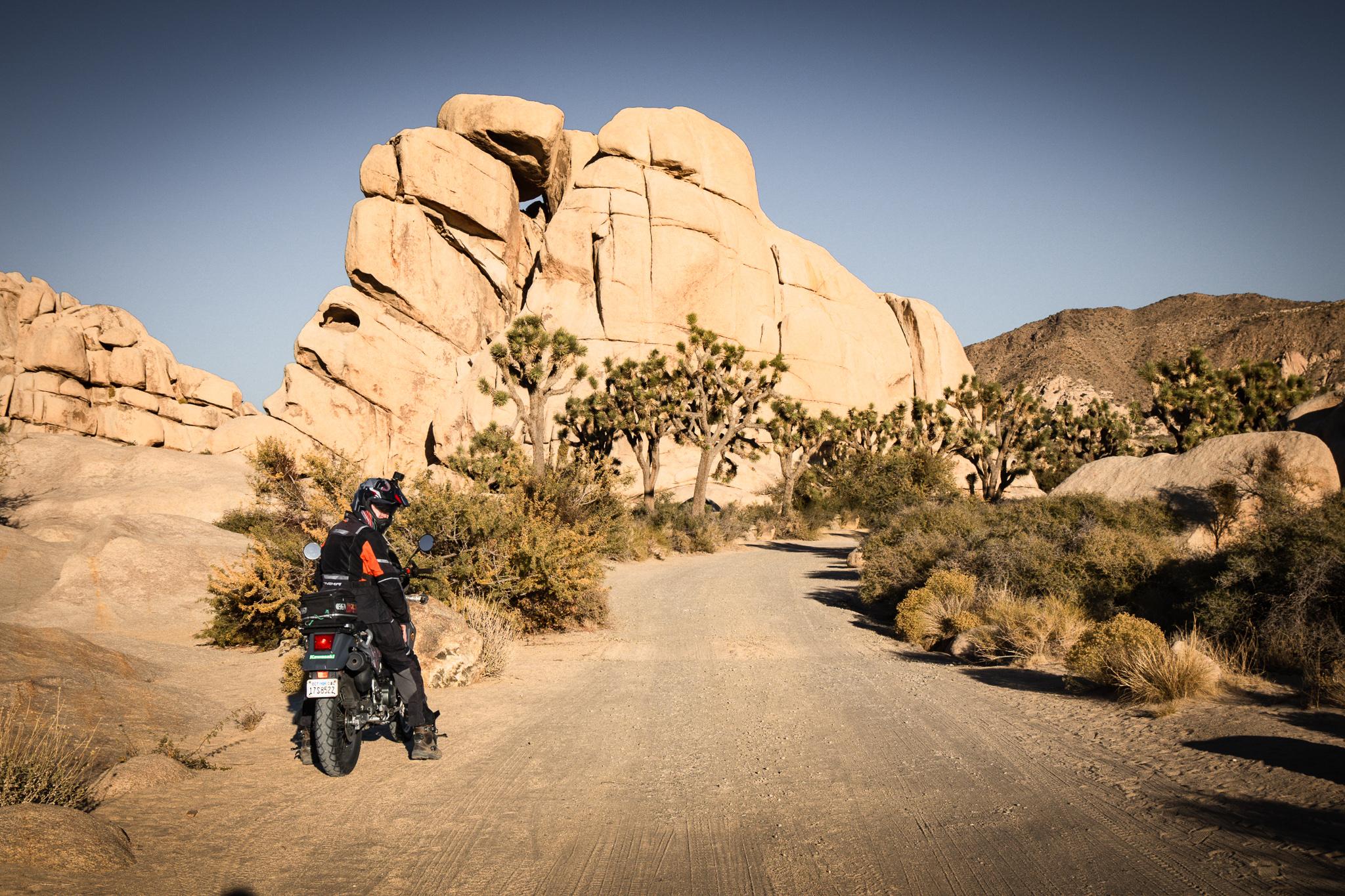
We spent a few days in Joshua Tree National Park. We spent part of that time leisurely hiking the surrounding trails, of which there are truly a great many. Climbing enthusiasts, however, will have even more fun, because Joshua Tree is a true mecca for climbers. We spent part of our time on motorcycles, exploring the surrounding area and discovering landscapes completely new to us. However, we won’t be giving a step-by-step guide on how to explore the entire park. You’ll find plenty of those online. Instead, we want to show you a few places that made the biggest impression on us and that have stayed with us the longest. It’s these places that made Joshua Tree more than just another stop on our travel itinerary.
PIONEERTOWN — WE’RE IN THE WILD WEST
“I guess winter came sooner than we expected,” I thought as I stepped out of the tent, shivering. We hadn’t slept very well that night. Despite our warm sleeping bags and good sleeping pads – which, in theory, should have kept us comfortable – we were clearly cold. Over coffee, which warmed us up from the inside – at least for a moment – we decided to drive to Walmart and look for extra sleeping bag liners or blankets. Stores in this chain are usually well-stocked with camping gear, so we hoped we’d find something. We were also running low on water and needed internet to contact our family, so leaving the park was necessary anyway. We set the GPS for Starbucks, where we could count on Wi-Fi, and headed toward town. The sun had already risen from behind the gentle hills. Enveloping us in its warm embrace, it made us quickly forget the chill and the sleepless night. Once again, we began to enjoy the road, the morning, and the landscapes around us.
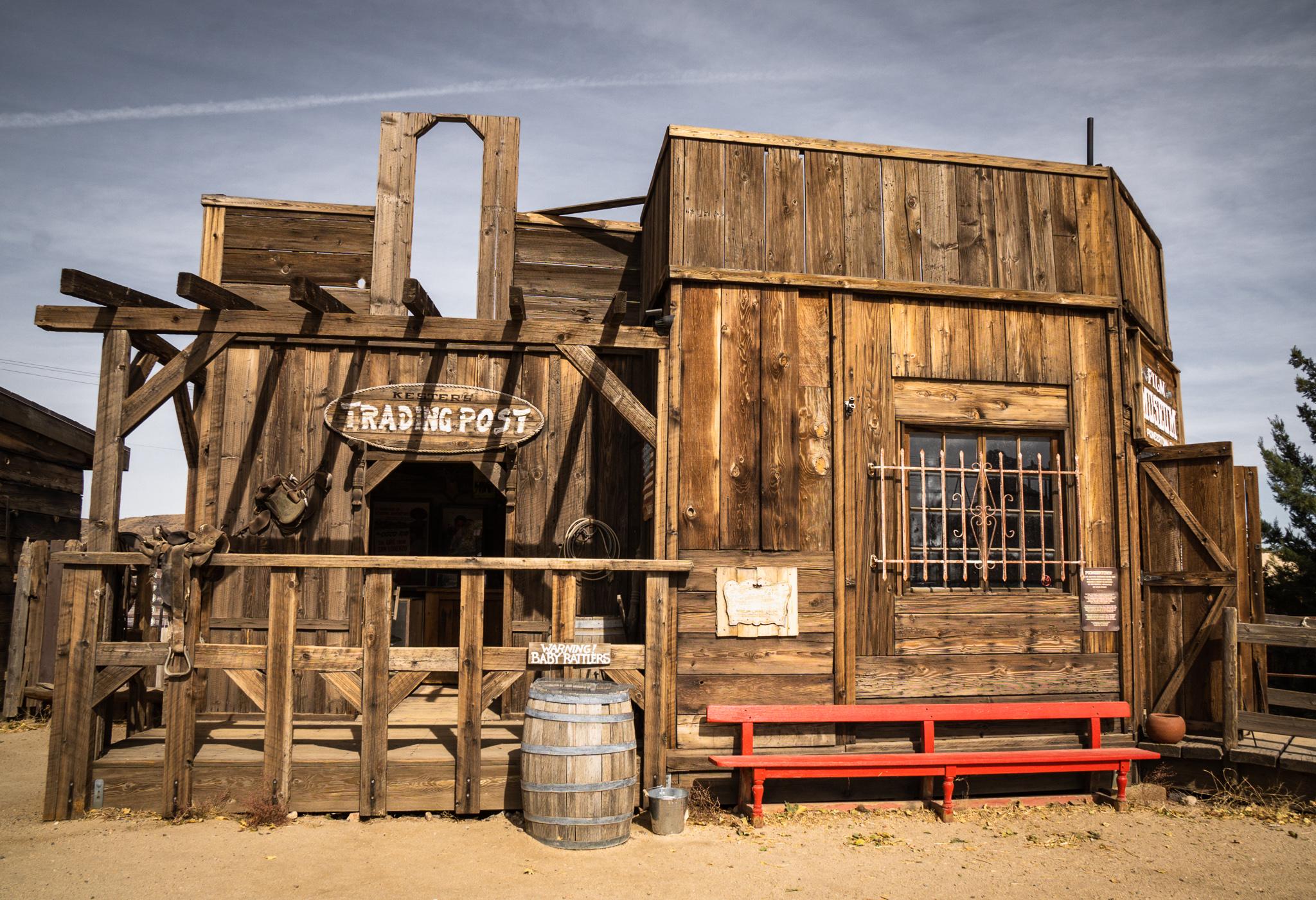
A moment later, we were already in the city, which was just coming to life. Morning traffic had started on the roads – people were driving to work, and children were waiting for the yellow school buses. When we spotted the green Starbucks logo in the distance, we knew exactly where to turn. Over coffee, while using the internet, we called our families, and no sooner had we hung up than a loud “Good morning!” rang out from behind us, spoken with the accent characteristic of Poles living in the U.S. This shouldn’t have come as a surprise, since there’s a large Polish community in the States, but we were still pleasantly surprised. The woman, who had lived in the area for over a dozen years, told us about it, suggesting a few things worth seeing outside the park. So, after shopping at Walmart – where we finally stocked up on some budget-friendly blankets – we headed toward a small town straight out of a Western movie: Pioneerstown.
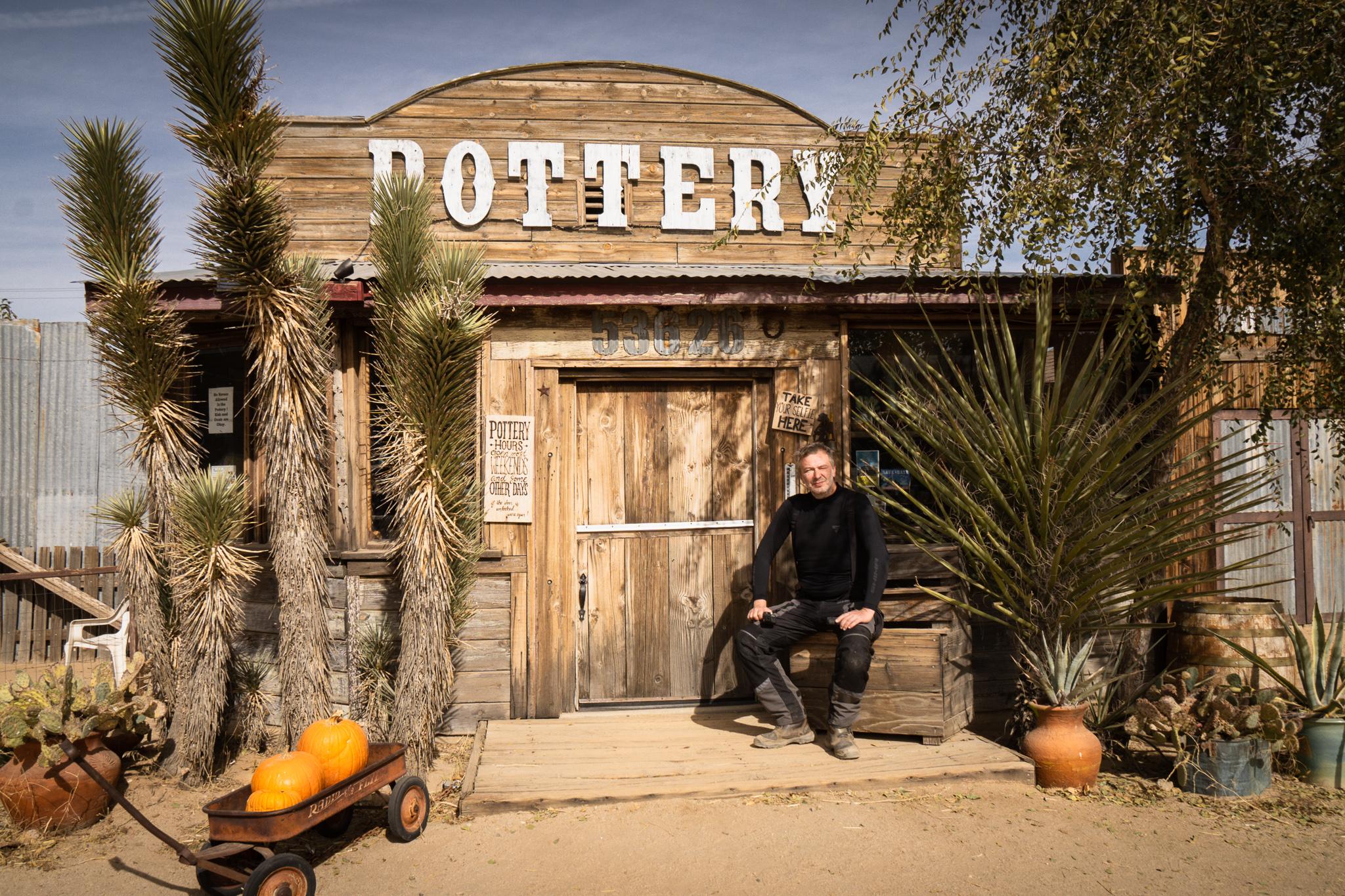
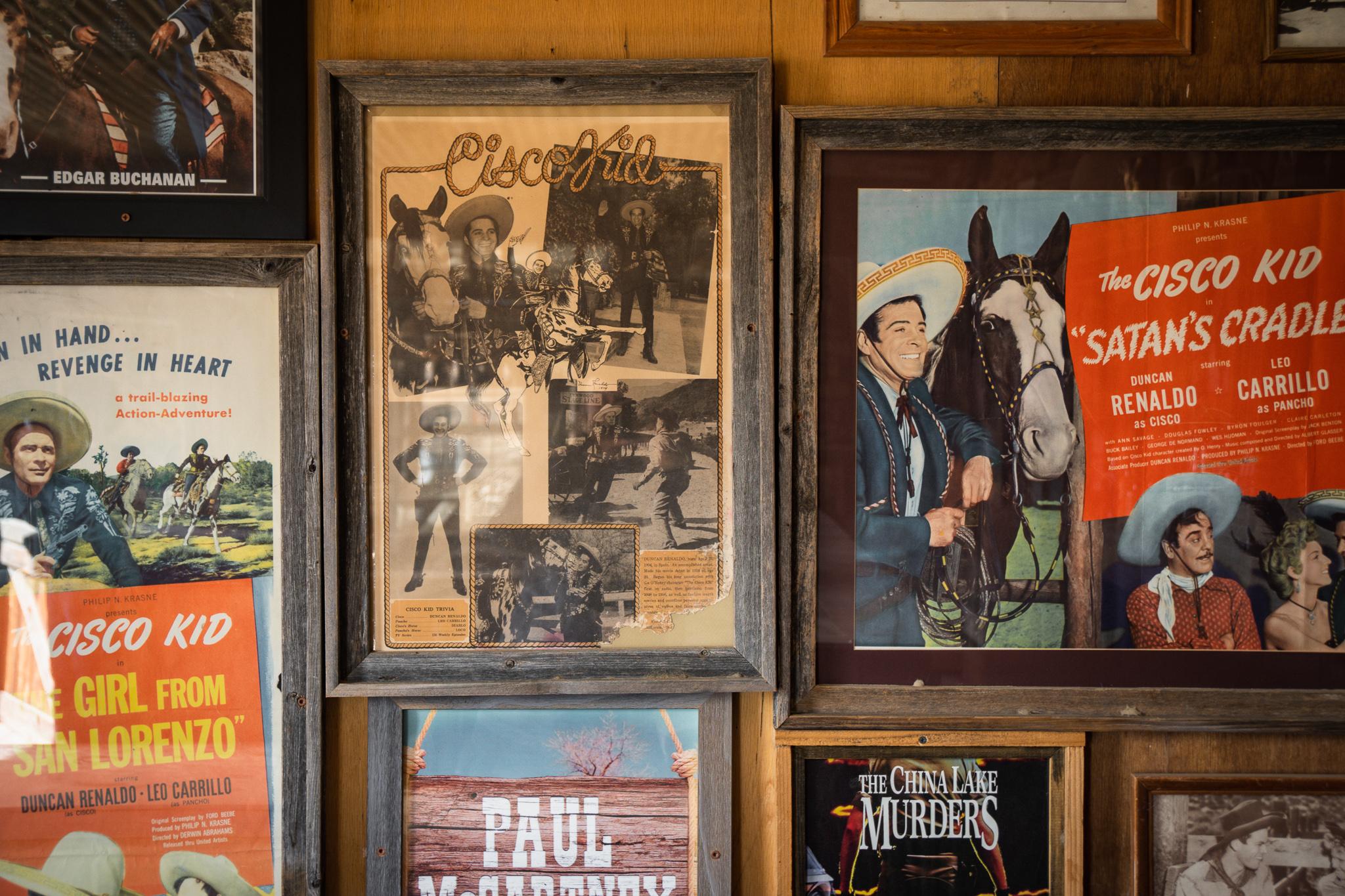
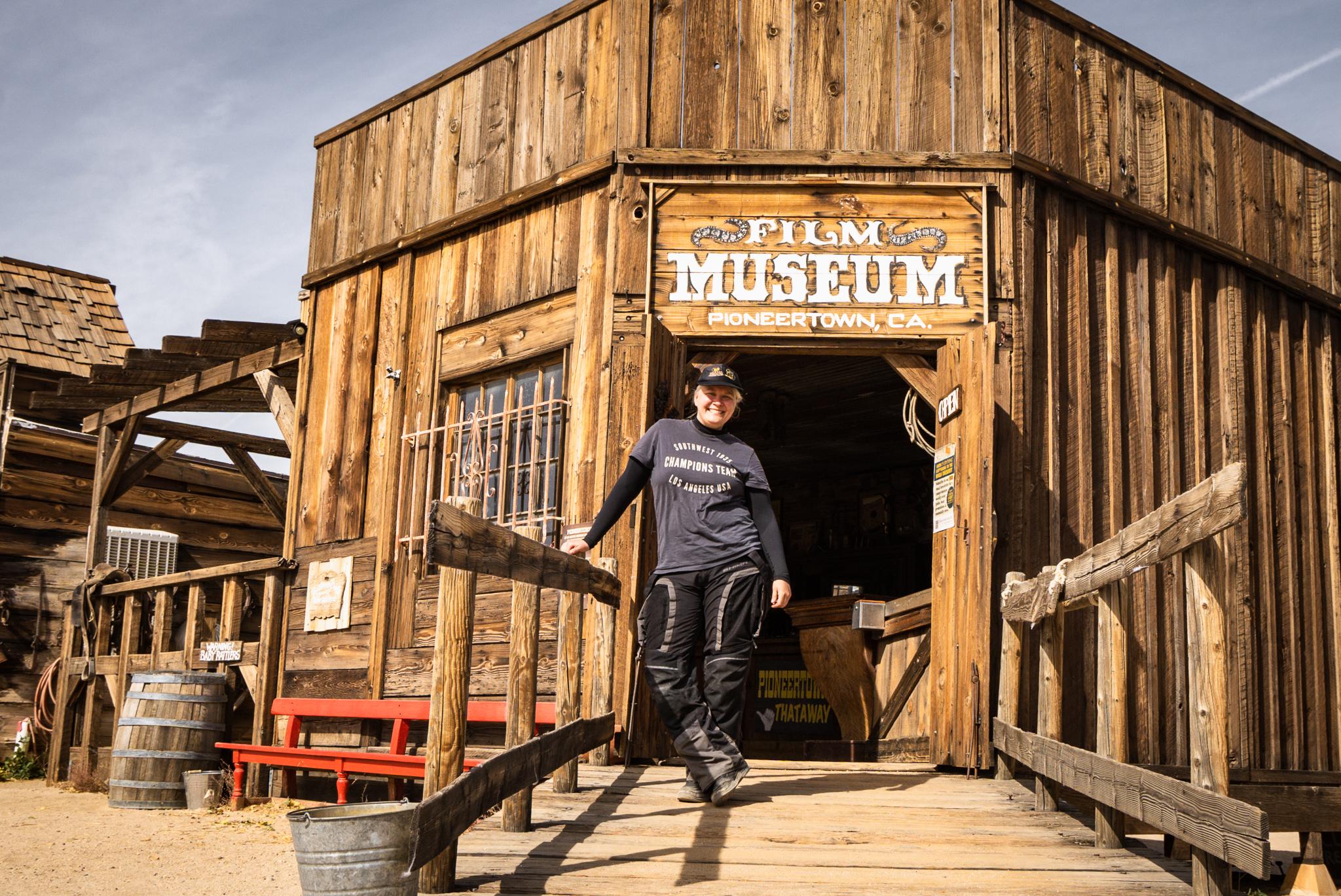
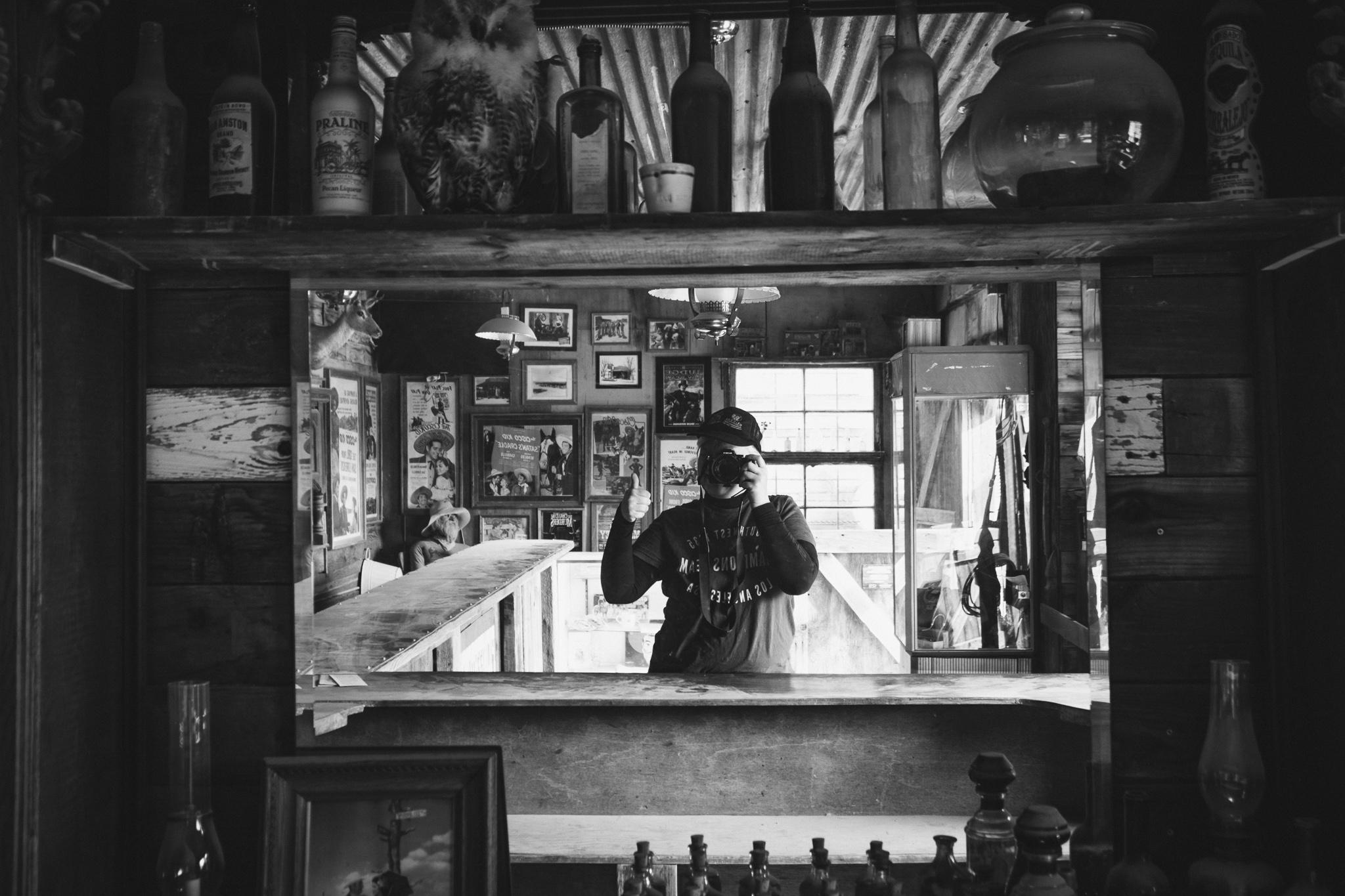
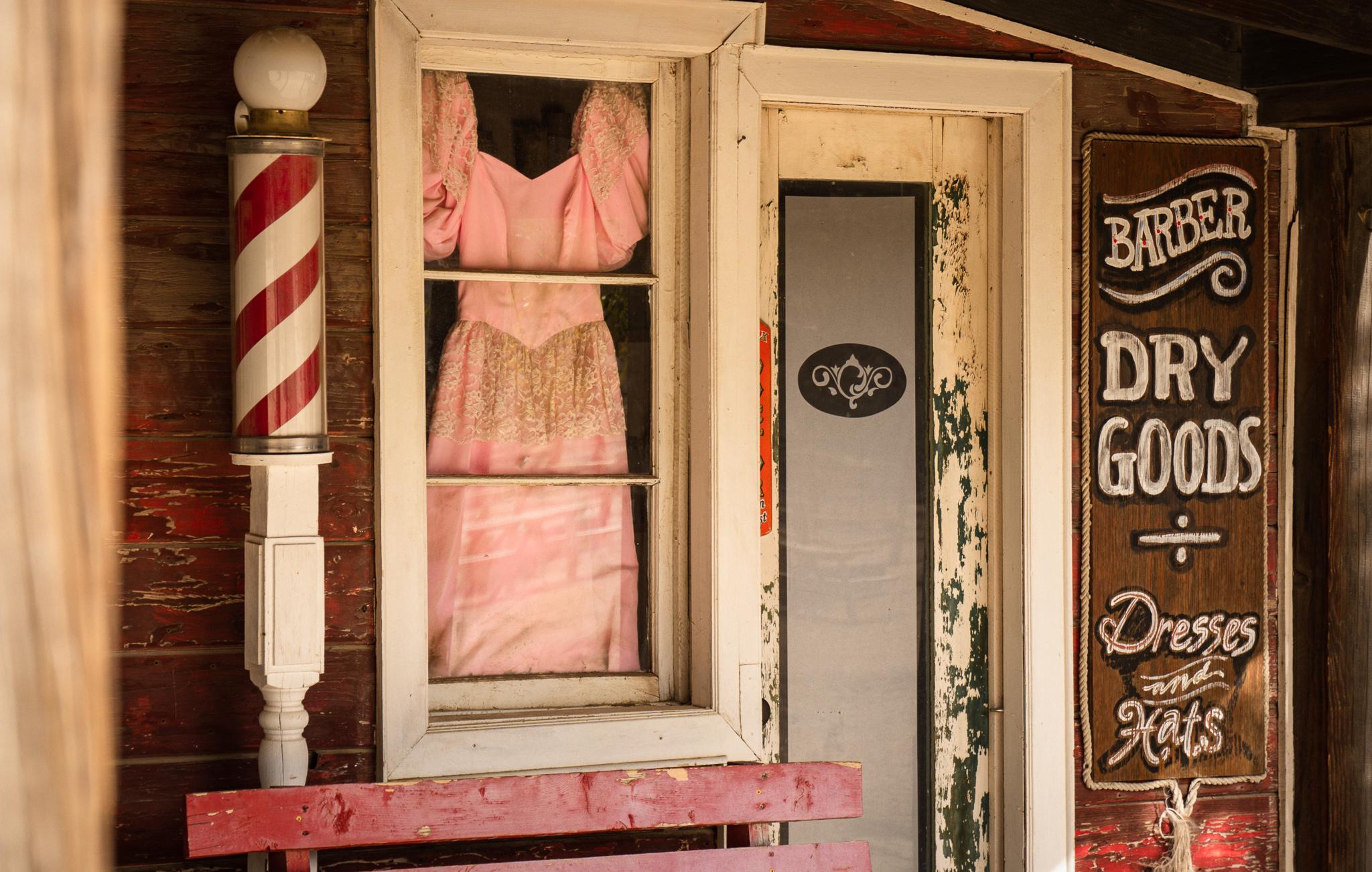
Pioneertown was founded in 1947, a year after its main visionary, Dick Curtis, shared his dream of a “living movie set.” Soon, seventeen investors each put in $500 and formed a company. The company then purchased 32,000 acres of land, on which Pioneertown was built. Dick Curtis’s goal was simple yet unique. He wanted to create a place where he could work and have fun with friends, family, and colleagues. This 1880s-themed town was intended to serve both as a film set and as a getaway for people from nearby Los Angeles. At first, everything was going well; a fully functioning town was built, attracting more and more people, but as its fame grew, big-time entrepreneurs and their money followed. Social goals took a back seat, and just as Dick Curtis thought his dream was fading, Philip N. Krasne, the producer of *The Cisco Kid*, happened to visit the town by chance. He liked Pioneerstown so much that he leased it for 25 years, which sparked renewed interest in the town itself and led to its revival.
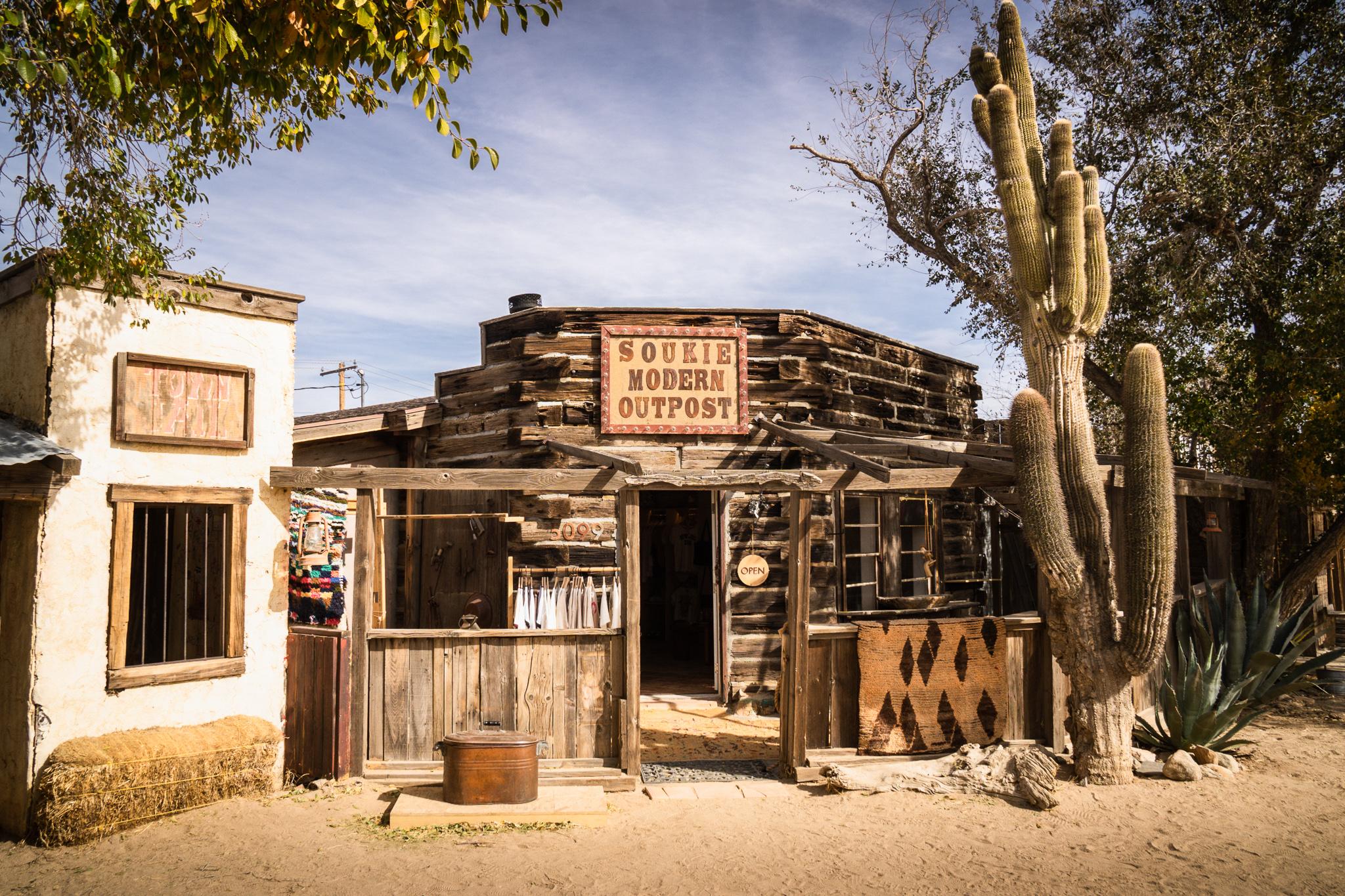
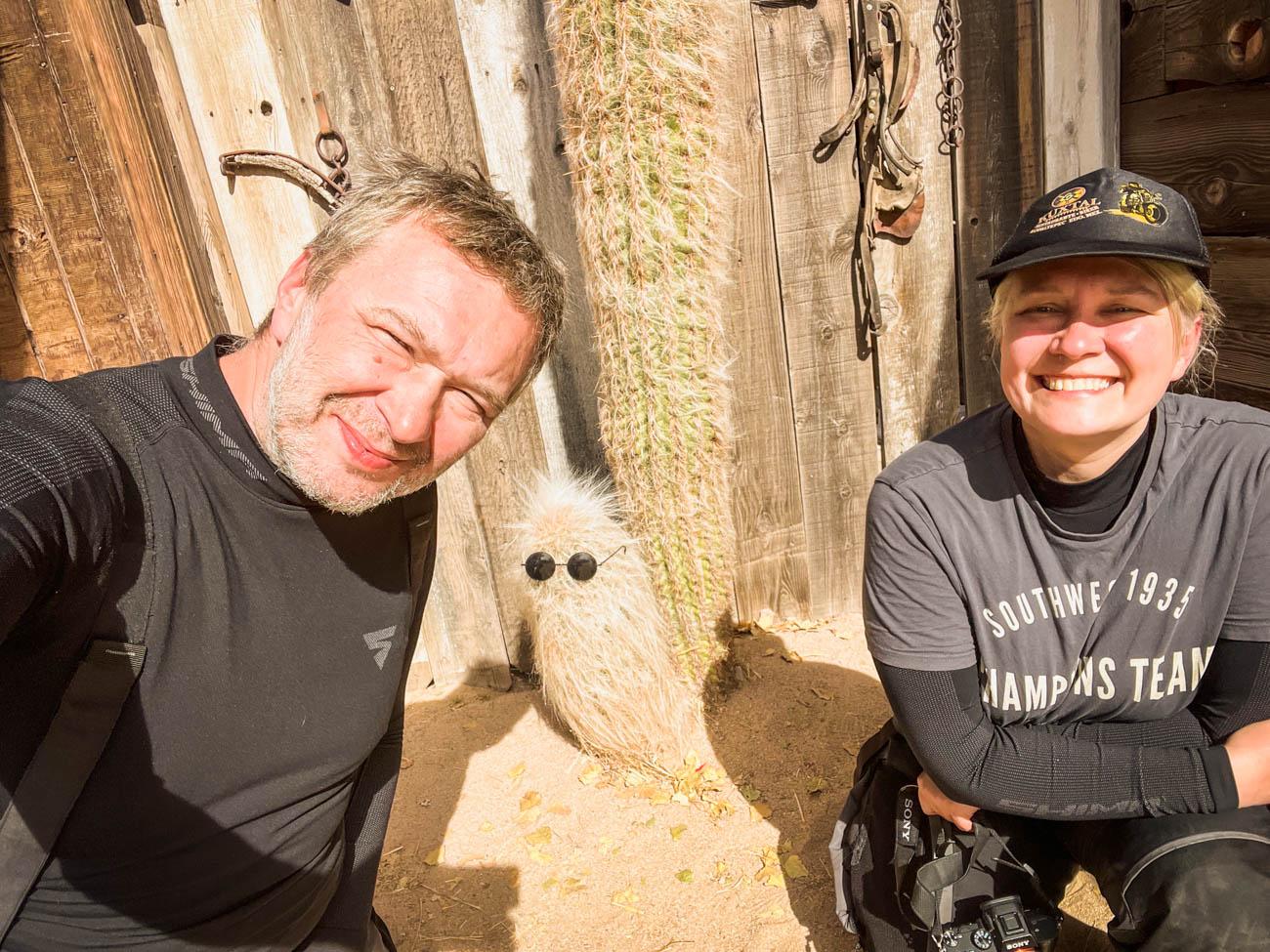
We learned all of this from the museum located in the town. Pioneerstown is really tiny – it consists of just one street lined with buildings in a Western style. But that one street was enough for us to feel the true spirit of the Wild West. We took a short walk, but the scorching heat started to get to us, so we got back on our motorcycles and sped off with relief along the black ribbons of beautiful American roads.
EXPLORING JOSHUA TREE NATIONAL PARK – THE HIDDEN VALLEY NATURE TRAIL
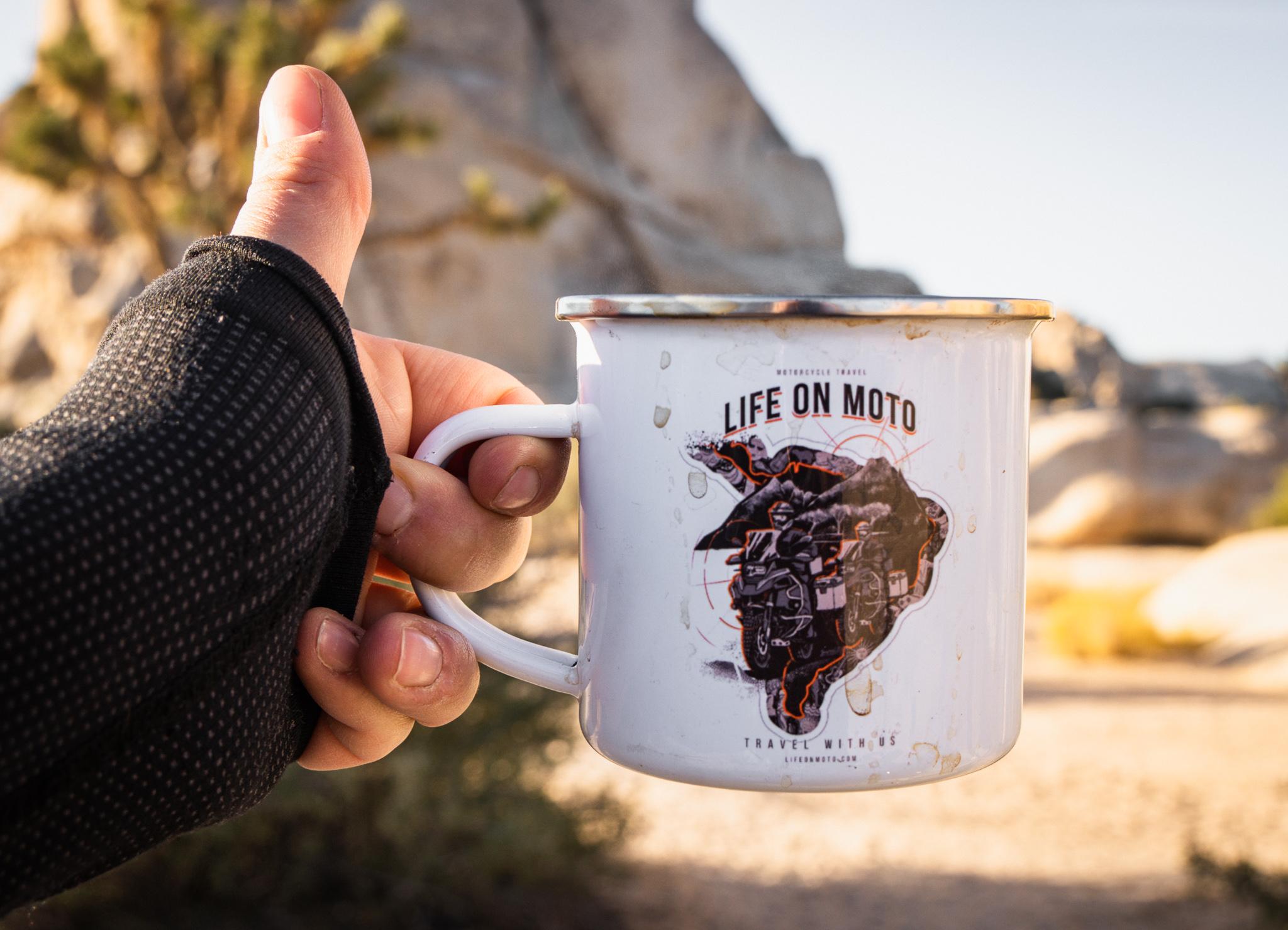
From early in the morning that day, our campsite was bustling with activity. You could hear conversations and laughter from a distance – all thanks to the coffee that the park rangers had brought for all the campers. This nice little event was called “Climber Coffee,” and although it was mainly aimed at climbers, everyone was invited, so we made sure to bring our mugs, which we filled with a cup of delicious coffee with milk. While we were there, we met one of the rangers and asked him about the nearby hiking trails. He recommended a loop through Hidden Valley – which, incidentally, is where the spot we were staying got its name. We thought it was a good idea, and a day off from motorcycling would do us good. We decided to wait until late afternoon for the heat to ease up a bit, since it was already unbearably hot around 11 a.m. to noon. We set off around 4 p.m.
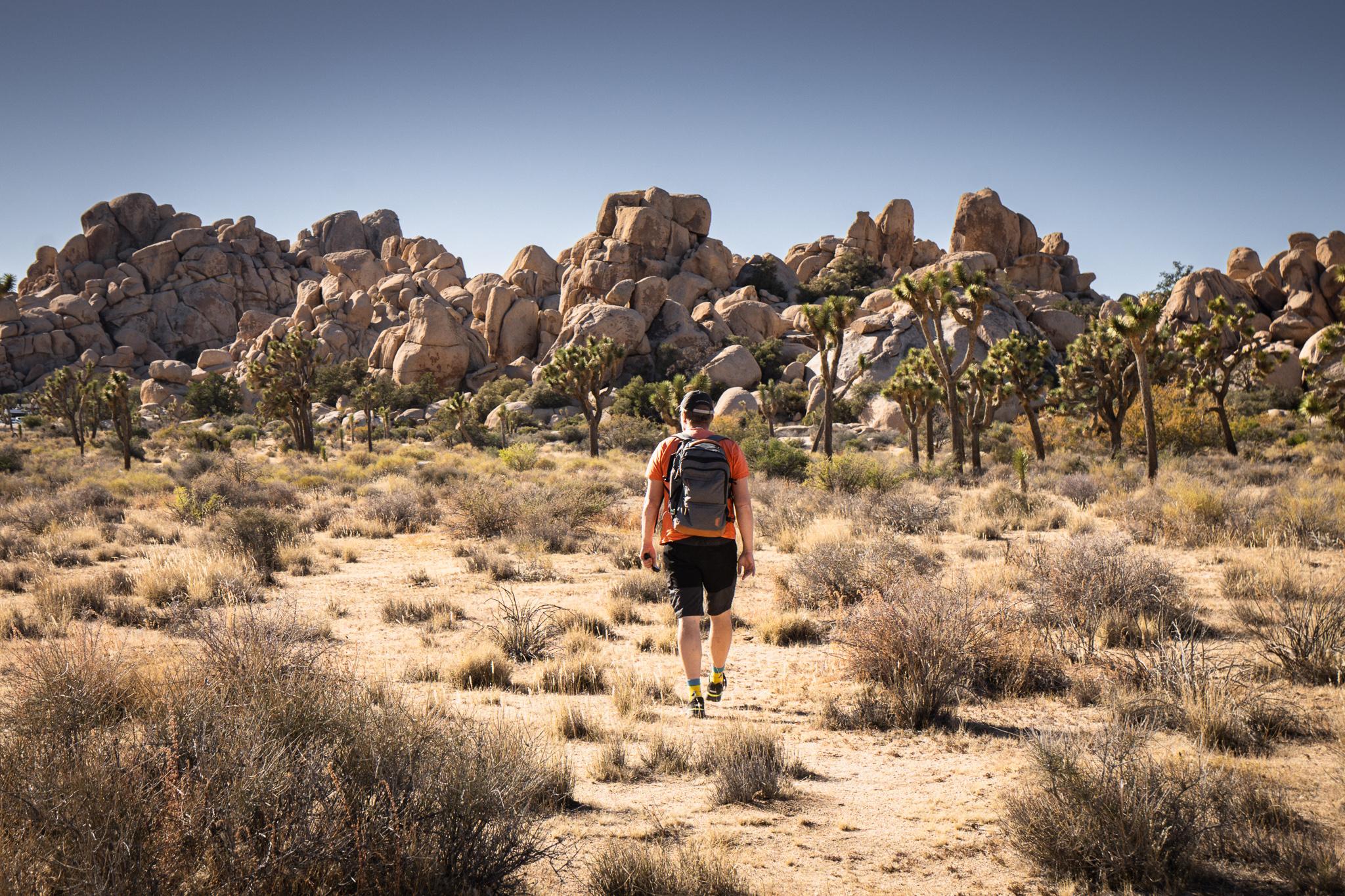
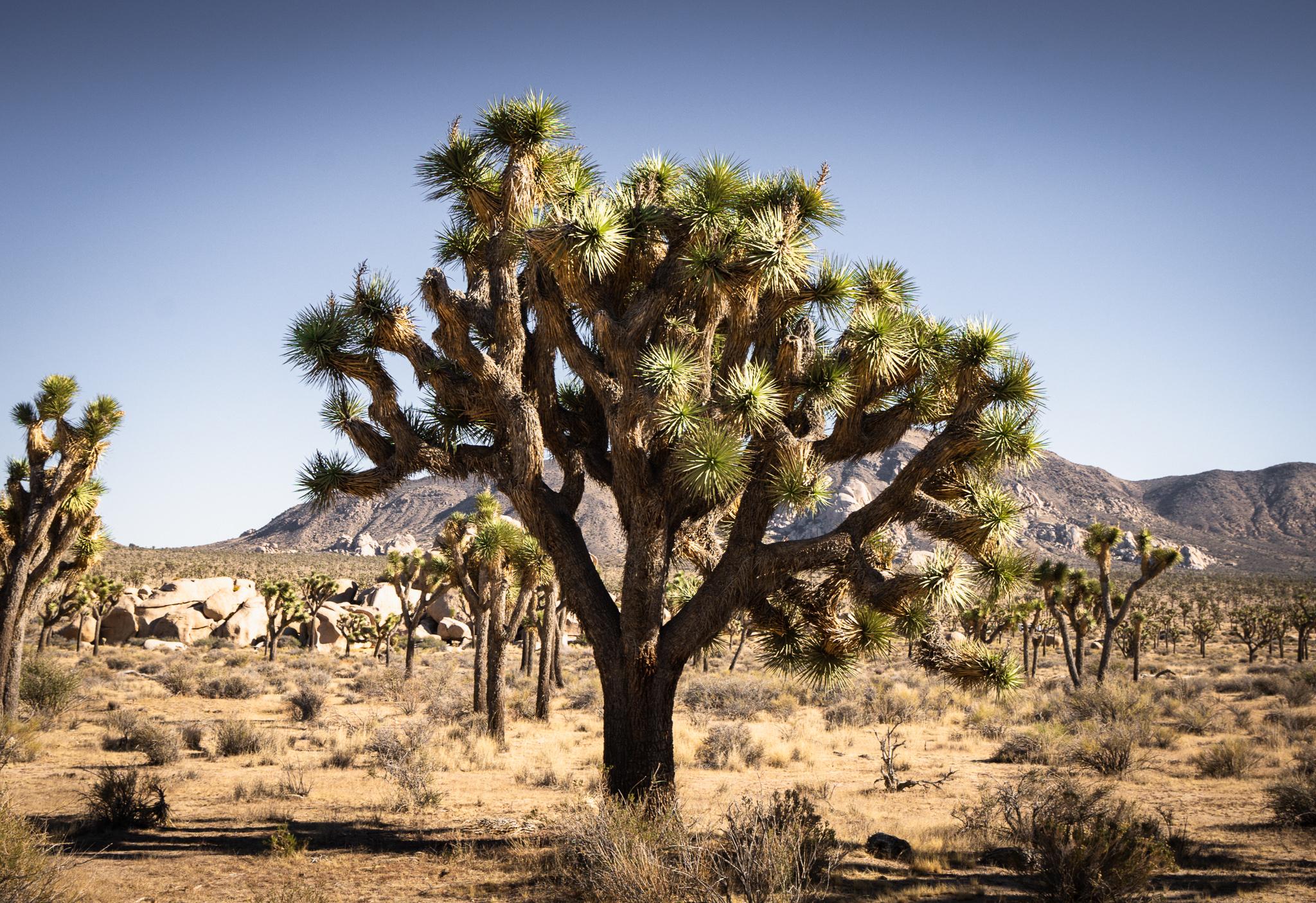
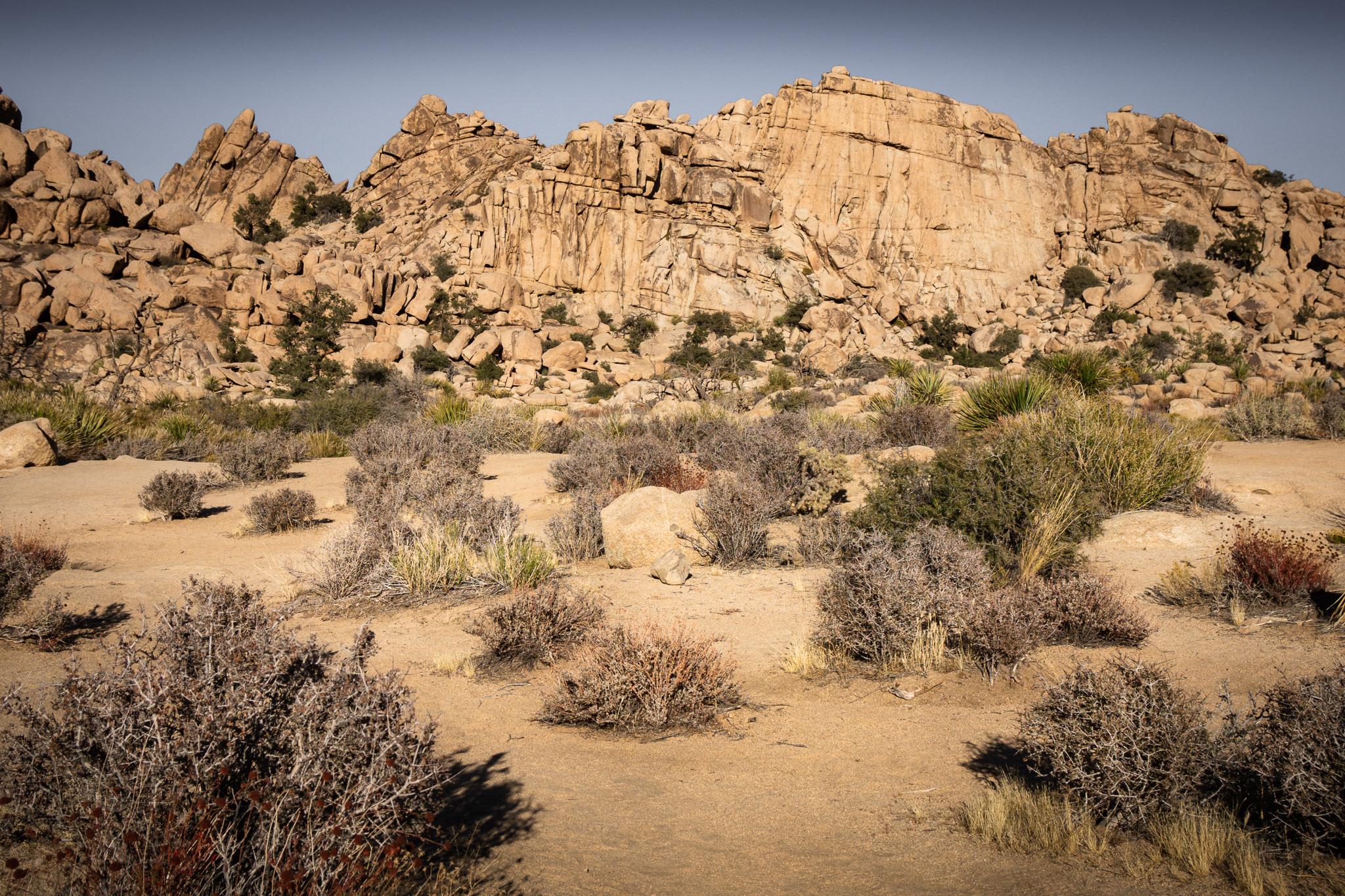
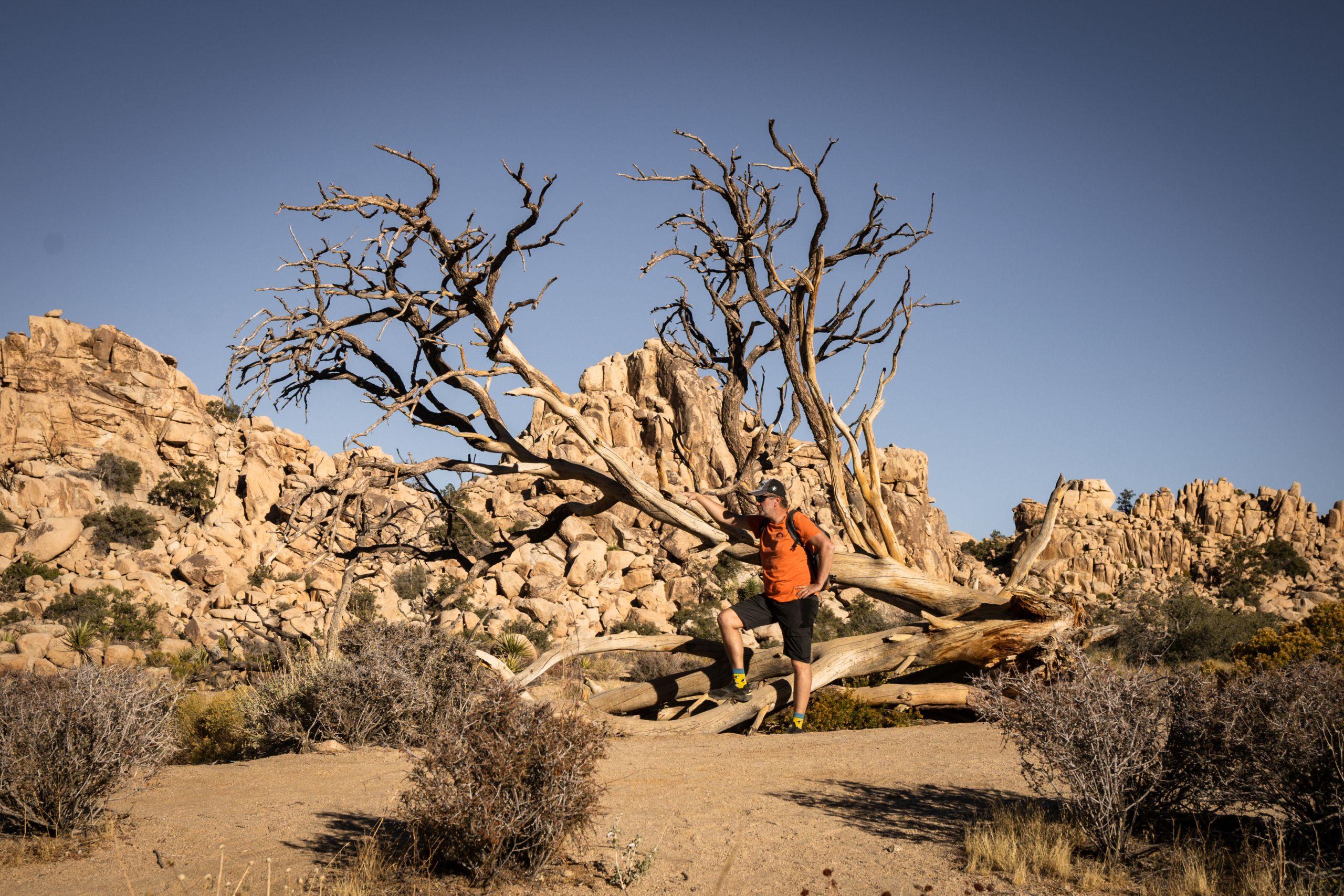
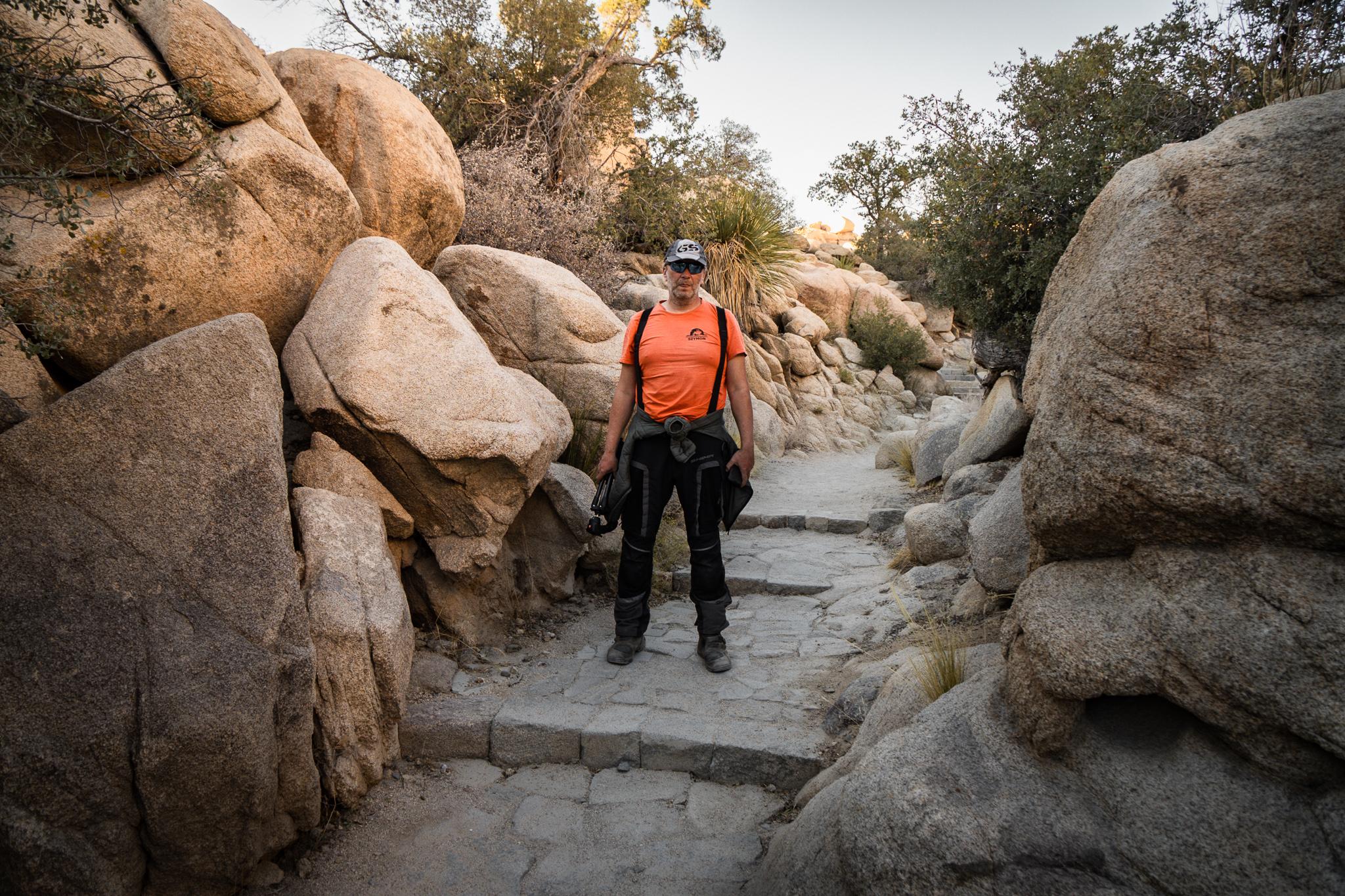
Although the trail is well marked, right at the start we strayed off course somewhere and spent a while wandering through the desert among Joshua trees and scattered boulders before we managed to find the entrance to the Hidden Valley Nature Trail. Eventually, though, we made it. We walked along a rocky path that gradually ascended between tall rocks until a small valley covered with low vegetation – Hidden Valley – opened up before us. Our trail led further in, then wound its way along monumental rock formations.
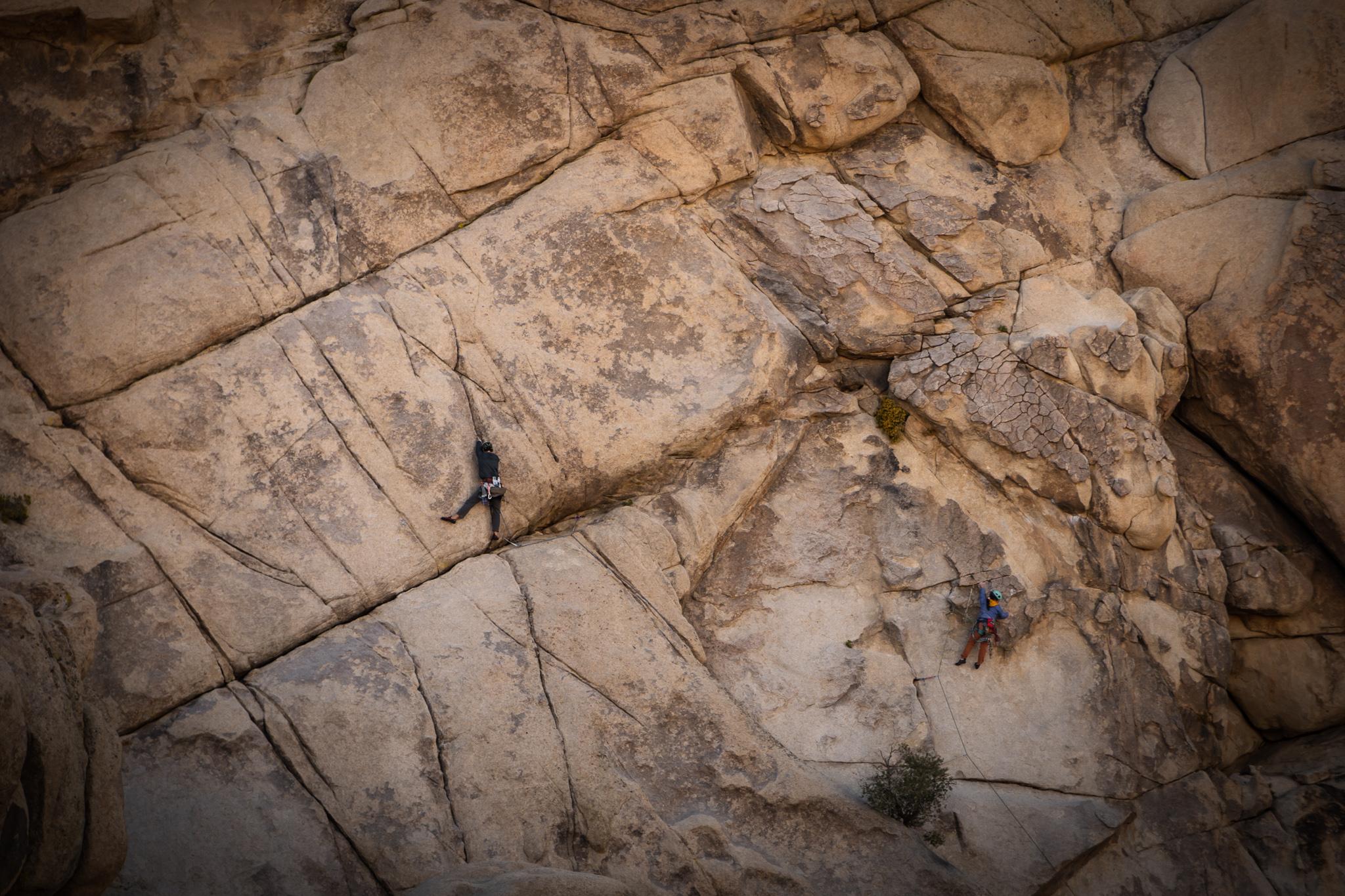
Rock faces of varying steepness attracted climbers who were tackling one route after another. It is said that this is where America’s love for rock climbing was born, and on that day, too, there were a few daredevils attempting to conquer yet more peaks. For a while, with undisguised admiration, we watched them struggle with their own weaknesses, and we almost felt their relief and joy as they conquered yet another rock face. Later, we moved on, following a trail that wound through the extraordinary vegetation of the Mojave Desert.
EXPLORING JOSHUA TREE NATIONAL PARK – THE TRAIL TO BAKER DAM
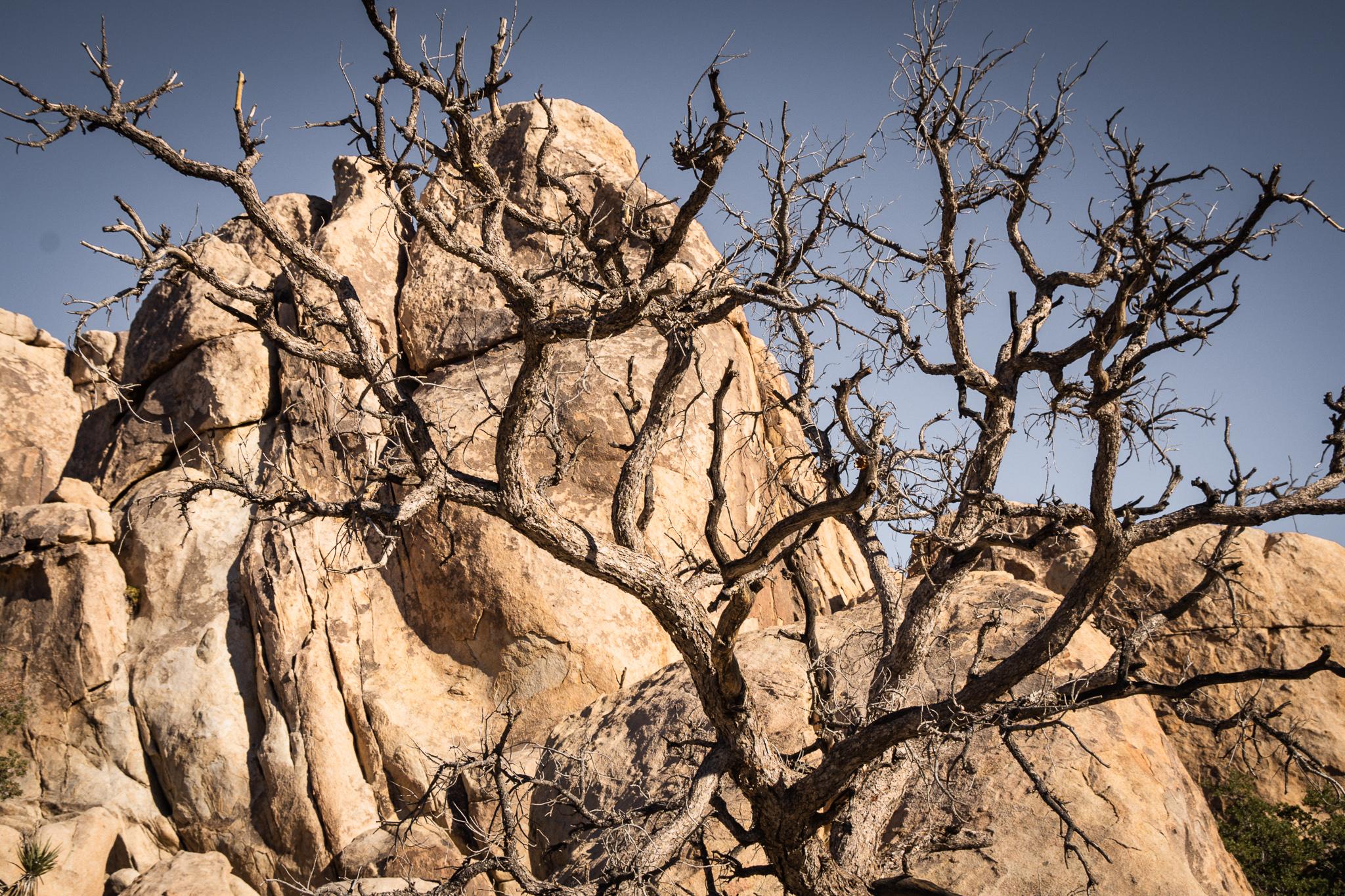
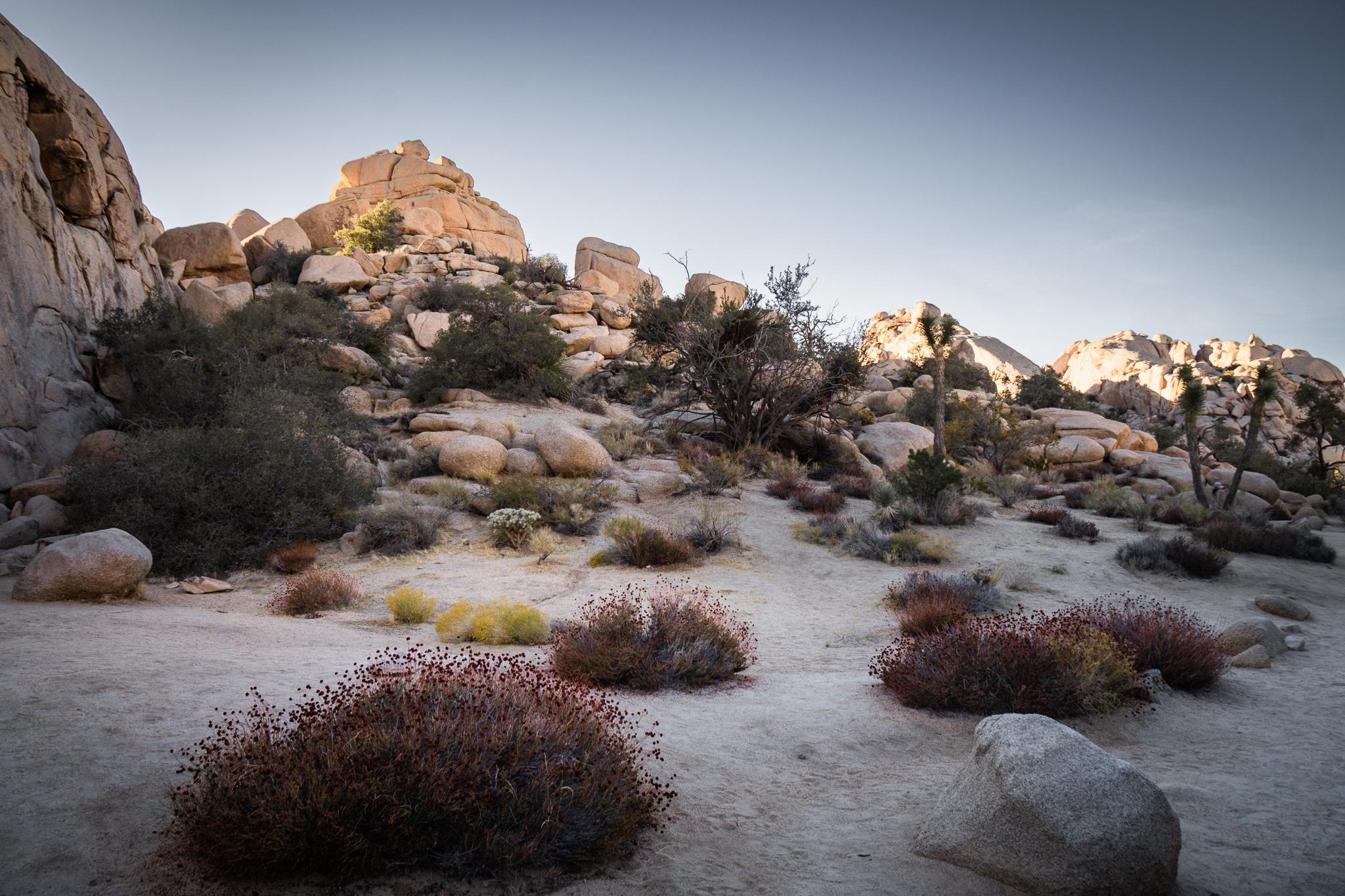
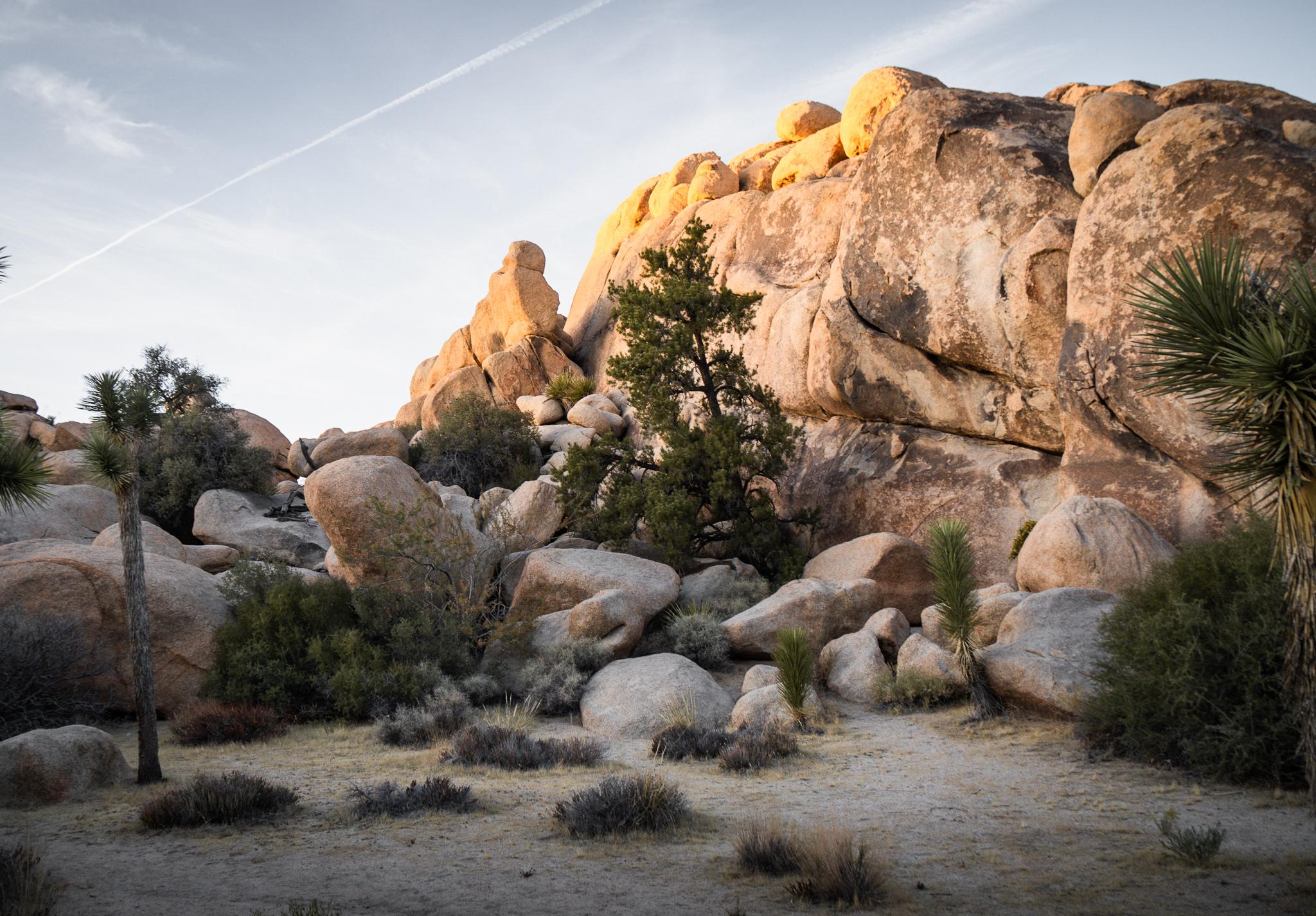
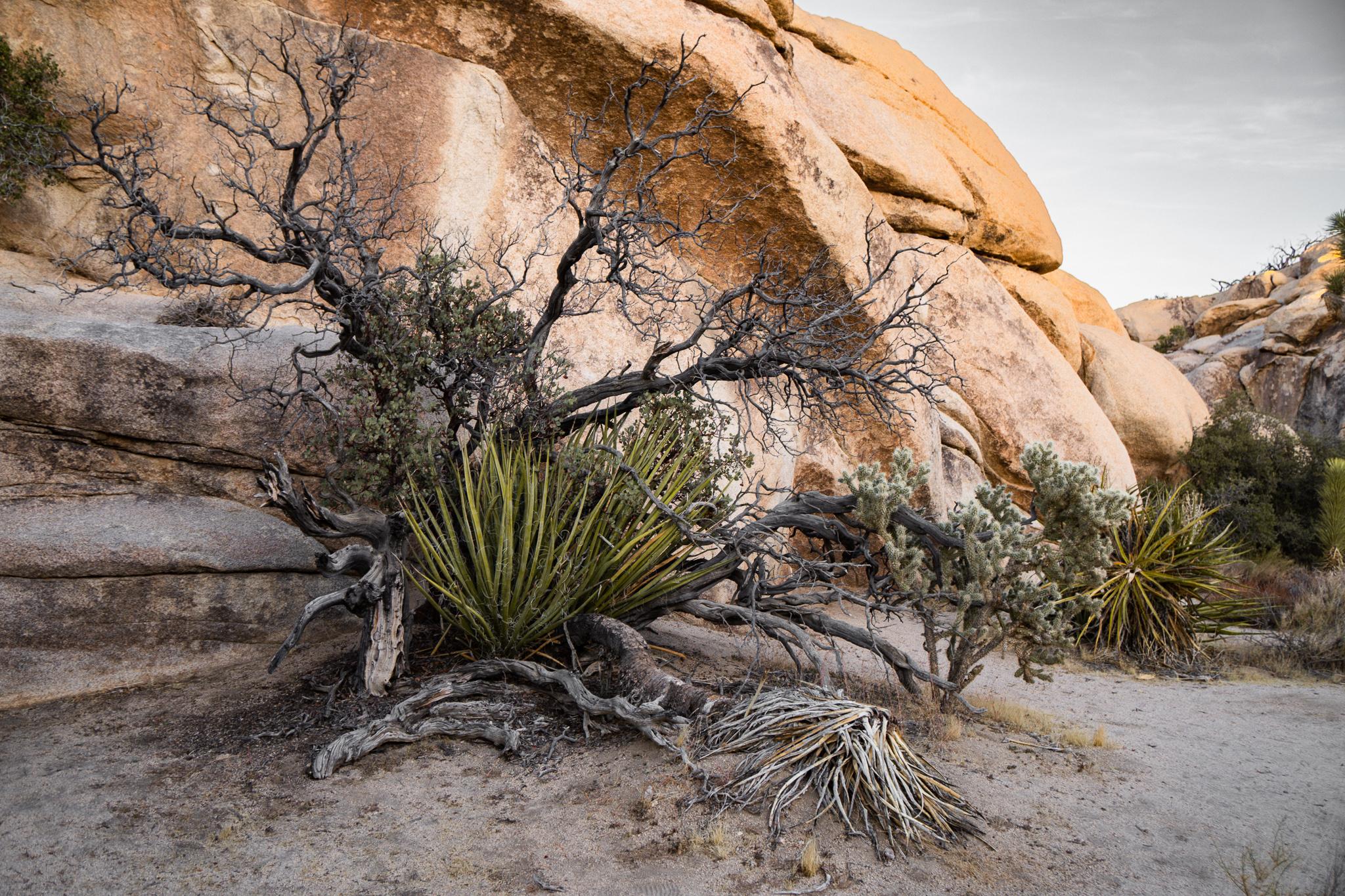
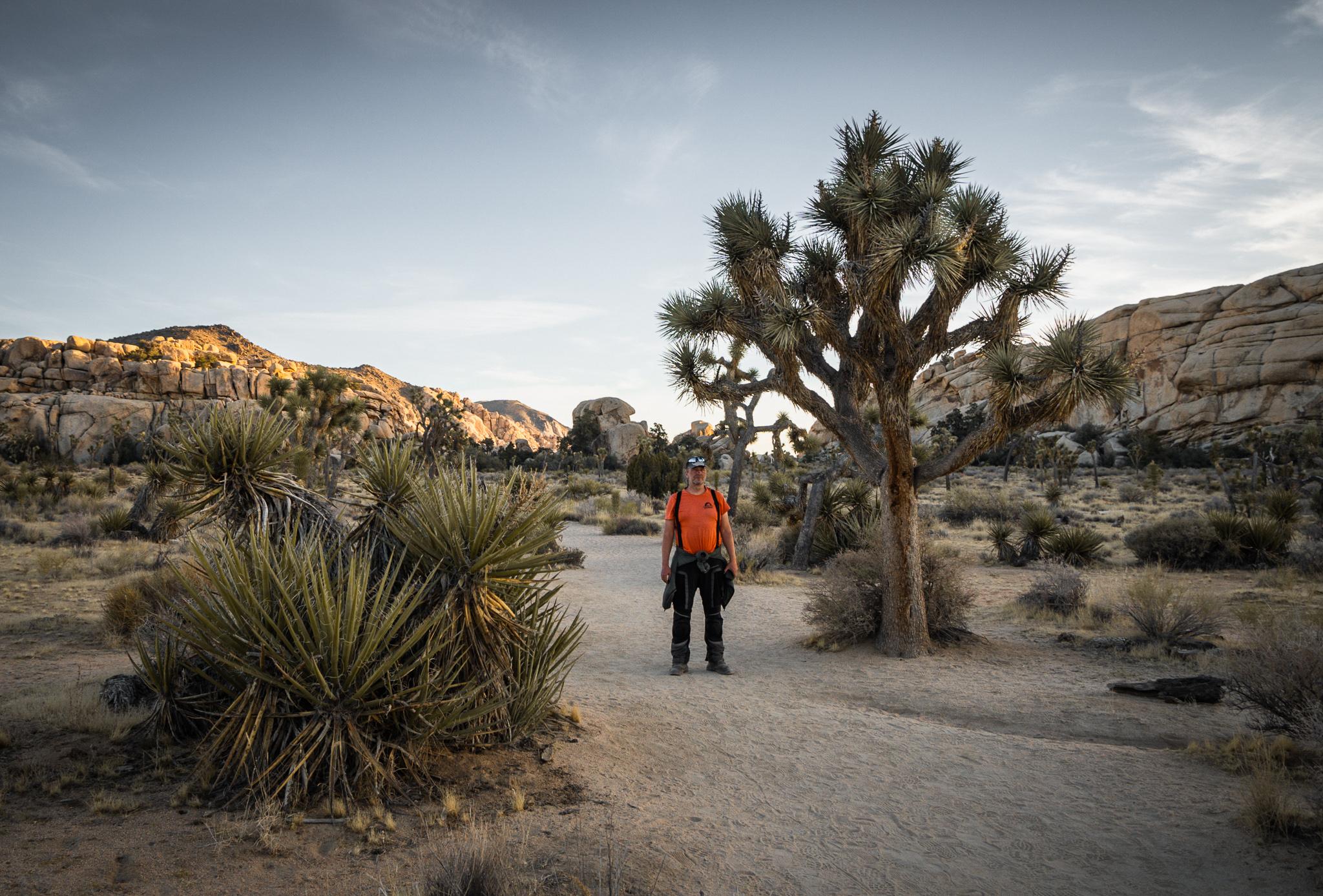
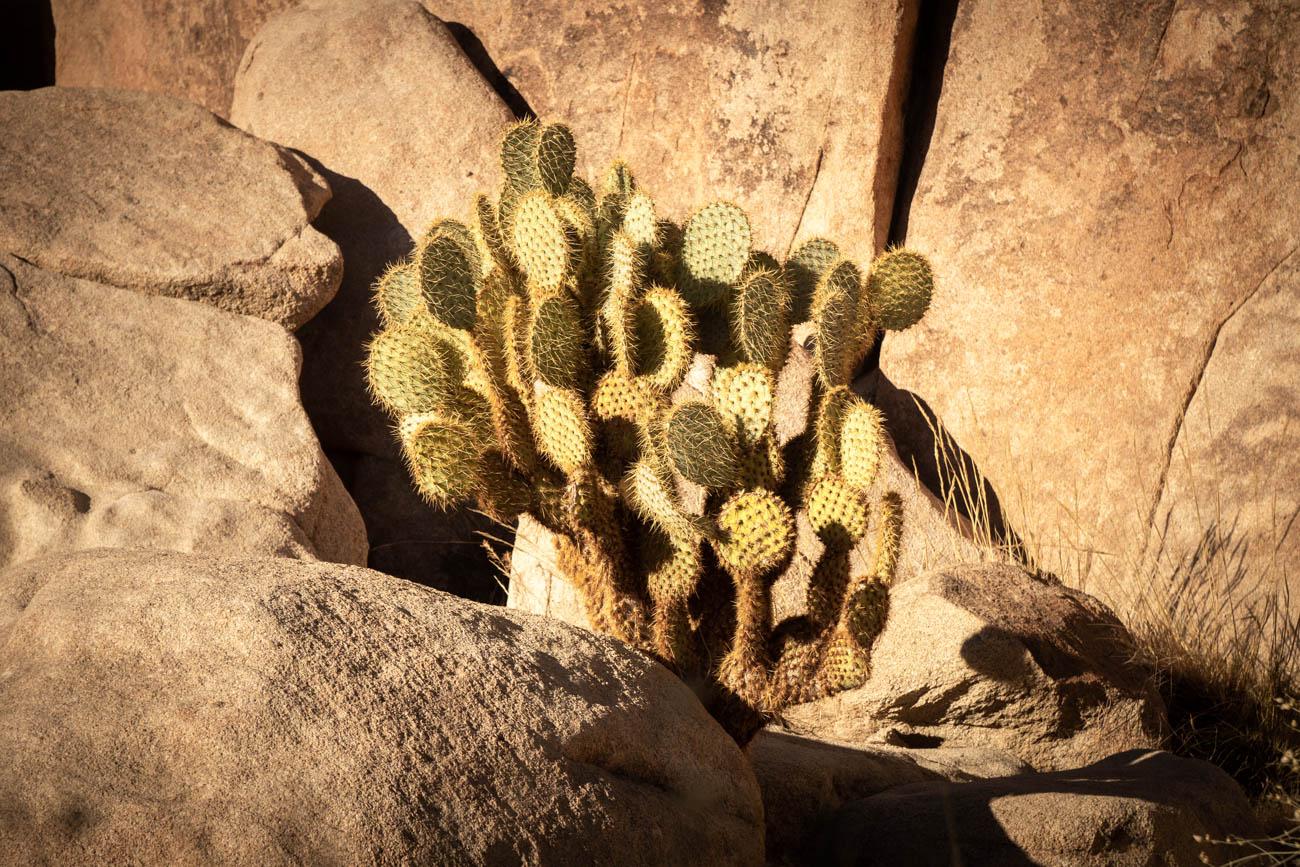
– Look! It looks like we’re in a rock garden! – the other day, we were walking along the path between the rocks toward Baker Dam, and every now and then we couldn’t help but feel that someone had deliberately planted all these plants around here, creating beautiful arrangements. The rocks, shrubs, and withered trees served as a backdrop for cacti and delicate desert flowers, which, though modest, were the stars of the show here. We marveled at their delicacy, but also at their strength, because very little can survive – let alone bloom – in such harsh conditions as the desert.
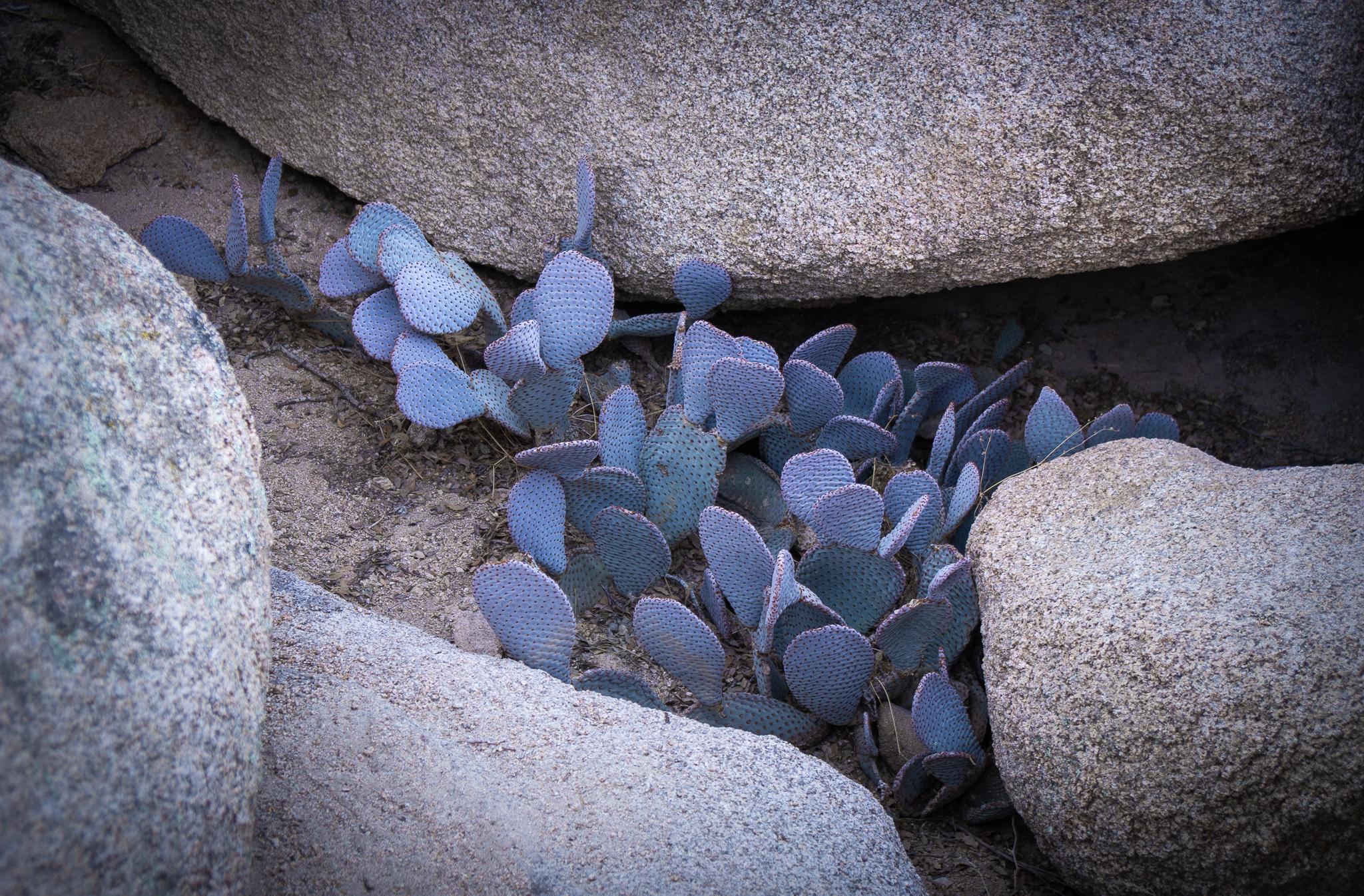
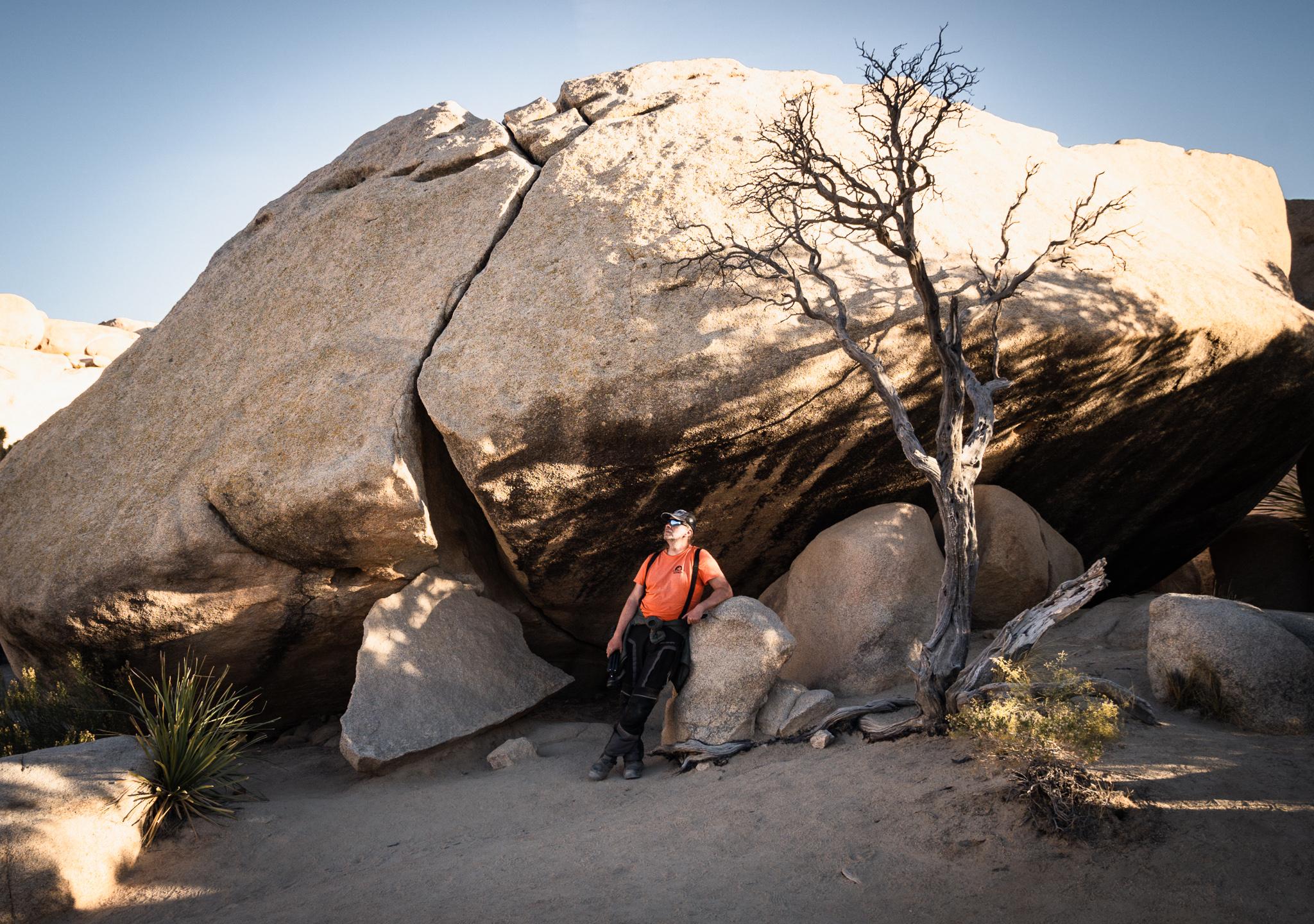
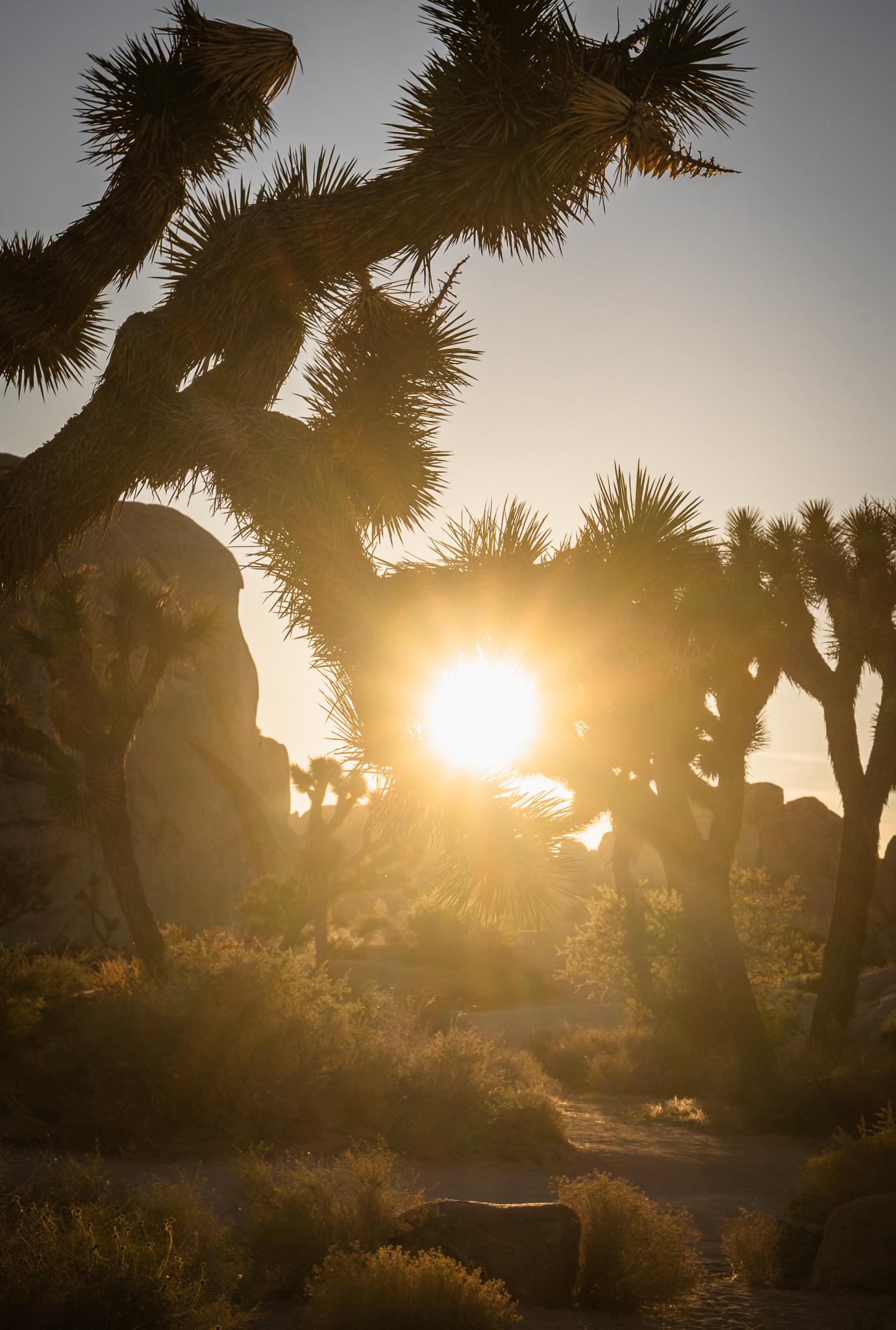
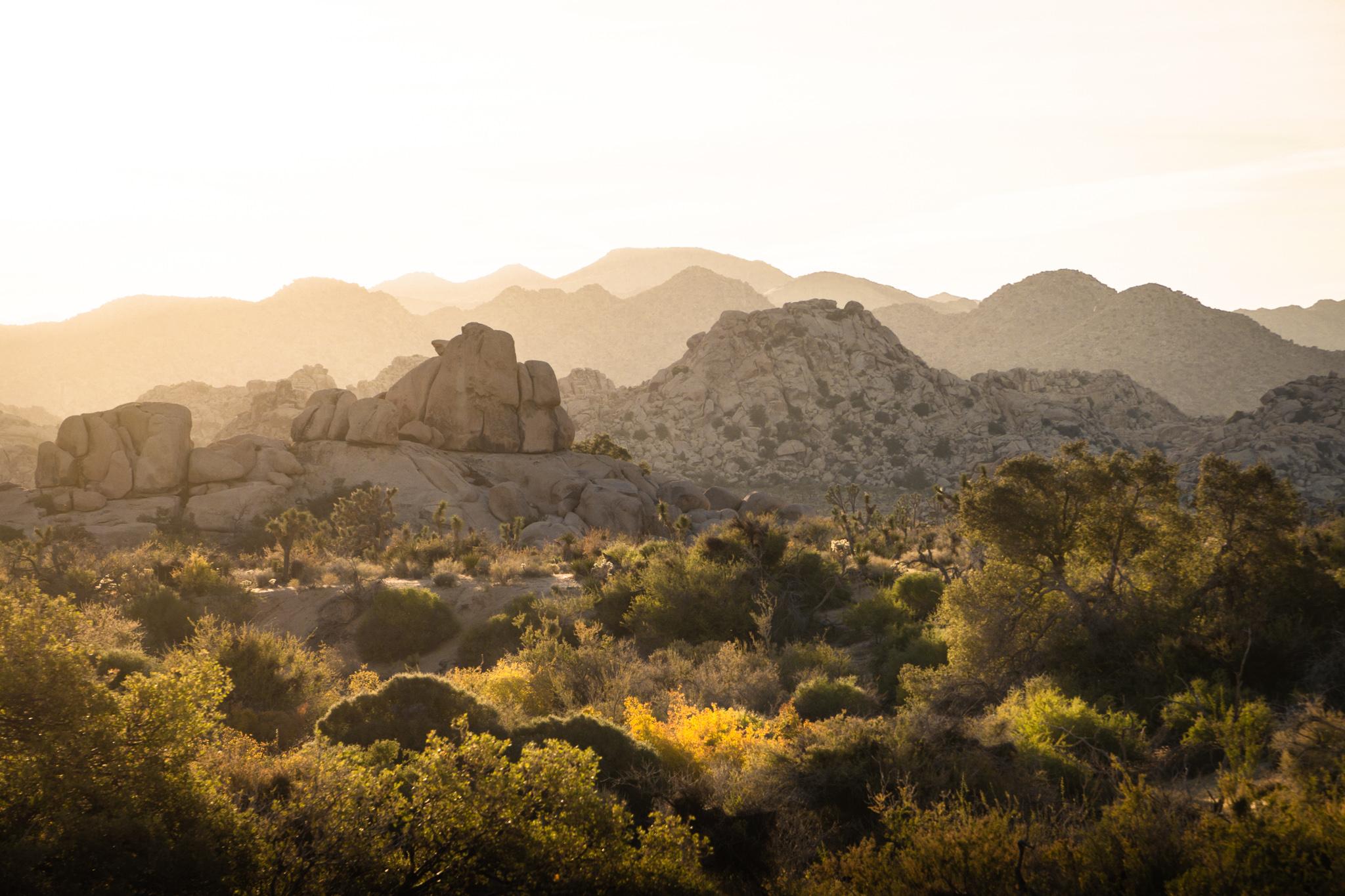
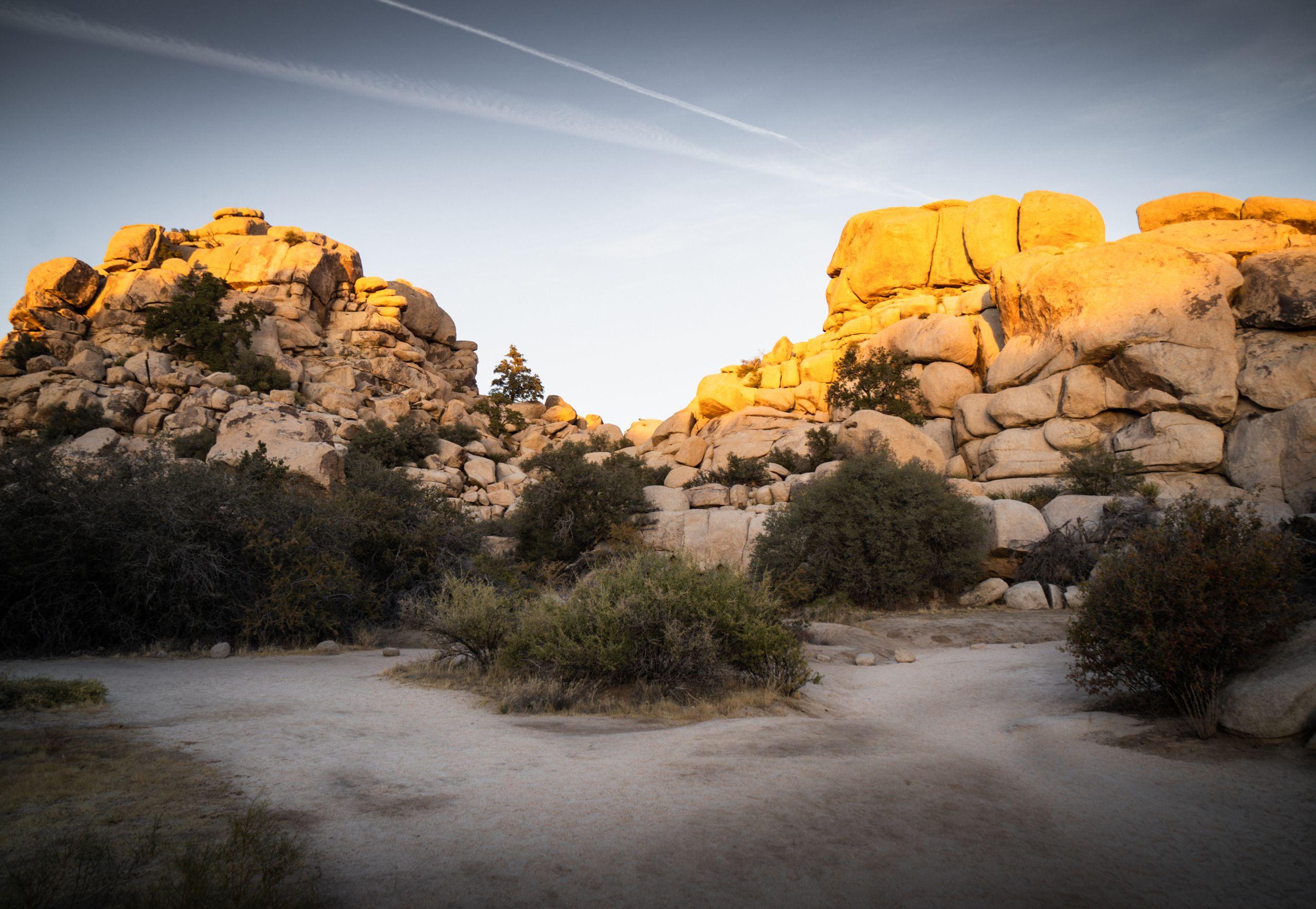
Later, we were amazed once again when we climbed up a small rock and a vast panorama unfolded before our eyes. In fact, we had just reached the main attraction of this trail – Baker Dam – but it was the surrounding landscape that captivated us even more. Hundreds of Joshua trees stretching their branches toward the setting sun, rocks glistening with gold, cacti, yuccas – everything looked so incredible and exotic to us that it was hard to tear ourselves away and keep going. For a moment, we even considered staying here for sunset, but we didn’t want to ride back on our motorcycles after dark.
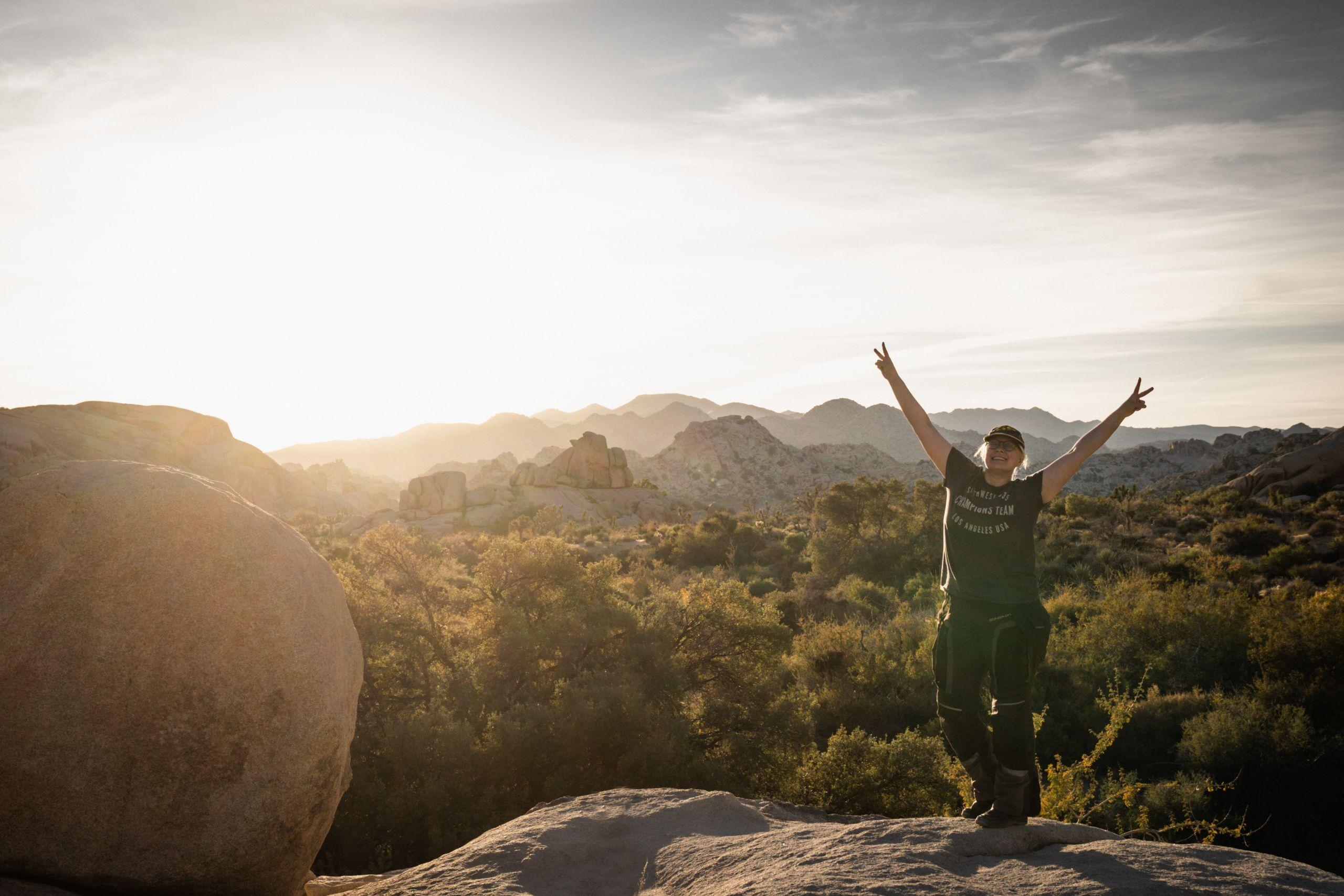
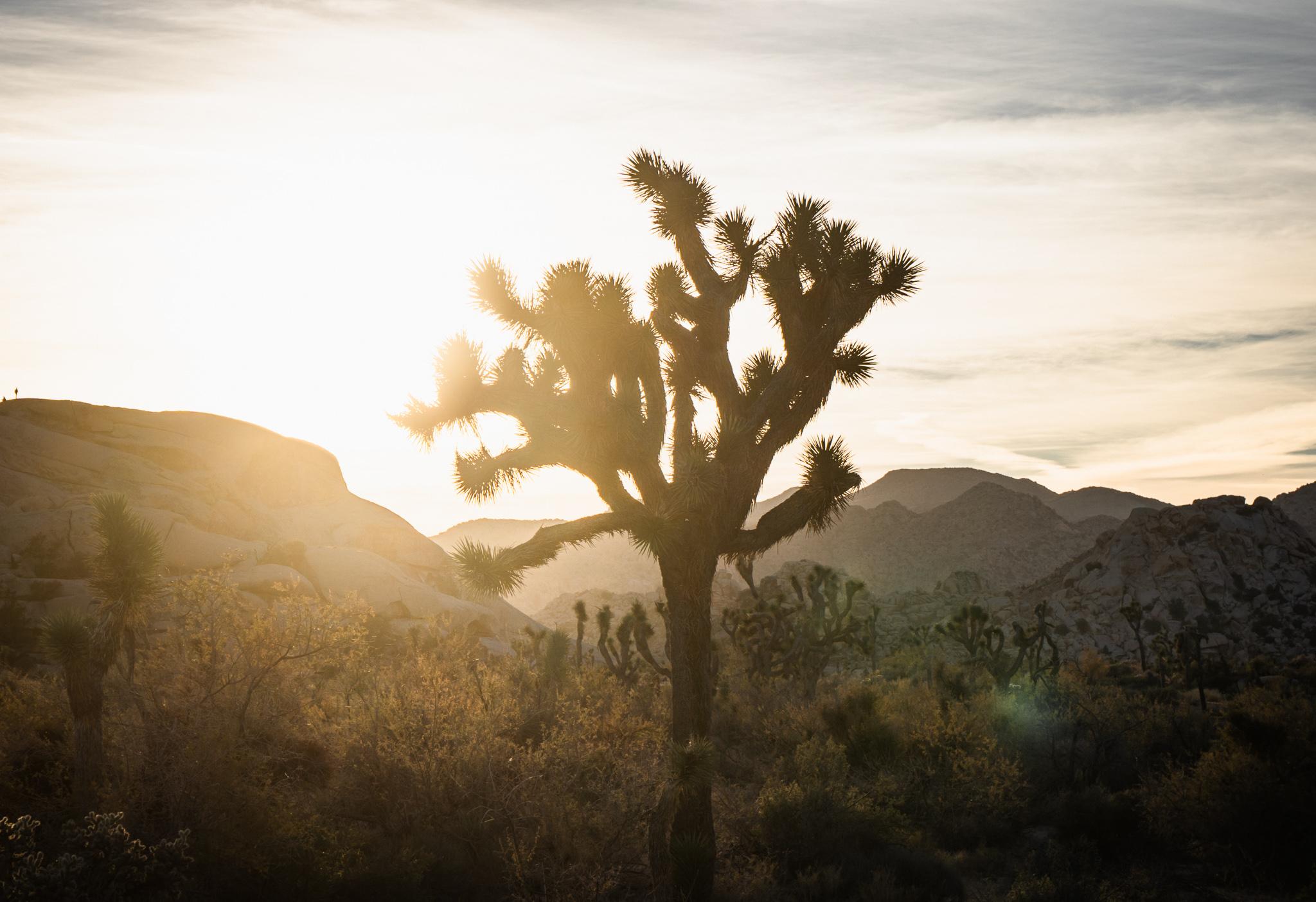
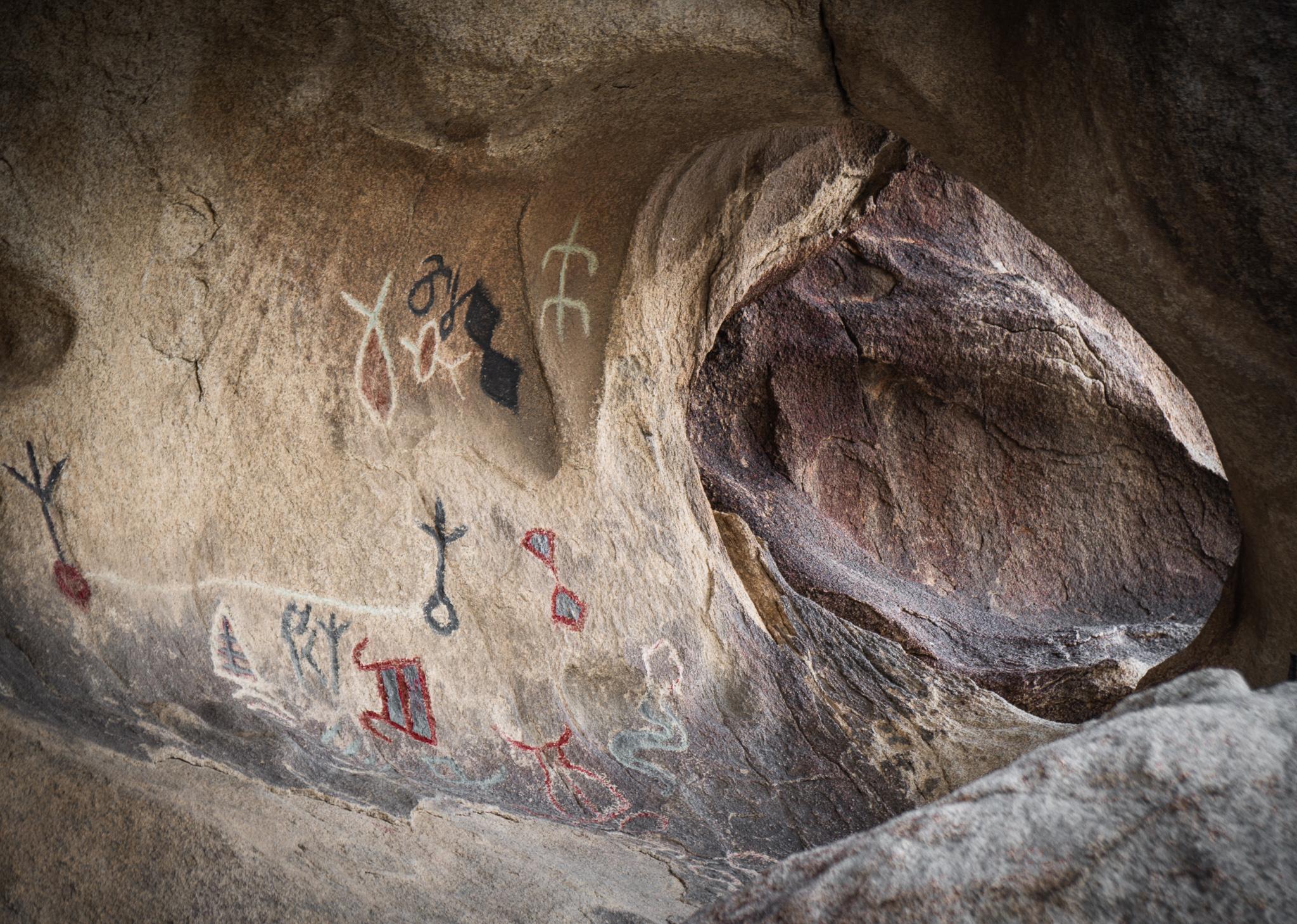
We began to slowly make our way down the rocky path and soon found ourselves back in the valley. The landscape was filled with Joshua trees and massive yuccas. We passed rocks adorned with petroglyphs, which – as it turned out later – were not prehistoric art but the result of vandalism. Walt Disney’s team, while filming a movie about Chico the Coyote, decided to color them in and embellish them.
A MOTORCYCLE RIDE THROUGH JOSHUA TREE NATIONAL PARK – AMONG THE ROCKS OF THE MOHAVE DESERT AND THE CACTUSES OF THE SONORA DESERT
We were driving along the road toward Cholla Garden. We were about halfway through our planned route when the landscape began to change almost before our very eyes. The giant rocks and Joshua trees had disappeared. In their place were endless fields of small, hairy cacti that stretched far into the distance, all the way to the horizon.
Joshua Tree is an extraordinary place where two deserts meet – the Mojave and the Colorado, which is part of the vast Sonoran Desert. The boundary between them is surprisingly distinct – the high-altitude Mojave Desert captivates with its characteristic Joshua trees and massive rock formations rising from the ground, while the lower-lying Colorado Desert is harsher and more barren – cacti dominate here, and the landscape seems more open and boundless.
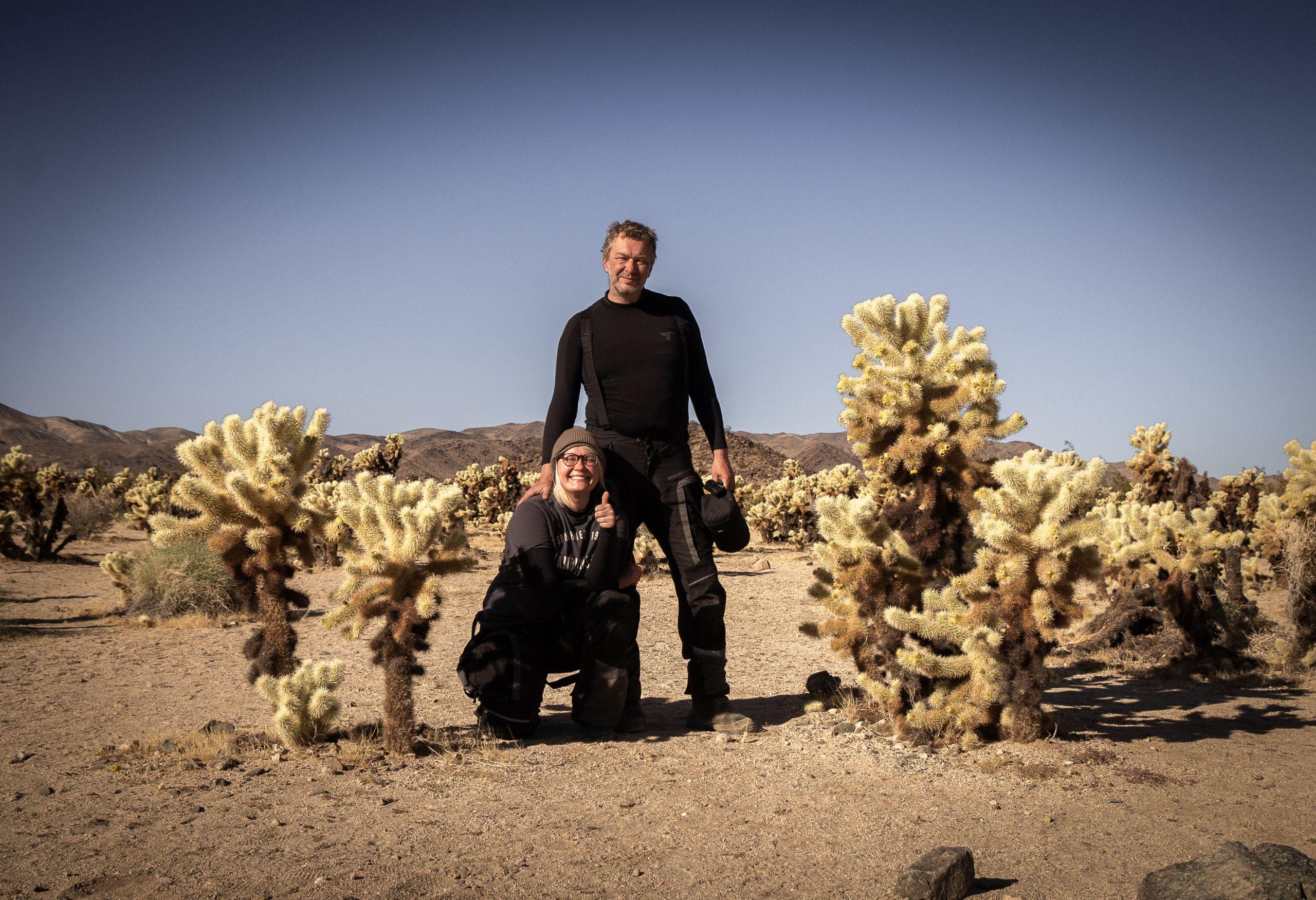
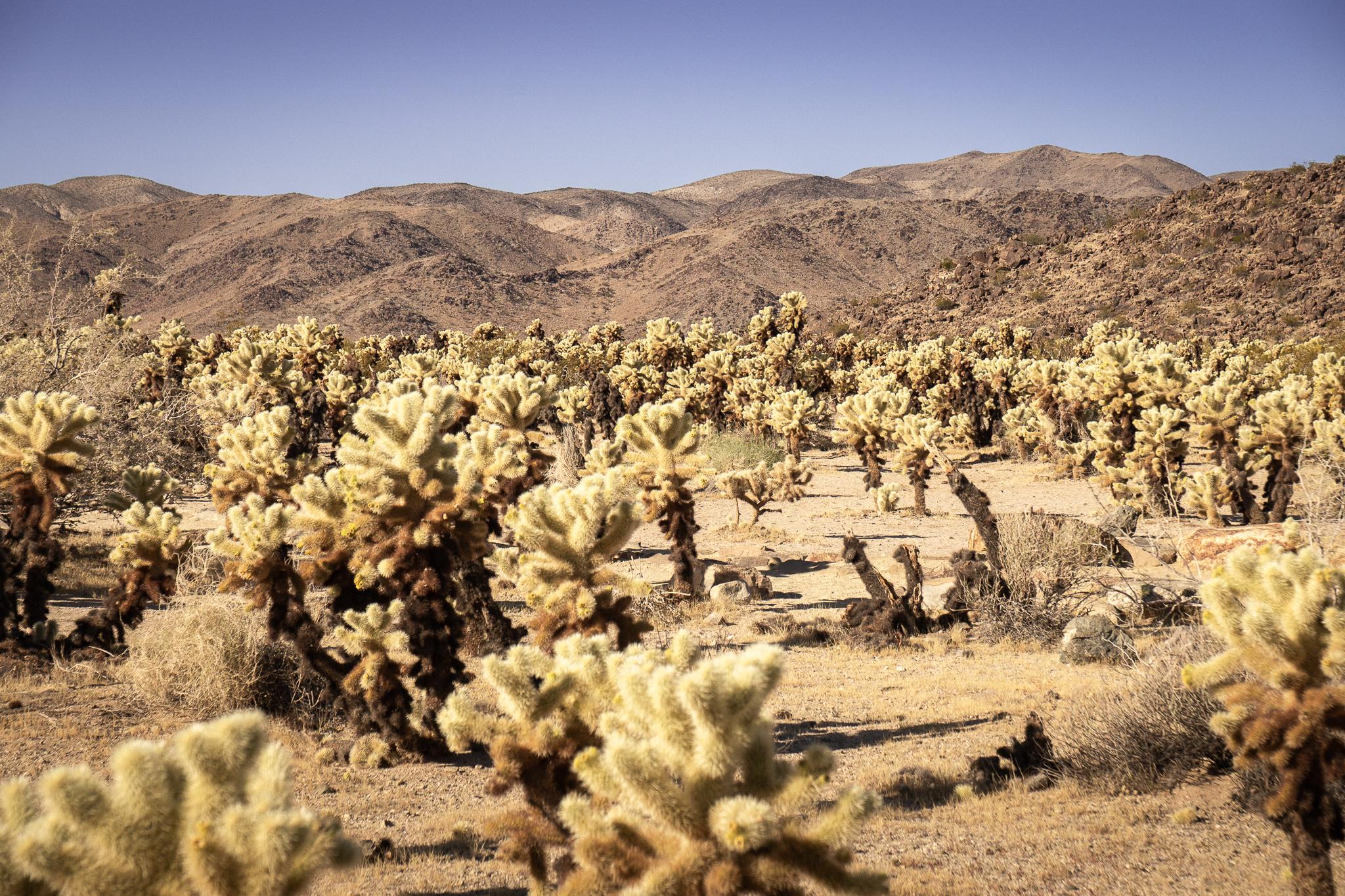
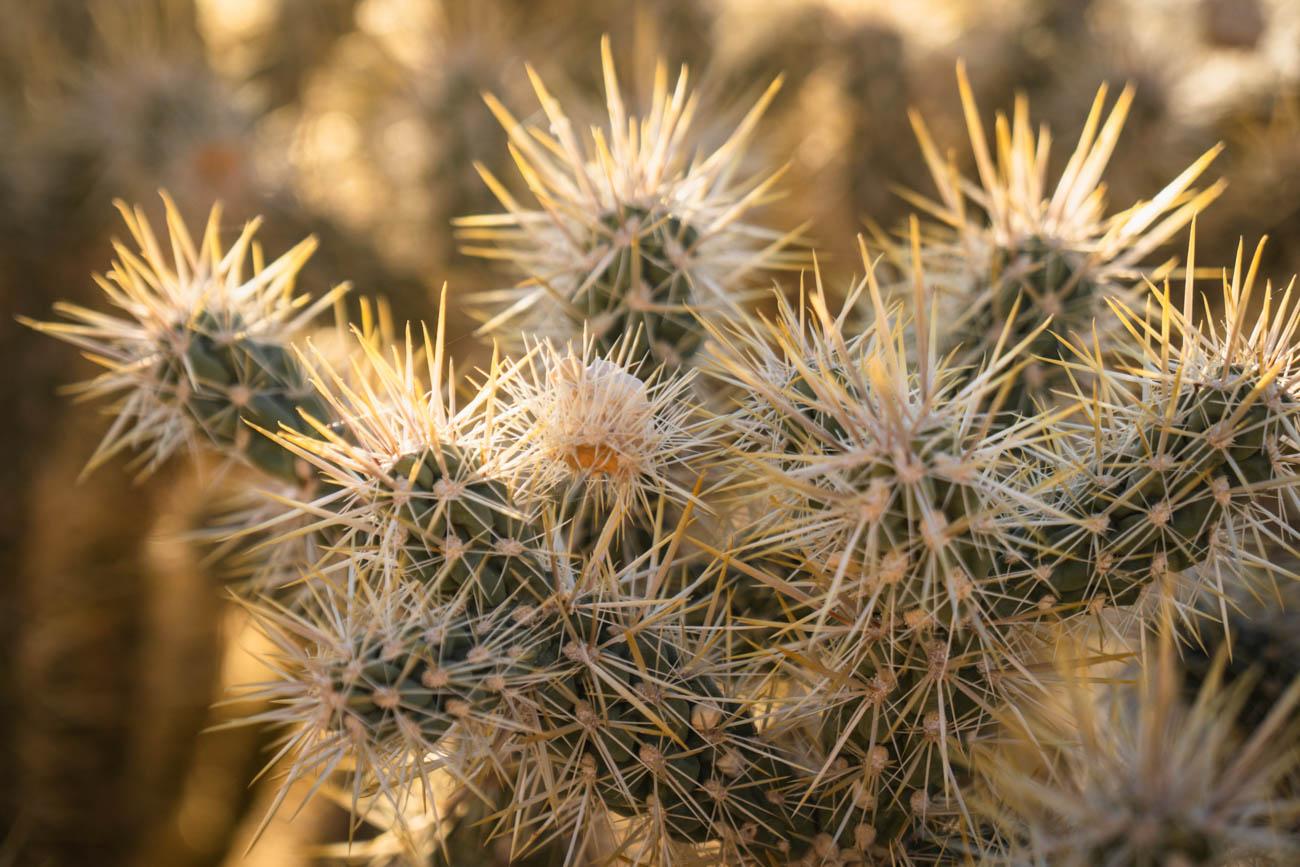
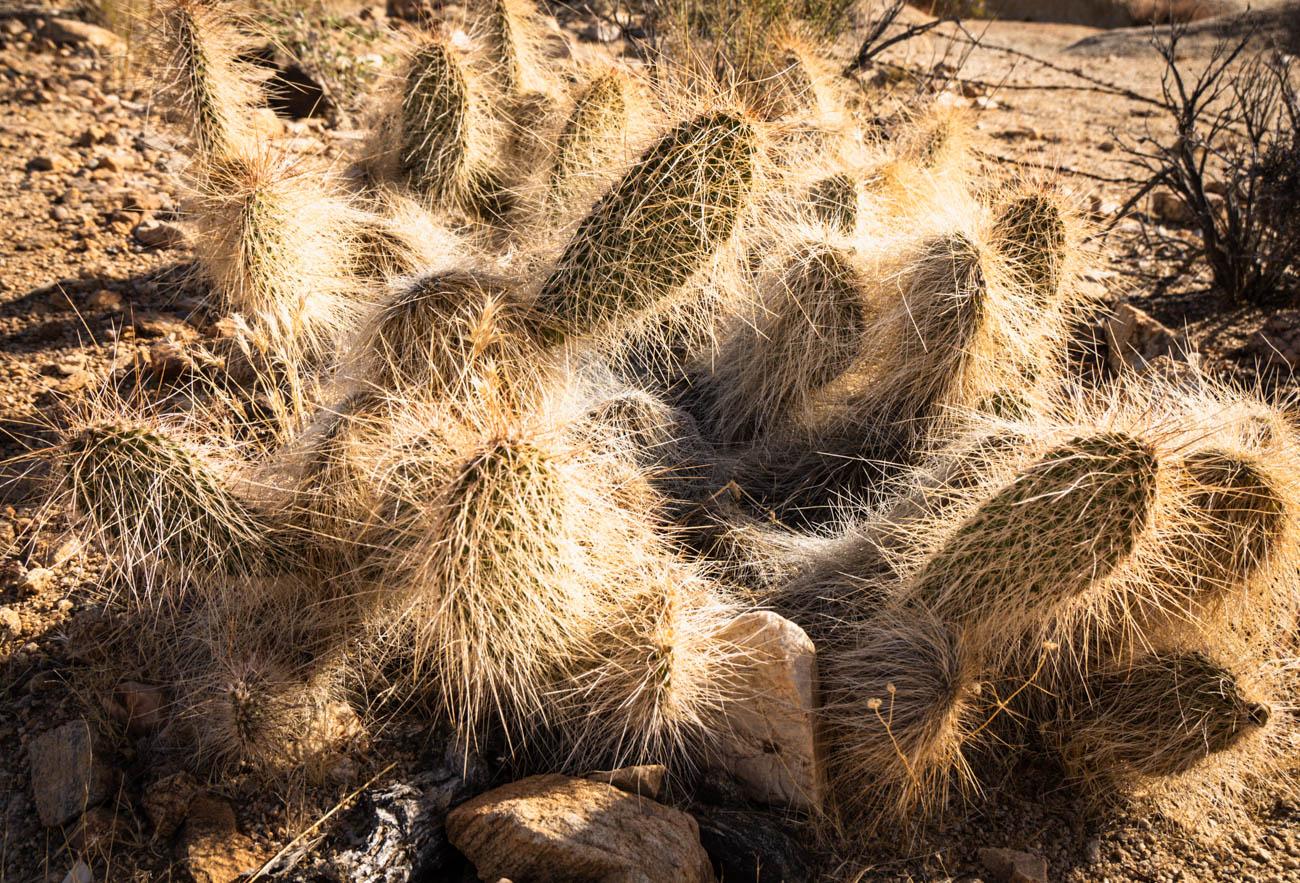
As we descended from the highlands of the Mojave Desert, the air became noticeably warmer and drier. Cacti surrounded us literally everywhere. They were on the hillsides, along the roadsides, and far out on the desert plain, stretching all the way to the hills visible on the horizon. After a while, we stopped at Cholla Garden – the starting point of a short trail leading through an extraordinary garden of cholla cacti. At first glance, they looked almost fairy-tale-like. Bathed in sunlight, they appeared soft and fluffy, as if someone had sprinkled them with delicate down. Despite their unassuming and even friendly appearance, cholla cacti can be exceptionally treacherous. Their spines break off very easily and instantly latch onto skin, clothing, and shoes, and removing them can be quite a challenge.
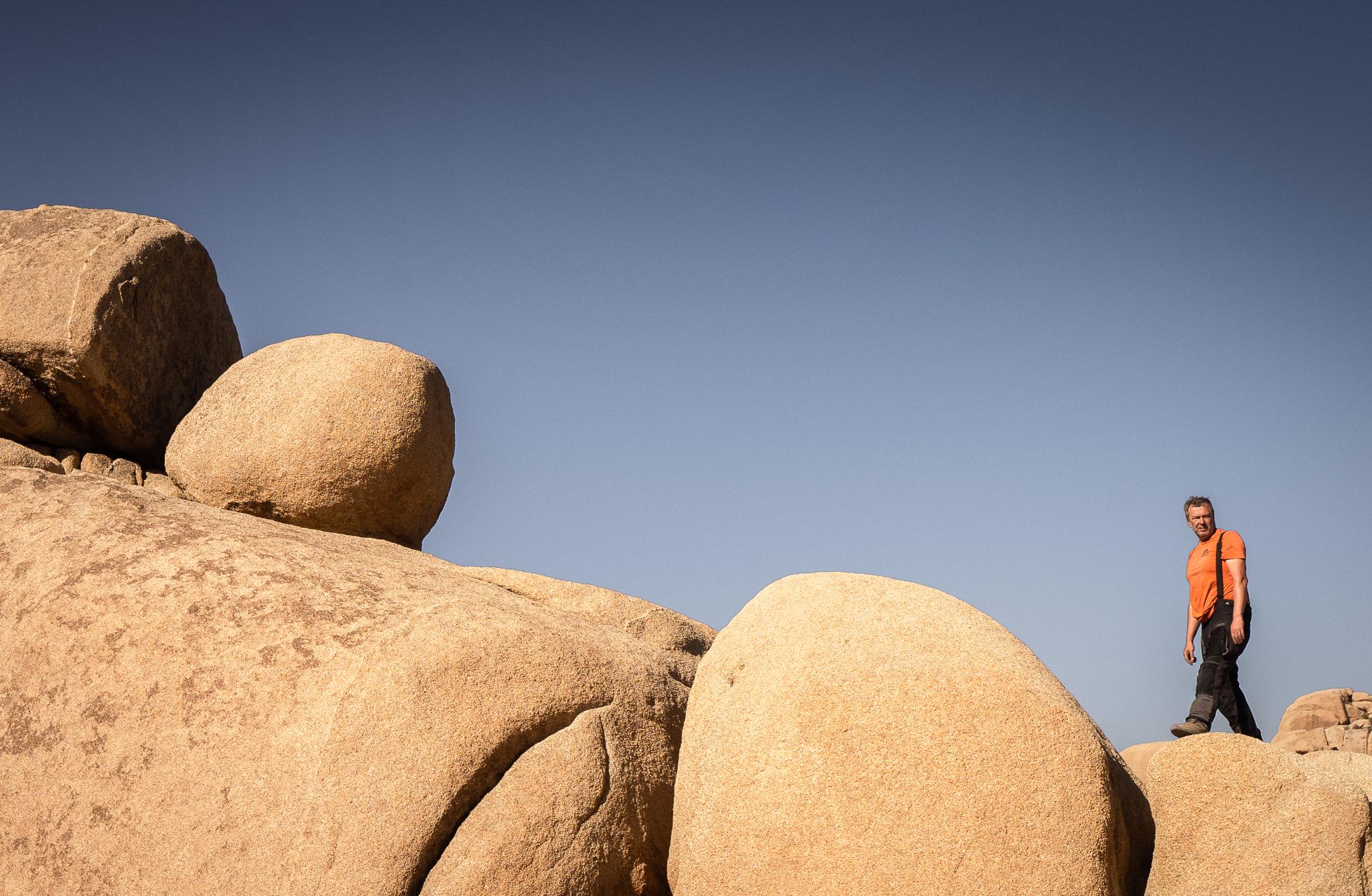
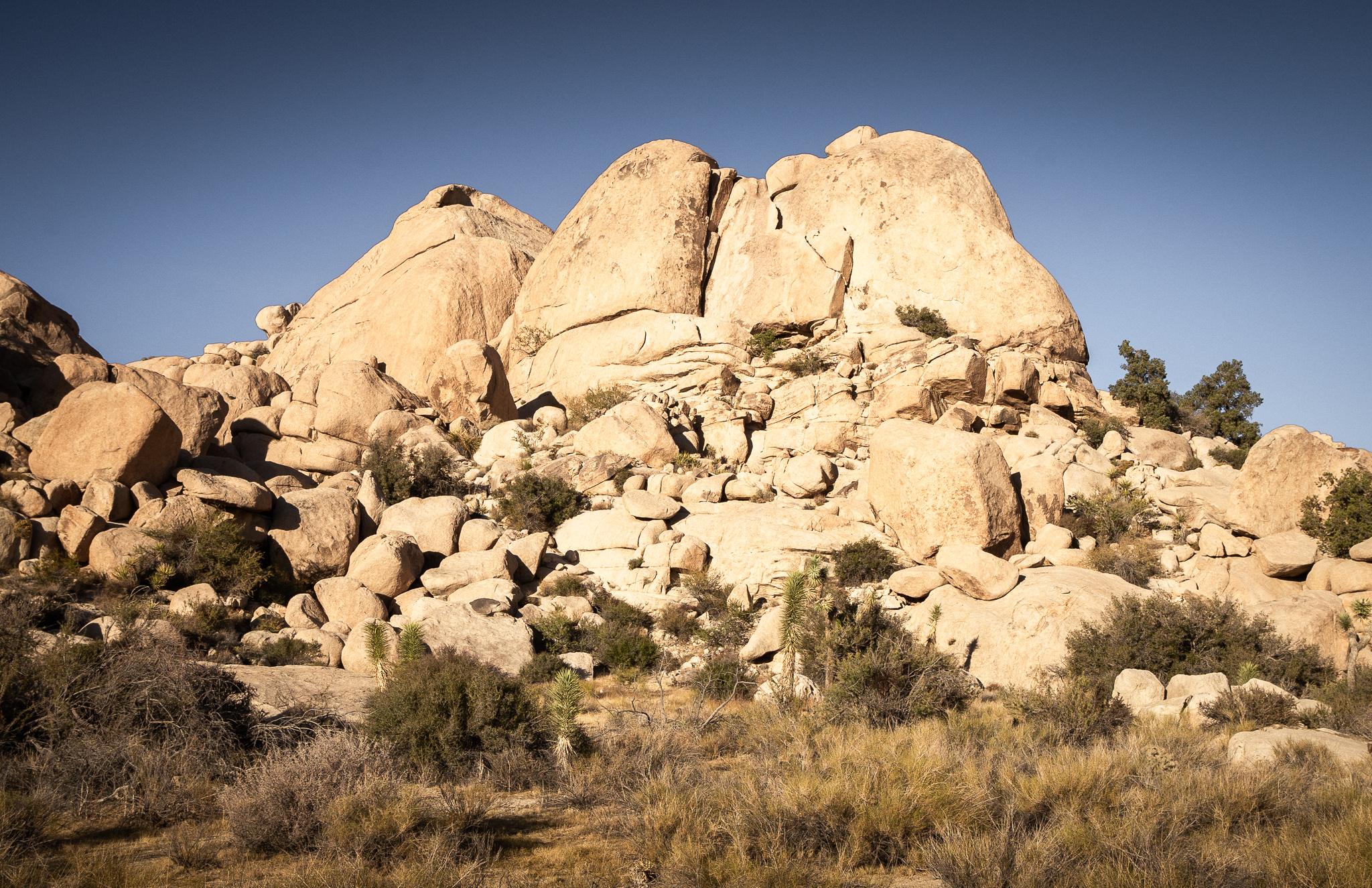
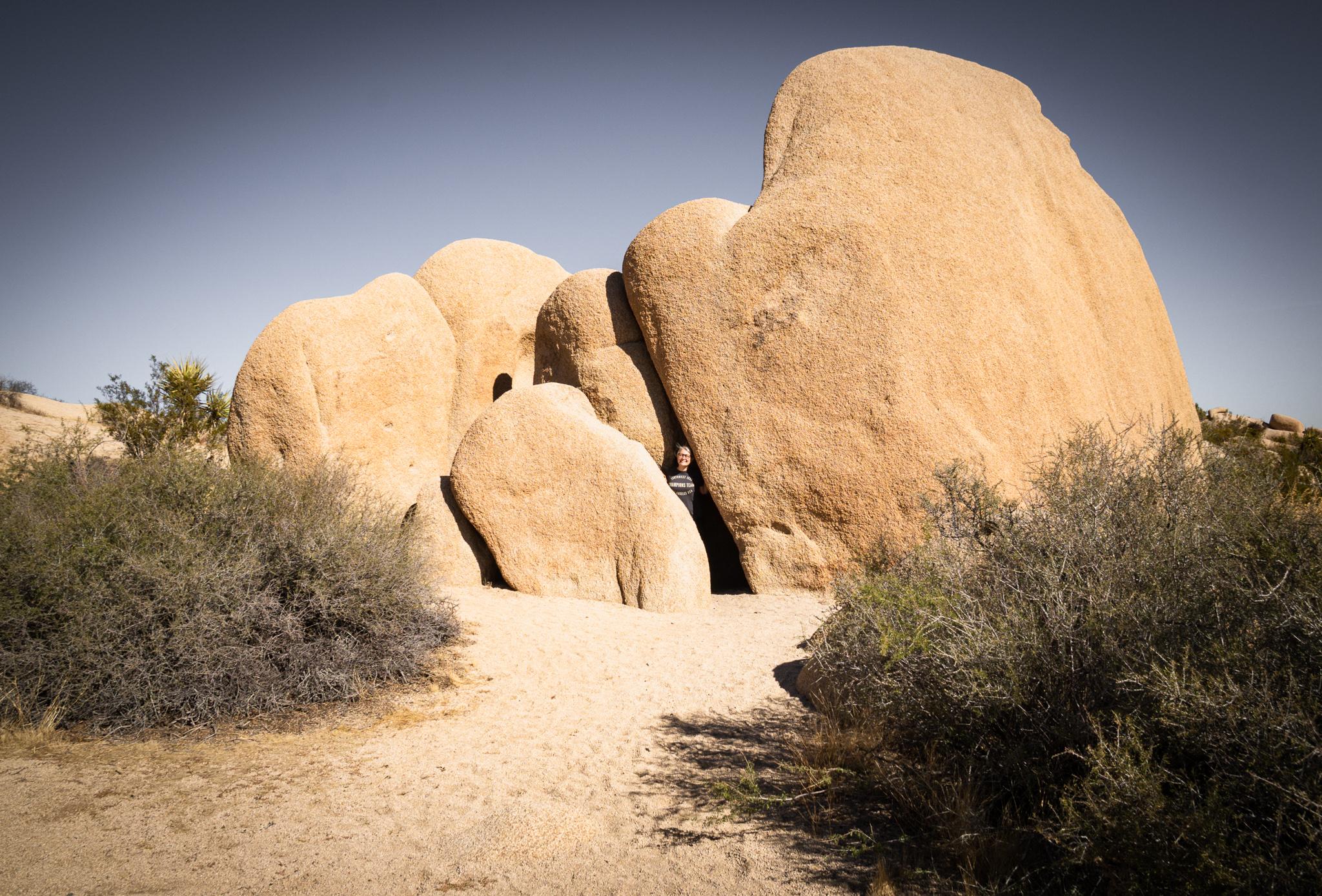
After a short walk through Cholla Garden, we returned to our motorcycles and headed back toward the Mojave Desert and our campsite. We wanted to see a few famous rock formations along the way before the sun rose fully above the horizon and turned the desert into a scorching furnace. The road wound through landscapes that never ceased to amaze us. In the morning light, the rocks shimmered with warm shades of yellow, and long shadows accentuated their incredible shapes. Every so often, we felt the urge to stop once again and just take it all in.
However, we were acutely aware that these were our final moments in Joshua Tree. Upon returning to the campground, we had to pack up, because the next morning we planned to head further on, toward Arizona. It was our last day in this extraordinary park, which, over the course of those few days, had enchanted us with the raw beauty of the desert.
WHAT SHOULD YOU KNOW ABOUT JOSHUA TREE NATIONAL PARK?
- We visited Joshua Tree Park in late fall. It was still too hot for us during the day, so we spent the daytime seeking shelter from the sun. As soon as the sun went down, it got very cold almost instantly, and at night the temperature dropped even below 0. From what we know, the best time to visit Joshua Tree National Park is in the spring, when temperatures are most pleasant and the desert turns into one big, blooming garden. Summer in Joshua Tree National Park can be excruciatingly hot, with temperatures reaching 40, and then dropping back down to 15, though it can even snow. In fact, with the right preparation, you can enjoy the park all year round.
- Joshua Tree National Park can also get very crowded. We didn’t mention this because we rarely went out during the day. We usually set out on our trips very early in the morning or fairly late in the afternoon, when most tourists had already left the park.
- Camping spots fill up very quickly. Apparently, during peak season, you have to reserve them at least two weeks in advance. Due to the abundance of climbing rocks, the campsites located in the Mojave Desert are more popular. We also think they’re better from a logistical standpoint—they’re closer to town, where you can find water and supplies.
- That’s right—water. We didn’t find any working water taps inside the park. We heard there used to be one near our campsite, but unfortunately, we couldn’t find it. The closest water tap was right at the park entrance from the Joshua Tree side, where you could fill up your water canisters for free.
- There’s also nowhere inside the park to take a shower. We were lucky, though, because we let some guys with an RV use our campsite, and in return, they let us use their shower. For others, unfortunately, the only options are to shower at a gas station or at a gym or pool in nearby Twentynine Palms.